
 17 Oct 2026









- long- and medium-range radars for general airspace surveillance;
- specialized radars for small and low-flying targets;
- passive sensors and electro-optical systems;
- electronic-warfare capabilities;
- mobile counter-UAV systems;
- secure communications between military and civilian authorities;
- continuous data sharing with Romania and other NATO allies.
Bulgaria Strengthens Airspace Protection After Drone Incident Near the Romanian Border
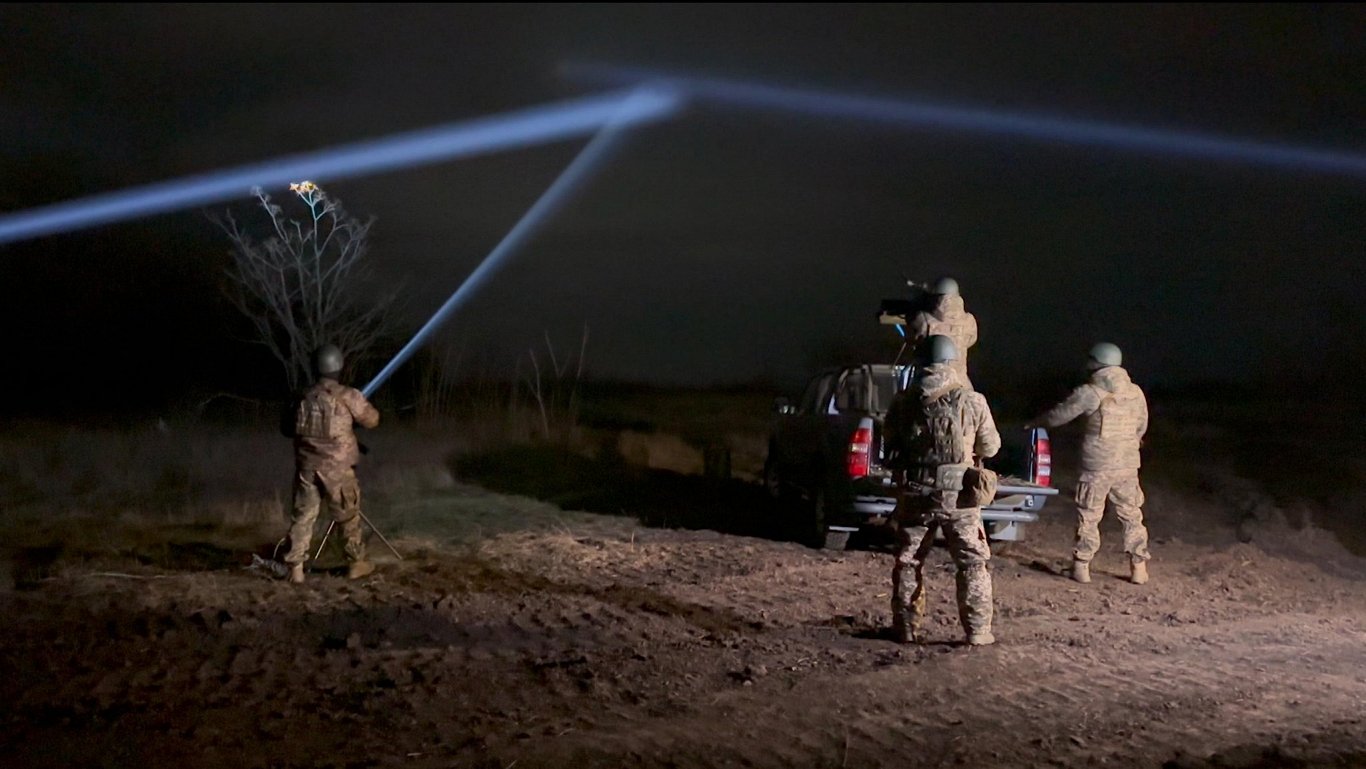
The drone incident near Kardam has served as another warning for Sofia about the need to accelerate the modernization of its air defense system and strengthen the protection of critical infrastructure amid growing security risks in the Black Sea region.
On August 8, a drone entered Bulgarian airspace from the direction of Romania and exploded near the village of Kardam, located close to the Bulgarian-Romanian border. The explosion occurred at around 8:10 a.m., approximately 100 meters inside Bulgarian territory. According to Bulgarian authorities, there were no casualties and no infrastructure was damaged.
However, the location of the incident was particularly sensitive from a national security perspective. The drone exploded approximately one kilometer from the Bulgarian compressor station of the Trans-Balkan Pipeline and around 200 meters from a similar facility on the Romanian side. The pipeline connects Turkey with Ukraine and forms part of the energy infrastructure of Southeastern Europe.
Bulgarian authorities do not currently consider the incident to have been a deliberate attack against the country. Following an initial analysis of the debris, Bulgaria's Ministry of Defence stated that the drone was most likely a Maya-type unmanned aerial vehicle — a decoy or simulated aerial target widely used by the Ukrainian armed forces. Bulgaria's Chief of Defence, Admiral Emil Eftimov, also stated that the explosion was not a deliberate action against Bulgaria.
Sofia is therefore demonstrating a measured approach, avoiding turning an accidental incident into a political or military escalation. However, the absence of evidence of a deliberate attack does not change another important fact: a small drone was able to cross Romanian airspace and enter Bulgaria without being detected and identified in time. This has become the key issue for Bulgarian military planners.
The Challenge of Detecting Small UAVs
Bulgarian Prime Minister Rumen Radev said that the drone was not detected in time by either Bulgarian or Romanian airspace surveillance systems. He also drew attention to delays in the delivery of new high-precision radars for the Bulgarian armed forces.
This represents a serious warning for Bulgaria. The country is a NATO member located on the Alliance's southeastern flank and directly on the Black Sea. Any gaps in the detection of low-flying drones could affect not only national security but also the broader NATO air-surveillance architecture in the region.
At the same time, the incident should not necessarily be interpreted as evidence of a weakness in Bulgaria's entire air-defense system. Modern air-defense systems were primarily designed to detect and counter aircraft, helicopters and missile threats. Small drones represent a different category of threat: they have a relatively small radar cross-section, can fly at low altitude and can exploit terrain features to reduce detection time.
For Sofia, this makes the development of a specialized counter-UAV architecture increasingly important. Such a system should combine radars, electro-optical and infrared sensors, electronic intelligence and electronic-warfare capabilities.
Kardam Highlights the Importance of Protecting Energy Infrastructure
The proximity of the explosion to gas infrastructure is particularly concerning. Even though no damage was reported, the incident demonstrates the potential vulnerability of energy facilities. Compressor stations, gas pipelines, power plants, ports and transportation hubs can become exposed to risks in modern warfare, including as a result of a drone deviating from its original flight path.
Protecting energy infrastructure is particularly important for Bulgaria because of its role in the regional gas-supply system. Sofia's response therefore needs to focus not only on increasing the number of air-defense assets but also on establishing a multilayered system for protecting critical infrastructure.
Bulgaria Needs a New Counter-UAV Model
From a military perspective, the Kardam incident demonstrates that Bulgaria needs to adapt its air-surveillance architecture to a new security environment.
The main challenge lies in the cost imbalance between the threat and the means used to counter it. Using expensive surface-to-air missiles against relatively cheap drones on a mass scale is economically inefficient.
A more rational approach is a multilayered system combining:
For Bulgaria, joint airspace surveillance with Romania is particularly important. The Kardam incident demonstrated that a potential threat does not necessarily originate directly over Bulgarian territory. Detecting a target while it is still over Romania could give Sofia additional time for identification and response.
NATO and the Black Sea Region
The incident also has a broader regional context. Since the beginning of Russia's full-scale war against Ukraine, the airspace of countries around the Black Sea has come under significantly greater pressure. Romania and Bulgaria are located close to the conflict zone and therefore have to account not only for deliberate attacks, but also for the possibility of drones deviating from their intended routes, losing control or being affected by electronic warfare.
For Sofia, avoiding unnecessary escalation is crucial. This is precisely why Bulgarian authorities have emphasized that there is currently no evidence of a deliberate attack.
However, a cautious political response should not mean underestimating the military lesson. Kardam demonstrated that even a drone that was not targeting Bulgaria can end up in close proximity to critical infrastructure. For a NATO member state, this alone is sufficient reason to strengthen early-warning and air-surveillance capabilities.
The incident should not become a cause for political panic, but rather a catalyst for accelerating long-overdue modernization. Bulgaria has a clear interest in ensuring that its airspace is as transparent as possible to its own armed forces and its allies, while energy and transportation infrastructure receive additional layers of protection.
The main lesson from Kardam is not who launched the specific drone, but that modern warfare is creating new risks even for states that are not directly involved in the fighting. Strengthening Bulgaria's air defenses, modernizing its radar network, developing counter-UAV capabilities and deepening coordination with Romania and NATO are therefore not matters of offensive policy, but primarily questions of protecting Bulgarian territory, its population and its critical infrastructure.


 Latest news
Bulgaria Asks NATO to Strengthen Its Defences Amid Black Sea Threats: Sofia Fears Growing Risks to Maritime Shipping
16.Oct.2026
Black Sea Shipping Risks Threaten Bulgaria’s 5 Million Tonnes of Wheat Exports
15.Oct.2026
Georgia’s Foreign Funding and Political Ban Laws Draw Criticism from the Venice Commission
15.Oct.2026
Kazakhstan Promotes a Caspian Green Energy Corridor: Astana Seeks New Routes to the European Market
14.Oct.2026
Inflation in Romania Accelerates to 6.61%: Rising Prices Increase Pressure on Households and the Economy
13.Oct.2026
Can Europe Protect the International Criminal Court from Trump’s Sanctions?
13.Oct.2026
Georgia’s Constitutional Court Continues Case on Banning Opposition Parties: Political Pluralism at Stake
12.Oct.2026
Azerbaijan and Iran Step Up Security Contacts Amid Hijab Protests
12.Oct.2026
Personnel Shortages Complicate Ukrainian Forces’ Rotation: Ukraine Faces Long-Term Challenges on the Front Line
11.Oct.2026
Trump Eases Sanctions on Russian Fuel After Talks with Putin: Kyiv Fears Boost to Moscow’s War Revenues
10.Oct.2026
Putin Seeks to Strengthen Russia’s Influence in the Post-Soviet Space Through the CIS
10.Oct.2026
Russia and the South Caucasus: External Pressure, Political Competition and a Crisis of Trust
10.Oct.2026
Peaceful Settlement Between Armenia and Azerbaijan: Moving from Declarations to Implementation
10.Oct.2026
Moldova Ready to Accept as Many Ukrainians as Necessary if Situation Worsens This Winter
09.Oct.2026
Turkmenistan Turns Avaza into a Regional Diplomatic Hub as Caspian, Central Asian and CIS Agendas Converge
08.Oct.2026