
 17 Oct 2026









Bulgaria Asks NATO to Strengthen Its Defences Amid Black Sea Threats: Sofia Fears Growing Risks to Maritime Shipping
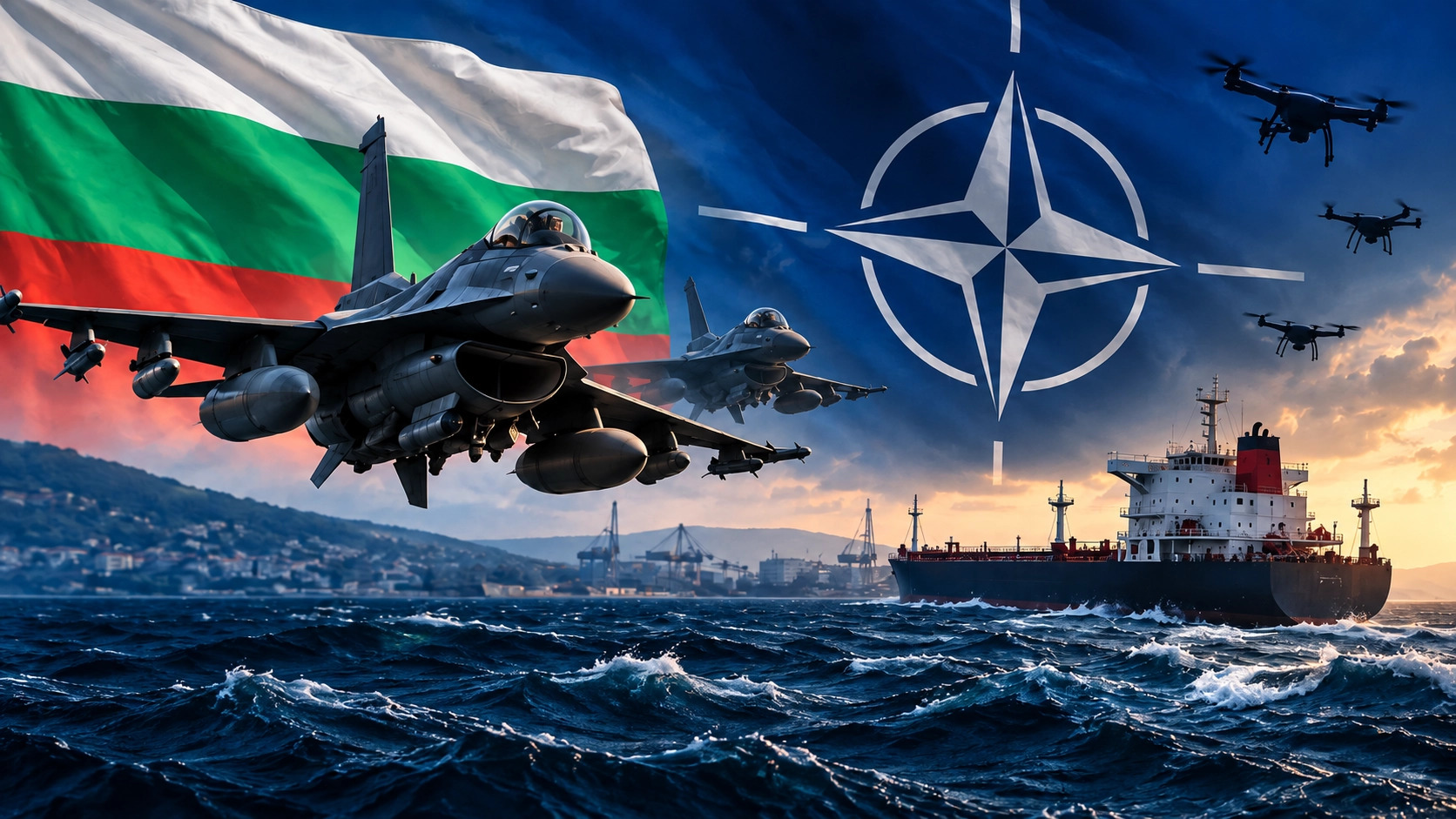
Bulgaria is seeking to strengthen NATO’s defensive capabilities amid reports of attacks on commercial vessels in the Black Sea. Sofia is looking for additional air support and counter-drone systems, viewing the security of maritime routes as a key element in protecting its national territory and economic infrastructure.
Bulgaria has approached NATO with a request to strengthen the country’s defences, including the provision of additional fighter aircraft and counter-unmanned aerial vehicle systems. According to available information, the request followed a series of incidents involving commercial vessels in the Black Sea, including reports of a cargo ship being sunk off the Bulgarian coast.
The developments have heightened Sofia’s concerns over the security of maritime routes and the potential consequences of regional military tensions for NATO’s eastern flank. For Bulgaria, whose economy is closely linked to Black Sea trade, port infrastructure, and agricultural exports, protecting maritime routes is a matter of both defence and economic security.
Strengthening Air Defence Becomes a Priority
The request for additional air support and counter-drone capabilities reflects the changing nature of threats in the Black Sea. Unmanned systems are increasingly being used in military operations, while risks to civilian shipping and coastal infrastructure require closer coordination between military and civilian authorities.
Additional fighter aircraft could expand airspace patrol capabilities, while specialised counter-drone systems could improve the protection of critical infrastructure.
However, the effectiveness of such measures will depend on the nature of the threats, the technical compatibility of the systems, and the willingness of NATO allies to provide the necessary resources. Bulgaria’s request to NATO does not in itself mean that the requested assets have already been allocated or that a decision to increase the alliance’s military presence has been made.
The Black Sea Takes on Greater Significance for NATO Security
Incidents involving commercial vessels are reinforcing the Black Sea’s importance as one of the most sensitive areas of European security.
Bulgaria is a member of both NATO and the European Union, meaning that the security of its airspace and maritime routes is directly linked to the broader framework of regional cooperation. In this context, Sofia is seeking closer coordination with its allies, improved intelligence-sharing, and greater readiness to respond to potential incidents.
At the same time, strengthening defensive capabilities does not necessarily indicate preparations for direct military confrontation. It can also be viewed as a deterrence measure intended to reduce the likelihood of isolated incidents escalating into a broader crisis.
Economic Consequences: Maritime Trade Under Threat
Maritime security is particularly important for Bulgaria because of the role its Black Sea ports play in international trade. Rising security risks could lead to higher insurance premiums, increased shipping costs, supply delays, and changes to cargo routes.
Grain exporters and other agricultural producers could be particularly vulnerable, as maritime transport remains an important channel for accessing foreign markets. Even without physical damage to port infrastructure, a deterioration in the perceived security of the region could increase business costs and undermine the competitiveness of Bulgarian exports.
Defence and economic resilience are therefore closely interconnected. For Sofia, preventing further incidents is becoming an important condition for maintaining stable port operations, protecting trade flows, and preserving the confidence of international shipping companies.
Bulgaria’s appeal to NATO demonstrates how regional instability is influencing the defence priorities of Black Sea states. Strengthening air surveillance, developing counter-drone capabilities, and improving coordination with allies could enhance the resilience of the alliance’s eastern flank.
However, further measures will require a balance between strengthening defence and preventing escalation. An increased military presence could improve readiness to respond to emerging threats, but it would also require clear coordination mechanisms to reduce the risk of misinterpreted incidents and unintended escalation.
Ultimately, Sofia’s efforts to secure additional support reflect a broader trend: Black Sea security is increasingly extending beyond military deployments to encompass the protection of civilian shipping, critical infrastructure, and the economic stability of coastal states.


 Latest news
Latest news
Latest newsBulgaria Asks NATO to Strengthen Its Defences Amid Black Sea Threats: Sofia Fears Growing Risks to Maritime Shipping
16.Oct.2026
Black Sea Shipping Risks Threaten Bulgaria’s 5 Million Tonnes of Wheat Exports
15.Oct.2026
Georgia’s Foreign Funding and Political Ban Laws Draw Criticism from the Venice Commission
15.Oct.2026
Kazakhstan Promotes a Caspian Green Energy Corridor: Astana Seeks New Routes to the European Market
14.Oct.2026
Inflation in Romania Accelerates to 6.61%: Rising Prices Increase Pressure on Households and the Economy
13.Oct.2026
Can Europe Protect the International Criminal Court from Trump’s Sanctions?
13.Oct.2026
Georgia’s Constitutional Court Continues Case on Banning Opposition Parties: Political Pluralism at Stake
12.Oct.2026
Azerbaijan and Iran Step Up Security Contacts Amid Hijab Protests
12.Oct.2026
Personnel Shortages Complicate Ukrainian Forces’ Rotation: Ukraine Faces Long-Term Challenges on the Front Line
11.Oct.2026
Trump Eases Sanctions on Russian Fuel After Talks with Putin: Kyiv Fears Boost to Moscow’s War Revenues
10.Oct.2026
Putin Seeks to Strengthen Russia’s Influence in the Post-Soviet Space Through the CIS
10.Oct.2026
Russia and the South Caucasus: External Pressure, Political Competition and a Crisis of Trust
10.Oct.2026
Peaceful Settlement Between Armenia and Azerbaijan: Moving from Declarations to Implementation
10.Oct.2026
Moldova Ready to Accept as Many Ukrainians as Necessary if Situation Worsens This Winter
09.Oct.2026
Turkmenistan Turns Avaza into a Regional Diplomatic Hub as Caspian, Central Asian and CIS Agendas Converge
08.Oct.2026