
 09 Oct 2026









Latvia Banned Russia-Based Media After Russia’s Invasion of Ukraine, Latvian Institute of International Affairs Director Says
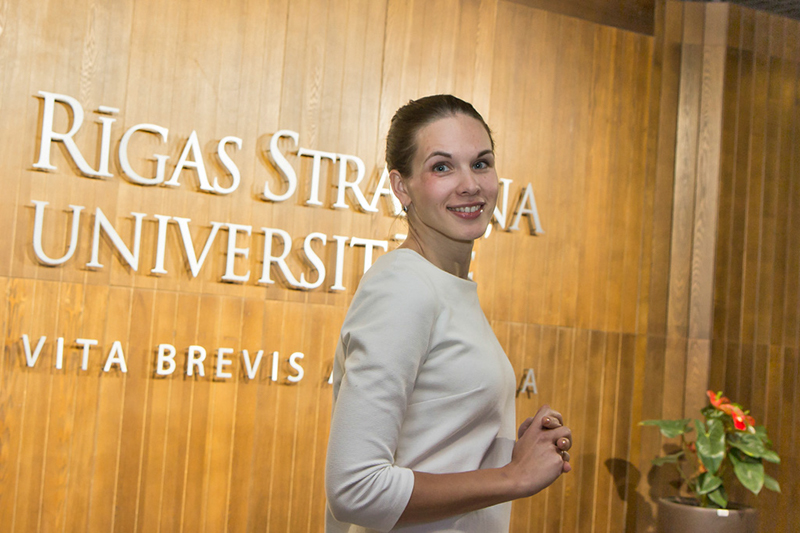
The Rīga Conference, one of the leading annual security and
foreign policy forums in the Baltic-Nordic region, gathered again this year in
the Latvian capital, bringing together heads of state, diplomats, military
leaders and analysts to discuss the future of European security. Beyond the
panels on Ukraine and deterrence, the conference has increasingly become a
meeting point for smaller states navigating powerful neighbors — a theme that
resonates strongly for Armenia as it seeks to redefine its foreign policy course
and deepen ties with the European Union.
On the sidelines of the conference, CCBS News journalist
Marine Kharatyan conducted an exclusive interview with Dr. Una Aleksandra
Bērziņa-Čerenkova, Director of the Latvian Institute of International Affairs,
about the lessons Latvia’s own post-Soviet transformation can offer Armenia —
from reforming security institutions and countering Russian propaganda
to understanding what EU accession actually requires, and how the hard-won
experience of the Baltic states can be translated into concrete support for
Yerevan.
CCBS News: As a country that
shares a border with Russia, how did Latvia go about building security
institutions free of outside influence, and what of that process might apply to
Armenia?
Dr. Una Aleksandra
Bērziņa-Čerenkova: I think the learning is mutual — that's why we also work
with our Armenian colleagues and discuss our shared experiences. It's not so
much what Latvia can offer, but that strength lies in this mutual exchange.
Having said that, I believe the first lesson is to put your state security
services in order and make sure there is no foreign interference within them.
That is something the Baltic states, including Latvia, did immediately after
re-establishing independence in 1991, and even more so after 1994, when the
remnants of the former Red Army finally left our territory. It's part of a
broader process of reconstruction — and in Armenia's case, a process of
post-conflict reconstruction as well. In that process, it's essential to
dismantle the informal and harmful structures of influence through which the
Russian state tries to maintain control over countries it sees as belonging to
its periphery, its "backyard," or its sphere of claim. That's our
number one lesson. The second is building an immediate, shared narrative of
statehood — a story of what it means to belong to the state, that brings people
together regardless of the language they speak at home or their ethnicity. In
our case, that is the story of a country that wants an open, free, European,
safe and democratic future.
CCBS News: Turning to societal
resilience — where does the Baltic experience with disinformation offer the
most relevant lessons for Armenia?
Dr. Una Aleksandra
Bērziņa-Čerenkova: There's an overlap here, I think. Around 36 percent of our
population speaks Russian at home. I don't know the exact figures for Armenia,
but I would assume a significant part of society also consumes content in
Russian. Russia, as a hybrid actor, always tries to exploit the
spread of the Russian language and its presence within our societies. It tries
to monopolize everything connected to how Russian culture is perceived — the
Orthodox Church is one such example in our case. Once we understood that this
is the playbook, we acted. Immediately after Russia's full-scale invasion of
Ukraine in 2022, we began the process of banning these Russian media
outlets, because they are not media in the sense that freedom of speech would
apply to them — this is propaganda, this is hybrid warfare. So we closed that
space.
CCBS News: How do you close them, in practice?
Dr. Una Aleksandra
Bērziņa-Čerenkova: Their licenses were revoked — they are illegal. So we no
longer have official access to these media. Of course, YouTube still exists,
and no one is prosecuted for watching it; that remains people's own choice. But
the state position — shared to a greater or lesser extent across all three
Baltic states — is unequivocal: this is not news, it is part of the information
and hybrid warfare that Russia is knowingly and strategically waging against
us, weaponizing the Russian language in a cynical pursuit of its geopolitical
interests. I don't know whether that approach is transplantable to other
countries, but for the Baltic states, cleaning up the standard of reporting and
the information environment has genuinely helped.
CCBS News: How would you compare the EU's level of engagement in the
South Caucasus with the attention it has historically given the Baltic region?
Dr. Una Aleksandra
Bērziņa-Čerenkova: Since we've been EU members since 2004, that question is,
in a sense, already settled for us — our task now is learning to speak up at
the table, understanding that we are not just members but stakeholders, taking
ownership of EU policies rather than simply being a downloader of Brussels
regulations. As for the South Caucasus, the EU is very aware that it exists within
a neighborhood — that it shares borders, transit routes and prosperity flows,
and perhaps even shared ideas about how open societies should function, with
the nations around it. There is a constant, present interest in keeping those
ties and being a good partner and neighbor. On the Baltic states specifically,
I'd say we bring particular expertise, because we were part of the same shared
system for fifty years alongside your countries in the South Caucasus. We have
people-to-people ties, families with heritage living here, and Latvian families
living in the South Caucasus as well. I actually believe that by admitting the
Baltic states, the EU also strengthened its own expertise and connection to the
South Caucasus — if you look at how our foreign ministers and presidents
communicate, they consistently keep that conversation about our links to the
Caucasus alive.
CCBS News: Looking ahead, what role do you see the Baltic states
playing as Armenia pursues deeper EU integration?
Dr. Una Aleksandra Bērziņa-Čerenkova: Going back to my earlier point — it's the advocacy of someone who has been through a similar ordeal, as we were during the Soviet occupation. It's the knowledge, and the transfer of lessons learned. You opened with a very good question about exactly that. We went through the process of EU accession, of standardization, of Europeanization — a great deal of institutional "homework". Some of those lessons are easier to learn and transfer when they come from someone with whom you already share a people-to-people connection. That, I think, is the role of the Baltic states: to support Armenia and provide concrete, institutional guidance on how that reconstruction and accession process was actually carried out. Our shared experience and our people-to-people ties will be decisive here. And I should add — we have a very large Armenian community in Latvia, an active part of our society and our institutions, so there is also a great deal that can be done through diaspora connections.
Journalist
Marine
KHARATYAN


 Latest news
Latest news
Latest newsMoldova Ready to Accept as Many Ukrainians as Necessary if Situation Worsens This Winter
09.Oct.2026
Turkmenistan Turns Avaza into a Regional Diplomatic Hub as Caspian, Central Asian and CIS Agendas Converge
08.Oct.2026
Romania Scrambles Spanish F-18s After Aerial Targets Detected Near Ukrainian Border
07.Oct.2026
Berlin Deepens Defence Partnership with Kyiv: Germany to Provide Ukraine with €1 Billion in Military Aid
07.Oct.2026
European Parliament Against Georgian Dream: EU Prepares New Response to Tbilisi
06.Oct.2026
Bulgarian Foreign Minister to Discuss European Security and International Law in the Netherlands
05.Oct.2026
Rheinmetall in Bulgaria: Sofia Emerges as a New NATO Defence-Industrial Hub in the Balkans
05.Oct.2026
The Cost of a Long War: Moscow Expands Spending Plans Through 2029
05.Oct.2026
Trump Steps Up Pressure on Iran: Washington Puts Tehran Before a Choice Between a Deal and Further Escalation
04.Oct.2026
Russia Warns Diplomats Amid New Wave of Strikes on Ukraine
04.Oct.2026
Turkiye Expands Defense Capabilities: Ankara Aligns European Cooperation with the Development of Its Domestic Defense Industry
04.Oct.2026
Azerbaijan Expands Defense Industry as Growing Production Increases Military Burden on the Economy
03.Oct.2026
Germany Scales Back Political Presence in Georgia as Konrad Adenauer Foundation Closes Tbilisi Office
03.Oct.2026
Russia Prepares to Ease Fuel Restrictions as Moscow Seeks Balance Between Gasoline Shortages and Diesel Exports
03.Oct.2026
Bulgaria and NIS2: A New Stage in Integration into the European Cybersecurity System
02.Oct.2026