
 09 Oct 2026









The Cost of a Long War: Moscow Expands Spending Plans Through 2029
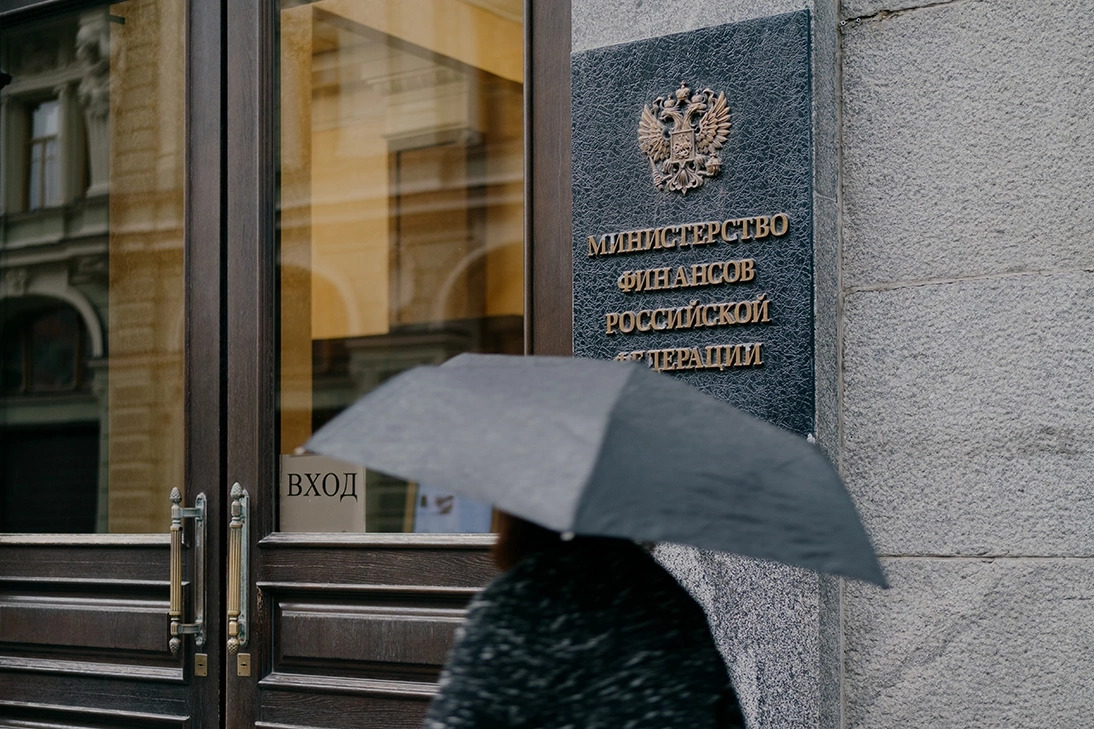
Russia
is entering a new budget cycle with record military spending, rising public
debt, declining oil and gas revenues, and additional tax pressure. Formally,
Moscow retains the ability to finance the war and meet its social obligations,
but the structure of the budget shows that the cost of maintaining the current
model is becoming increasingly high.
The
Russian government has submitted to the State Duma a draft federal budget for
2027 and the planned period of 2028–2029. The document shows that Moscow
expects to maintain high levels of government spending on defence, security,
and social programmes despite the deterioration of several key budget indicators.
In
2027, federal revenues are projected at 43.3 trillion rubles ($518 billion),
while expenditures are expected to reach 48.8 trillion rubles ($584.5 billion).
The resulting deficit is estimated at approximately 5.5 trillion rubles ($65.9
billion), or 2.2% of GDP. In 2028, revenues are expected to rise to 45.8
trillion rubles ($548.6 billion), while expenditures will reach 50.9 trillion
rubles ($609.7 billion). In 2029, the corresponding figures are projected at
48.6 trillion rubles ($582 billion) and 53.9 trillion rubles ($645.6 billion).
At
first glance, a deficit of around 2–2.2% of GDP does not appear critical for an
economy of Russia's size. This is also the position expressed by Finance
Minister Anton Siluanov, who said on October 5 that the proposed budget was
"resilient to any scenarios" and that public debt remained under
control.
However,
the key issue is not only the size of the deficit, but what is creating
pressure on Russian public finances. The main signal is military spending.
According to the budget documents, Russia's defence expenditures are expected
to reach approximately 17.1 trillion rubles ($204.8 billion) in 2027, about 27%
higher than the level initially planned for 2026. Over the three-year period,
total defence spending could reach approximately 50 trillion rubles ($598.9
billion). This would represent the highest level of military spending during
the entire period since Russia launched its full-scale invasion of Ukraine.
Moscow
is therefore not demonstrating a transition toward a peacetime budget policy.
On the contrary, its financial planning assumes that the high burden on the
defence-industrial complex and security sector will continue throughout the
entire new three-year period.
At
the same time, the oil and gas component of the budget is becoming a less
reliable source of financing. According to the published parameters, oil and
gas revenues in 2027 are expected to amount to approximately 7 trillion rubles
($83.85 billion), while non-oil and gas revenues are projected at around 36.3
trillion rubles ($434.9 billion). By 2029, the share of oil and gas revenues in
the budget structure is expected to continue declining.
This
has a dual significance. On the one hand, reducing the budget's dependence on
oil and gas can be viewed as a structural adaptation of the Russian economy to
sanctions and changes in external markets. On the other hand, the replacement
of oil and gas revenues is taking place primarily through taxation, domestic
borrowing, and the redistribution of resources within the economy, rather than
through a rapid increase in productivity.
This
is why tax policy is becoming one of the most important elements of the new
budget. The Russian authorities have already prepared a package of tax changes
designed to increase federal revenues. Additional revenues are needed by Moscow
to offset higher expenditures and the widening budget deficit.
Another
indicator of pressure is public debt. According to budget calculations,
Russia's public debt could rise to approximately 21.7% of GDP in 2027,
exceeding the 20% of GDP benchmark that Russian authorities have previously
regarded as a relatively safe level. By 2029, the ratio could reach
approximately 24% of GDP.
This
does not yet indicate a debt crisis. Russia's public debt remains significantly
below the levels recorded by many developed economies. But the trajectory is
more important than the absolute figure: after several years of large-scale war
financing, the state is gradually increasing its reliance on domestic
borrowing.
At
the same time, the government is building the budget around relatively moderate
economic growth. The baseline forecast assumes GDP growth of approximately 1.4%
in 2027, accelerating to 2.4% by 2029. This creates a potential contradiction.
Russia plans to increase military spending, expand government expenditure, and
maintain social commitments while not expecting a comparable acceleration in
economic growth.
In
other words, the state will be redistributing an increasingly large share of
economic resources without generating a proportional increase in economic
potential. The social component of the budget also remains substantial. The
government has pledged to maintain family benefits, pension indexation, and
healthcare funding. In 2027, healthcare expenditures, including both the
federal budget and the compulsory medical insurance system, will exceed 7
trillion rubles ($83.85 billion).
This
is also important from a political perspective. The Russian authorities cannot
fully shift the cost of the war onto the population by cutting social spending,
as such a policy would create additional domestic risks. Moscow is therefore
attempting to maintain social programmes while continuing to finance defence.
As a
result, a distinctive three-way budgetary structure is emerging: defence and
security, social commitments, and servicing the growing deficit must all be
financed simultaneously. The higher the spending on the first element, the
greater the pressure on the other two.
At
the same time, the Russian economy still retains a certain degree of
resilience. Relatively low public debt as a share of GDP, access to domestic
borrowing, extensive state control over the economy, and the ability to
redistribute resources allow Moscow to continue operating under this model. However,
its sustainability cannot be assessed solely by the absence of an immediate
financial crisis. The more important question is the price at which this
resilience is being maintained.
Higher
military spending means a further expansion of the role of the state and the
defence-industrial complex in the economy. A higher tax burden reduces the room
for manoeuvre available to private businesses. Rising domestic debt increases
future budget expenditures on debt servicing. Declining oil and gas revenues
reduce the traditional financial buffer. At the same time, limited GDP growth
indicates that the expansion of government spending is increasingly less
supported by a rapidly growing economic base.
Thus,
the 2027–2029 budget is less an indication of an immediate financial crisis in
Russia than a transition toward a more expensive and less flexible model of a
wartime economy.
Moscow
still has the resources to continue its current policy. However, its room for
manoeuvre is gradually narrowing. If oil prices fall below the assumptions
built into the budget, military spending will have to be financed through an
even larger deficit, higher taxes, additional borrowing, or cuts to other
spending categories. If sanctions pressure intensifies at the same time as
economic growth slows, the budgetary burden will become significantly more
sensitive.
The main conclusion of the new budget is therefore the following: Russia remains capable of financing the war, but the cost of maintaining this capability is rising. The 2027–2029 budget shows not so much Moscow's financial weakness as the gradual exhaustion of the cheapest ways to sustain military spending. The state increasingly has to borrow, collect more taxes, and redistribute resources in favour of defence.
CCBS Research Desk


 Latest news
Latest news
Latest newsMoldova Ready to Accept as Many Ukrainians as Necessary if Situation Worsens This Winter
09.Oct.2026
Turkmenistan Turns Avaza into a Regional Diplomatic Hub as Caspian, Central Asian and CIS Agendas Converge
08.Oct.2026
Romania Scrambles Spanish F-18s After Aerial Targets Detected Near Ukrainian Border
07.Oct.2026
Berlin Deepens Defence Partnership with Kyiv: Germany to Provide Ukraine with €1 Billion in Military Aid
07.Oct.2026
European Parliament Against Georgian Dream: EU Prepares New Response to Tbilisi
06.Oct.2026
Bulgarian Foreign Minister to Discuss European Security and International Law in the Netherlands
05.Oct.2026
Rheinmetall in Bulgaria: Sofia Emerges as a New NATO Defence-Industrial Hub in the Balkans
05.Oct.2026
The Cost of a Long War: Moscow Expands Spending Plans Through 2029
05.Oct.2026
Trump Steps Up Pressure on Iran: Washington Puts Tehran Before a Choice Between a Deal and Further Escalation
04.Oct.2026
Russia Warns Diplomats Amid New Wave of Strikes on Ukraine
04.Oct.2026
Turkiye Expands Defense Capabilities: Ankara Aligns European Cooperation with the Development of Its Domestic Defense Industry
04.Oct.2026
Azerbaijan Expands Defense Industry as Growing Production Increases Military Burden on the Economy
03.Oct.2026
Germany Scales Back Political Presence in Georgia as Konrad Adenauer Foundation Closes Tbilisi Office
03.Oct.2026
Russia Prepares to Ease Fuel Restrictions as Moscow Seeks Balance Between Gasoline Shortages and Diesel Exports
03.Oct.2026
Bulgaria and NIS2: A New Stage in Integration into the European Cybersecurity System
02.Oct.2026