
 09 Oct 2026









Germany Scales Back Political Presence in Georgia as Konrad Adenauer Foundation Closes Tbilisi Office
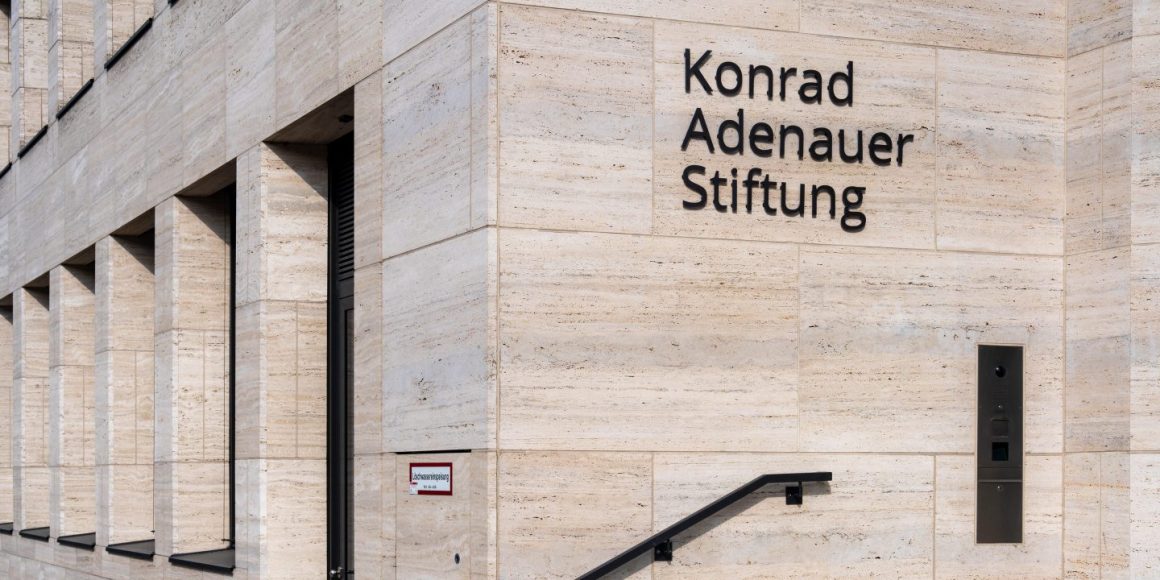
The German Konrad Adenauer Foundation has closed its office in Tbilisi after Georgian authorities rejected funding applications for its projects under the country’s new grants legislation. Against this backdrop, the German ambassador said that four German political foundations had been forced to temporarily suspend their activities in Georgia. The development has become a new factor in relations between Tbilisi and Berlin and reflects growing disagreements over the operating environment for foreign organizations in Georgia.
The Konrad Adenauer Foundation (KAS) officially closed its foreign office in Tbilisi on September 30, 2026. In a statement, the organization stressed that the decision was not voluntary and was a direct consequence of the political and legal conditions established by the Georgian government.
According to the foundation, on July 28, the Georgian government administration rejected KAS applications for funding its project activities submitted under the country’s new Law on Grants. The foundation said subsequent efforts, including with the involvement of the German government, to find a way to continue operating under the new conditions were unsuccessful.
KAS said that maintaining a presence in Georgia would only make sense if it were able to carry out its core mandate. According to the foundation, approval of its projects would have been possible only if they were stripped of their political character and no longer reflected the organization’s mission.
The foundation has operated in Georgia since 2003. For more than two decades, KAS has worked on issues including democracy, the rule of law, parliamentary development and European integration, while cooperating with political representatives, academics and civil society organizations.
At the same time, KAS is not completely severing its institutional ties with Georgia. The foundation said it would retain its legal registration in the country in order to preserve the possibility of returning to full-scale operations if political conditions change.
The situation involving KAS is part of a broader process. German Ambassador to Georgia Barbara Voss said on October 2 that four German political foundations had been forced to temporarily suspend their activities in the country as a result of decisions by the Georgian government.
They include the Konrad Adenauer Foundation, affiliated with Germany’s Christian Democratic Union (CDU); the Friedrich Naumann Foundation, affiliated with the Free Democratic Party (FDP); the Heinrich Böll Foundation, associated with Germany’s Greens; and the Friedrich Ebert Foundation, affiliated with the Social Democratic Party (SPD).
At least two foundations — the Konrad Adenauer Foundation and the Friedrich Naumann Foundation — have so far officially announced the closure of their offices. The Naumann Foundation has also said that the requirements of the new grants legislation prevent it from continuing its programs in the format it considers necessary.
Voss said German political foundations had supported Georgia and its European integration for decades. According to the ambassador, the developments would also affect relations between Georgia and the European Union.
A key factor in the dispute is the new regulatory framework governing foreign funding. Under the updated legislation, German foundations were required to obtain approval from Georgian authorities to finance their projects and continue cooperation with local partners.
The Georgian authorities view increased state oversight of foreign funding as a mechanism for improving transparency and monitoring organizations receiving funds from abroad. German foundations, meanwhile, argue that the new requirements restrict their ability to implement their political and civic programs.

The dispute therefore extends beyond individual grant applications. At its center is the question of the extent to which foreign political foundations can independently implement programs in Georgia as state control over foreign funding increases.
The closure of the KAS office is particularly significant given the foundation’s long-standing presence in the country. For more than two decades, it served as one of the channels of political and institutional engagement between Germany and Georgian society.
The closure of the office and the temporary suspension of activities by other German foundations now significantly reduce the opportunities for such engagement at the level of civil society and political institutions.
At the same time, the developments do not amount to a rupture in diplomatic relations between Germany and Georgia. Berlin continues to maintain its diplomatic presence in Tbilisi, while the German ambassador has stressed that preserving German-Georgian relations remains a priority of her work.
The closure of the Konrad Adenauer Foundation’s office is another manifestation of broader disagreements between the Georgian authorities and parts of the European political community over the country’s domestic political environment, foreign funding and the role of international organizations.
The fact that several political foundations representing major political forces in Germany are affected is particularly significant. The developments therefore concern not just a single organization, but an entire infrastructure of German-Georgian political and civil-society cooperation.
Overall, the closure of the Konrad Adenauer Foundation’s office is not merely an administrative decision, but also an indicator of changing conditions for European institutional engagement in Georgia. The foundation’s decision to retain its legal registration leaves open the possibility of a return if circumstances change. At the current stage, however, Tbilisi and Berlin are facing a noticeable reduction in channels of interaction between German political institutions and Georgian society.


 Latest news
Latest news
Latest newsMoldova Ready to Accept as Many Ukrainians as Necessary if Situation Worsens This Winter
09.Oct.2026
Turkmenistan Turns Avaza into a Regional Diplomatic Hub as Caspian, Central Asian and CIS Agendas Converge
08.Oct.2026
Romania Scrambles Spanish F-18s After Aerial Targets Detected Near Ukrainian Border
07.Oct.2026
Berlin Deepens Defence Partnership with Kyiv: Germany to Provide Ukraine with €1 Billion in Military Aid
07.Oct.2026
European Parliament Against Georgian Dream: EU Prepares New Response to Tbilisi
06.Oct.2026
Bulgarian Foreign Minister to Discuss European Security and International Law in the Netherlands
05.Oct.2026
Rheinmetall in Bulgaria: Sofia Emerges as a New NATO Defence-Industrial Hub in the Balkans
05.Oct.2026
The Cost of a Long War: Moscow Expands Spending Plans Through 2029
05.Oct.2026
Trump Steps Up Pressure on Iran: Washington Puts Tehran Before a Choice Between a Deal and Further Escalation
04.Oct.2026
Russia Warns Diplomats Amid New Wave of Strikes on Ukraine
04.Oct.2026
Turkiye Expands Defense Capabilities: Ankara Aligns European Cooperation with the Development of Its Domestic Defense Industry
04.Oct.2026
Azerbaijan Expands Defense Industry as Growing Production Increases Military Burden on the Economy
03.Oct.2026
Germany Scales Back Political Presence in Georgia as Konrad Adenauer Foundation Closes Tbilisi Office
03.Oct.2026
Russia Prepares to Ease Fuel Restrictions as Moscow Seeks Balance Between Gasoline Shortages and Diesel Exports
03.Oct.2026
Bulgaria and NIS2: A New Stage in Integration into the European Cybersecurity System
02.Oct.2026