
 09 Oct 2026









Turkmenistan Turns Avaza into a Regional Diplomatic Hub as Caspian, Central Asian and CIS Agendas Converge
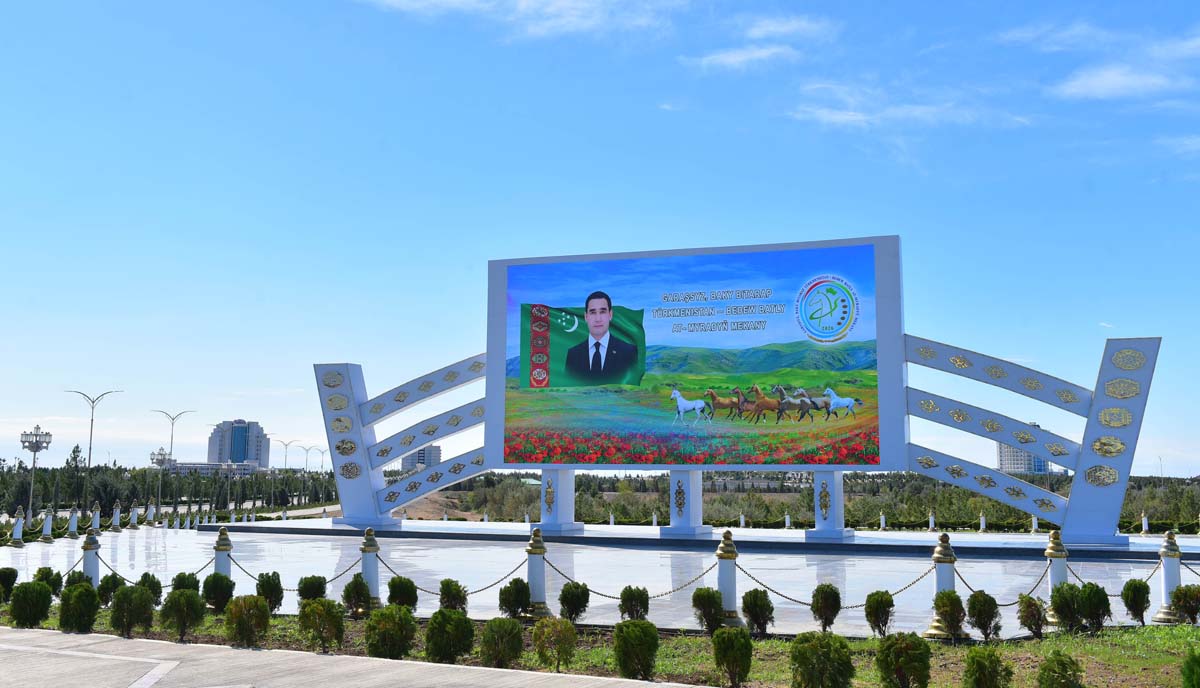
Turkmenistan
is hosting a series of high-level international events from October 7 to 9. Leaders
and representatives of the Central Asian states, Azerbaijan, CIS countries and
Iran have gathered on the Caspian Sea coast.
The
Avaza National Tourist Zone on Turkmenistan’s Caspian coast has become one of
the region’s main diplomatic venues these days. From October 7 to 9, Avaza is
hosting a meeting of the Council of Heads of State of the Commonwealth of
Independent States (CIS), the Consultative Meeting of the Heads of State of
Central Asia and Azerbaijan, the Caspian Environmental Summit, as well as a
number of thematic conferences and international forums.
A
distinctive feature of the current diplomatic program is that Turkmenistan is
simultaneously working within several regional formats. On October 8, Avaza is
hosting the Consultative Meeting of the Heads of State of Central Asia and
Azerbaijan. On October 9, the Council of Heads of State of the CIS and the
Caspian Environmental Summit are scheduled to take place, with the
participation of the five Caspian littoral states — Turkmenistan, Kazakhstan,
Azerbaijan, Russia and Iran.
It
should be noted that Turkmenistan holds the CIS chairmanship in 2026 and seeks
to use its chairmanship to strengthen its diplomatic standing while maintaining
its traditional policy of permanent neutrality. Official Ashgabat presents
Avaza as a platform for dialogue, confidence-building and the search for joint
solutions to political, economic, humanitarian and environmental challenges.

One
of the central areas of focus is the Central Asia–Caspian–Azerbaijan
connection. The agenda prepared by Turkmenistan includes security and
stability, political and diplomatic cooperation, trade, energy and the
development of sustainable transport corridors. Separate sections are devoted
to climate issues, the water resources of the Amu Darya and Syr Darya rivers,
the restoration of the Aral Sea and humanitarian cooperation.
In
this context, Turkmenistan’s transport geography is becoming particularly
important. The country is located on the eastern shore of the Caspian Sea and
has the potential to become an important component of routes linking Central
Asia with the Caucasus, Türkiye and European markets. The development of the
port infrastructure in Turkmenbashi, as well as cooperation with Azerbaijan
across the Caspian Sea, gives Ashgabat an opportunity to strengthen its role in
regional logistics.
At
the same time, the environmental problems of the Caspian Sea are moving to the
forefront. For all five littoral states, declining water levels, changes in the
coastline, the impact on ports and shipping, and the condition of ecosystems
and fish resources are becoming increasingly important. The shallowing of the
Caspian Sea is expected to be one of the key issues addressed at the upcoming
environmental summit.
The
Caspian Sea is a crucial component of Turkmenistan’s transport infrastructure,
while the Turkmenbashi port is connected to international trade and transit
routes. Consequently, changes in the hydrological conditions of the Caspian Sea
could affect not only the environment but also the long-term efficiency of
transport projects.
At
the same time, Turkmenistan is paying considerable attention to water resources
in Central Asia. On October 7, the 95th meeting of the Interstate Commission
for Water Coordination of Central Asia was held in Turkmenbashi, along with a
high-level meeting on the rational use of the water resources of the Amu Darya
and Syr Darya rivers.
Water
is becoming an increasingly strategic issue for the region. Population growth,
the expansion of agriculture, climate change and declining water availability
are increasing the need for coordination among the Central Asian states. As a
downstream country of the Amu Darya, Turkmenistan has a direct interest in
mechanisms governing the distribution and management of regional water
resources.
Another
important element of Turkmenistan’s current diplomatic activity is its
relationship with Russia. On October 7, President of Turkmenistan Serdar
Berdimuhamedov held a telephone conversation with Russian President Vladimir
Putin. The two sides reaffirmed the importance of bilateral cooperation and
discussed the upcoming meeting in Avaza. The Turkmen side emphasized that the
development of strategic cooperation with Russia remains one of the priorities
of Ashgabat’s foreign policy.
At
the same time, the presence of Russian representatives in Avaza does not
indicate that Turkmenistan is abandoning its own multi-vector diplomacy. On the
contrary, the current configuration demonstrates Ashgabat’s intention to maintain
relations with Moscow while simultaneously developing ties with Kazakhstan,
Uzbekistan and other Central Asian states, strengthening cooperation with
Azerbaijan and preserving an important channel of interaction with Iran.
Iran’s
participation in the Caspian format is particularly significant. According to
the Russian side, Iranian President Masoud Pezeshkian will participate both in
the expanded meeting of the Council of Heads of State of the CIS and in the
Caspian Environmental Summit.
Thus,
for several days Avaza has become a crossroads of several geopolitical spaces
at once: Central Asia, the Caspian region, the South Caucasus and the
post-Soviet space. This provides Turkmenistan with an opportunity to
demonstrate that its policy of permanent neutrality does not amount to
diplomatic isolation.
On
the contrary, Ashgabat seeks to position itself as a platform where states with
different political and foreign-policy orientations can interact
simultaneously. In this sense, the current events are significant not only for
Turkmenistan itself but also for the emerging regional architecture around the
Caspian Sea.
Turkmenistan is seeking to use its
geographical position to strengthen its diplomatic and transit significance.
Ashgabat’s Caspian policy increasingly intersects with the interests of
Kazakhstan and Azerbaijan, while environmental issues are becoming increasingly
linked to port infrastructure, shipping and the future of the Trans-Caspian
Transport Corridor. The simultaneous holding of three major political formats
in Avaza demonstrates that the Caspian Sea is gradually moving from the
periphery toward the center of the emerging regional architecture of Eurasia.


 Latest news
Latest news
Latest newsMoldova Ready to Accept as Many Ukrainians as Necessary if Situation Worsens This Winter
09.Oct.2026
Turkmenistan Turns Avaza into a Regional Diplomatic Hub as Caspian, Central Asian and CIS Agendas Converge
08.Oct.2026
Romania Scrambles Spanish F-18s After Aerial Targets Detected Near Ukrainian Border
07.Oct.2026
Berlin Deepens Defence Partnership with Kyiv: Germany to Provide Ukraine with €1 Billion in Military Aid
07.Oct.2026
European Parliament Against Georgian Dream: EU Prepares New Response to Tbilisi
06.Oct.2026
Bulgarian Foreign Minister to Discuss European Security and International Law in the Netherlands
05.Oct.2026
Rheinmetall in Bulgaria: Sofia Emerges as a New NATO Defence-Industrial Hub in the Balkans
05.Oct.2026
The Cost of a Long War: Moscow Expands Spending Plans Through 2029
05.Oct.2026
Trump Steps Up Pressure on Iran: Washington Puts Tehran Before a Choice Between a Deal and Further Escalation
04.Oct.2026
Russia Warns Diplomats Amid New Wave of Strikes on Ukraine
04.Oct.2026
Turkiye Expands Defense Capabilities: Ankara Aligns European Cooperation with the Development of Its Domestic Defense Industry
04.Oct.2026
Azerbaijan Expands Defense Industry as Growing Production Increases Military Burden on the Economy
03.Oct.2026
Germany Scales Back Political Presence in Georgia as Konrad Adenauer Foundation Closes Tbilisi Office
03.Oct.2026
Russia Prepares to Ease Fuel Restrictions as Moscow Seeks Balance Between Gasoline Shortages and Diesel Exports
03.Oct.2026
Bulgaria and NIS2: A New Stage in Integration into the European Cybersecurity System
02.Oct.2026