
 17 Oct 2026









Putin Seeks to Strengthen Russia’s Influence in the Post-Soviet Space Through the CIS
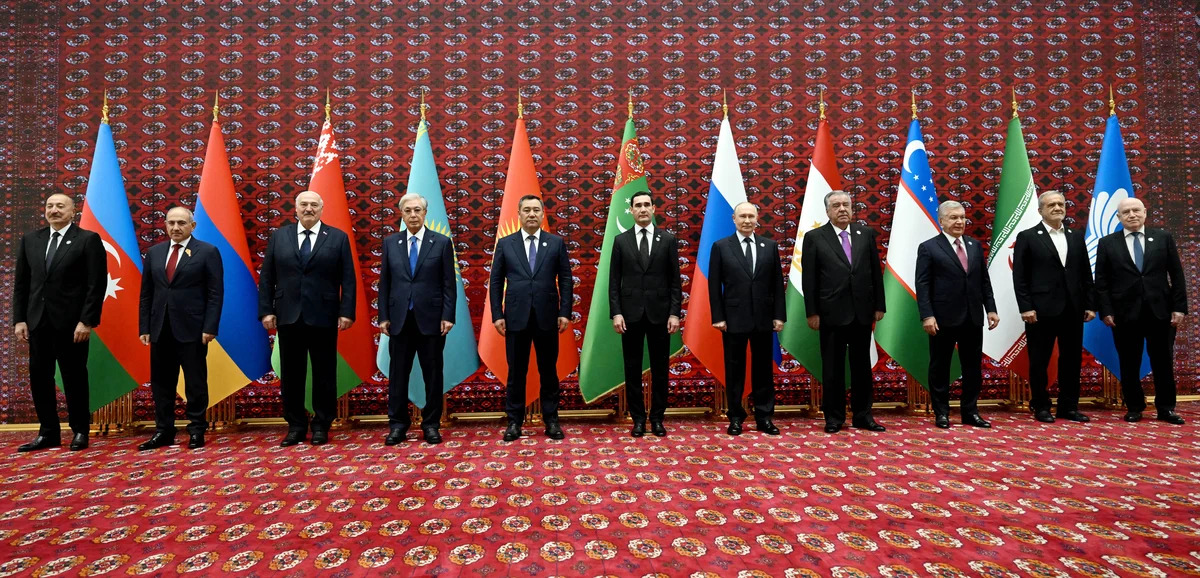
Russian President Vladimir
Putin has called for further development of economic, humanitarian and cultural
ties among the member states of the Commonwealth of Independent States (CIS).
The statement was made on October 9 at the CIS summit in Turkmenistan, amid
Moscow’s ongoing efforts to maintain its position in a region where countries
are increasingly diversifying their foreign policy and economic relations.
According to Putin, Russia’s trade turnover with CIS countries exceeded $110 billion in 2025, with approximately 90% of mutual settlements conducted in national currencies. The Russian president presented these figures as evidence of the resilience of economic cooperation and the ability of CIS member states to expand their engagement despite external restrictions.
The shift towards settlements
in national currencies is particularly important for Moscow following the
imposition of Western sanctions in response to Russia’s full-scale invasion of
Ukraine in February 2022. Reducing reliance on the US dollar and the euro
enables Russian companies to maintain trade operations amid restricted access
to international financial infrastructure. However, the use of national
currencies does not, in itself, eliminate risks associated with sanctions,
currency instability and the dependence of certain markets on the Russian
economy.
For the Kremlin, the CIS
remains one of the instruments for preserving economic and political ties with
former Soviet republics. However, Moscow’s interest in this format is
determined not only by trade volumes but also by its ability to keep the region
within Russia’s sphere of influence amid a changing international balance of
power.
At the same time, the
interests of CIS member states are far from uniform. Countries across the
region are seeking to maintain economic relations with Russia while expanding
cooperation with the European Union, Turkiye, China and other external
partners. Diversifying transport routes, energy supplies and trade relations is
becoming a way to reduce dependence on a single direction and expand the scope
for independent foreign policy.
This process is particularly
significant amid the development of the Middle Corridor, which connects China
and Central Asia with Europe via the Caspian Sea, the South Caucasus and
Turkiye. The expansion of alternative routes creates additional trade and
transit opportunities for countries in the region while intensifying
competition between different integration and transport projects.
Putin’s call to strengthen
ties within the CIS reflects Moscow’s determination to preserve its economic
presence and political influence across the post-Soviet space.


 Latest news
Latest news
Latest newsBulgaria Asks NATO to Strengthen Its Defences Amid Black Sea Threats: Sofia Fears Growing Risks to Maritime Shipping
16.Oct.2026
Black Sea Shipping Risks Threaten Bulgaria’s 5 Million Tonnes of Wheat Exports
15.Oct.2026
Georgia’s Foreign Funding and Political Ban Laws Draw Criticism from the Venice Commission
15.Oct.2026
Kazakhstan Promotes a Caspian Green Energy Corridor: Astana Seeks New Routes to the European Market
14.Oct.2026
Inflation in Romania Accelerates to 6.61%: Rising Prices Increase Pressure on Households and the Economy
13.Oct.2026
Can Europe Protect the International Criminal Court from Trump’s Sanctions?
13.Oct.2026
Georgia’s Constitutional Court Continues Case on Banning Opposition Parties: Political Pluralism at Stake
12.Oct.2026
Azerbaijan and Iran Step Up Security Contacts Amid Hijab Protests
12.Oct.2026
Personnel Shortages Complicate Ukrainian Forces’ Rotation: Ukraine Faces Long-Term Challenges on the Front Line
11.Oct.2026
Trump Eases Sanctions on Russian Fuel After Talks with Putin: Kyiv Fears Boost to Moscow’s War Revenues
10.Oct.2026
Putin Seeks to Strengthen Russia’s Influence in the Post-Soviet Space Through the CIS
10.Oct.2026
Russia and the South Caucasus: External Pressure, Political Competition and a Crisis of Trust
10.Oct.2026
Peaceful Settlement Between Armenia and Azerbaijan: Moving from Declarations to Implementation
10.Oct.2026
Moldova Ready to Accept as Many Ukrainians as Necessary if Situation Worsens This Winter
09.Oct.2026
Turkmenistan Turns Avaza into a Regional Diplomatic Hub as Caspian, Central Asian and CIS Agendas Converge
08.Oct.2026