
 17 Oct 2026









Georgia’s Constitutional Court Continues Case on Banning Opposition Parties: Political Pluralism at Stake
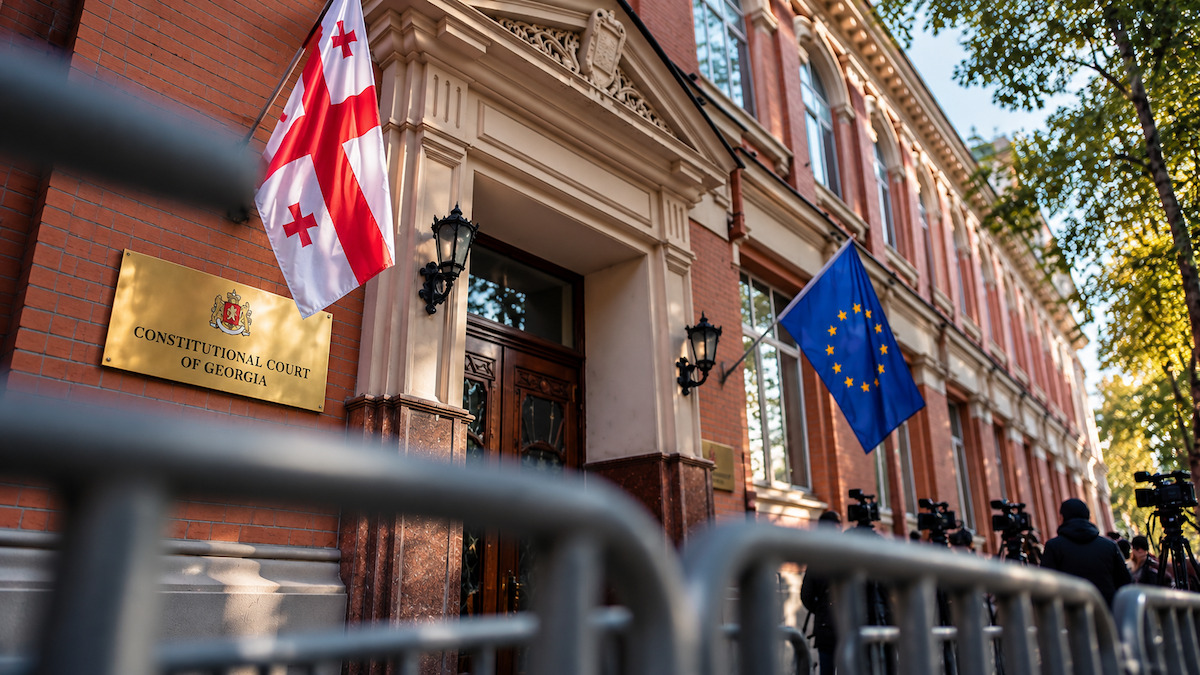
Georgia’s Constitutional Court has rejected a motion by Judge Manana Kobakhidze to recuse herself from a case concerning the possible ban of several opposition political forces, initiated by the ruling Georgian Dream party. The proceedings are particularly significant for the future of political competition in the country, as their outcome could affect opposition activities and Tbilisi’s relations with European institutions.
On October 12, Georgia’s Constitutional Court rejected Judge Manana Kobakhidze’s motion for recusal from a case concerning the possible banning of several opposition parties. The lawsuit was initiated by the ruling Georgian Dream party in November 2025 and subsequently expanded.
The political forces concerned include the United National Movement, Lelo – Strong Georgia, and Akhali. The proceedings are taking place amid ongoing disagreements between the Georgian government and opposition representatives over the country’s political system and the future direction of its relations with the West.
The court’s decision could have implications for Georgia’s political system as a whole. If the demands to ban the parties are upheld, the consequences could extend beyond the activities of the specific political organizations, affecting their ability to participate in political life, form coalitions, and represent the interests of voters.
However, the rejection of the judge’s recusal motion is a procedural decision and does not, in itself, indicate that the Constitutional Court has determined the outcome of the main case. The legal implications of a potential ban can be assessed conclusively only after a ruling on the merits has been issued and published.
The proceedings could become an additional source of tension between Tbilisi and its European partners. At the same time, the legal assessment of demands to ban political parties must be based on the specific grounds and evidence presented to the court, as well as applicable constitutional and international standards. The fact that the ruling party has filed a lawsuit does not, in itself, establish either the merits of its claims or the outcome of the proceedings.
The case concerning a possible ban on opposition parties is emerging as a significant test for Georgia’s political system. If the demands are upheld, the key questions will concern the scope of the restrictions, the available avenues for appeal, and the consequences for opposition representation. If the court rejects the demands, this would also be an important indication of the constitutional limits on state intervention in the activities of political organizations.
More broadly, the proceedings raise the question of how Georgia will balance the protection of the constitutional order with the preservation of a competitive political environment. The legal grounds for the ruling and its practical consequences, rather than the mere fact that the case is being heard, will be decisive in assessing its impact on the country’s democratic institutions and relations with European partners.


 Latest news
Latest news
Latest newsBulgaria Asks NATO to Strengthen Its Defences Amid Black Sea Threats: Sofia Fears Growing Risks to Maritime Shipping
16.Oct.2026
Black Sea Shipping Risks Threaten Bulgaria’s 5 Million Tonnes of Wheat Exports
15.Oct.2026
Georgia’s Foreign Funding and Political Ban Laws Draw Criticism from the Venice Commission
15.Oct.2026
Kazakhstan Promotes a Caspian Green Energy Corridor: Astana Seeks New Routes to the European Market
14.Oct.2026
Inflation in Romania Accelerates to 6.61%: Rising Prices Increase Pressure on Households and the Economy
13.Oct.2026
Can Europe Protect the International Criminal Court from Trump’s Sanctions?
13.Oct.2026
Georgia’s Constitutional Court Continues Case on Banning Opposition Parties: Political Pluralism at Stake
12.Oct.2026
Azerbaijan and Iran Step Up Security Contacts Amid Hijab Protests
12.Oct.2026
Personnel Shortages Complicate Ukrainian Forces’ Rotation: Ukraine Faces Long-Term Challenges on the Front Line
11.Oct.2026
Trump Eases Sanctions on Russian Fuel After Talks with Putin: Kyiv Fears Boost to Moscow’s War Revenues
10.Oct.2026
Putin Seeks to Strengthen Russia’s Influence in the Post-Soviet Space Through the CIS
10.Oct.2026
Russia and the South Caucasus: External Pressure, Political Competition and a Crisis of Trust
10.Oct.2026
Peaceful Settlement Between Armenia and Azerbaijan: Moving from Declarations to Implementation
10.Oct.2026
Moldova Ready to Accept as Many Ukrainians as Necessary if Situation Worsens This Winter
09.Oct.2026
Turkmenistan Turns Avaza into a Regional Diplomatic Hub as Caspian, Central Asian and CIS Agendas Converge
08.Oct.2026