
 17 Oct 2026









EU leads calls for Armenia and Azerbaijan to de-escalate border conflict
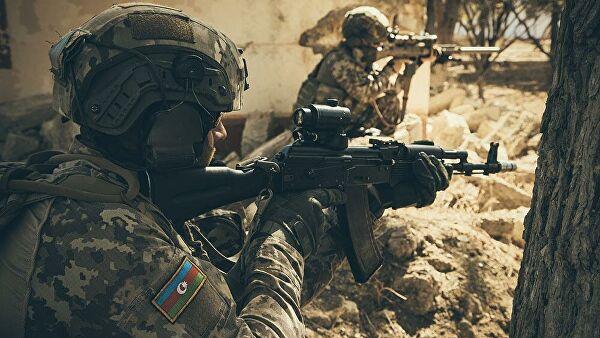
The European Union has called on Armenia and Azerbaijan to immediately de-escalate their deadly border spat following two days of armed clashes on their shared border, Emerging Europe reported.
Azerbaijan claims that four of its soldiers were killed and three others injured on July 12 when Armenian forces violated a ceasefire and targeted positions of Azerbaijan’s army in the northwestern Tovuz district. Armenia has blamed Azerbaijan for the conflict, citing “provocations”.
Azerbaijan says that its army launched counterattacks on July 13, targeting Armenian positions. According to a statement from the Azerbaijan defense ministry a military radar station, vehicle depot, tanks and armoured vehicles were hit, and that more than 20 Armenian army personnel were killed. Armenia however has said that just three of its soldiers and two police officers had been wounded.
“The EU urges both sides to stop the armed confrontation, refrain from action and rhetoric that provoke tension, and undertake immediate measures to prevent further escalation,” the European Union’s External Action unit said in a statement. “In this context, both sides should make use of their mechanism for direct communication, the established format led by the OSCE Minsk Group Co-Chairs, as well as the Personal Representative of the OSCE Chairperson-in-Office. This serious ceasefire violation highlights the urgency of resuming the OSCE monitoring on the ground, as soon as conditions allow.”
The EU called on both sides to strictly respect the ceasefire, devote energy and resources to fighting the coronavirus pandemic, meaningfully re-engage in substantive negotiations under the auspices of the OSCE Minsk Group Co-Chairs and prepare their populations for peace.
While the two countries have been locked in a conflict over Azerbaijan’s breakaway region of Nagorno-Karabakh for three decades, with skirmishes common, the recent clashes took place far from Nagorno-Karabakh and directly between the two nations, something occurs rarely.
Armenian Prime Minister Nikol Pashinyan told a cabinet meeting on July 13 that Azerbaijani “provocations will not be unanswered”.
Armenia’s Defence Minister David Tonoyan added that Yerevan “will be reacting to Azerbaijani actions, including by taking advantageous positions” in their territory.
He said Armenian forces “do not shell civilian targets in Azerbaijan and only target the engineering infrastructure and technical facilities of the Azerbaijani armed forces”.
Azerbaijani President Ilham Aliyev’s office meanwhile has blamed Yerevan for the incident, saying that Armenia’s “military adventure” was aimed at drawing the Collective Security Treaty Organisation (CSTO), a Russia-led military bloc, into the fighting.


 Latest news
Latest news
Latest newsBulgaria Asks NATO to Strengthen Its Defences Amid Black Sea Threats: Sofia Fears Growing Risks to Maritime Shipping
16.Oct.2026
Black Sea Shipping Risks Threaten Bulgaria’s 5 Million Tonnes of Wheat Exports
15.Oct.2026
Georgia’s Foreign Funding and Political Ban Laws Draw Criticism from the Venice Commission
15.Oct.2026
Kazakhstan Promotes a Caspian Green Energy Corridor: Astana Seeks New Routes to the European Market
14.Oct.2026
Inflation in Romania Accelerates to 6.61%: Rising Prices Increase Pressure on Households and the Economy
13.Oct.2026
Can Europe Protect the International Criminal Court from Trump’s Sanctions?
13.Oct.2026
Georgia’s Constitutional Court Continues Case on Banning Opposition Parties: Political Pluralism at Stake
12.Oct.2026
Azerbaijan and Iran Step Up Security Contacts Amid Hijab Protests
12.Oct.2026
Personnel Shortages Complicate Ukrainian Forces’ Rotation: Ukraine Faces Long-Term Challenges on the Front Line
11.Oct.2026
Trump Eases Sanctions on Russian Fuel After Talks with Putin: Kyiv Fears Boost to Moscow’s War Revenues
10.Oct.2026
Putin Seeks to Strengthen Russia’s Influence in the Post-Soviet Space Through the CIS
10.Oct.2026
Russia and the South Caucasus: External Pressure, Political Competition and a Crisis of Trust
10.Oct.2026
Peaceful Settlement Between Armenia and Azerbaijan: Moving from Declarations to Implementation
10.Oct.2026
Moldova Ready to Accept as Many Ukrainians as Necessary if Situation Worsens This Winter
09.Oct.2026
Turkmenistan Turns Avaza into a Regional Diplomatic Hub as Caspian, Central Asian and CIS Agendas Converge
08.Oct.2026