
 17 Oct 2026









Kazakhstan and South Korea Elevate Ties to Comprehensive Strategic Partnership
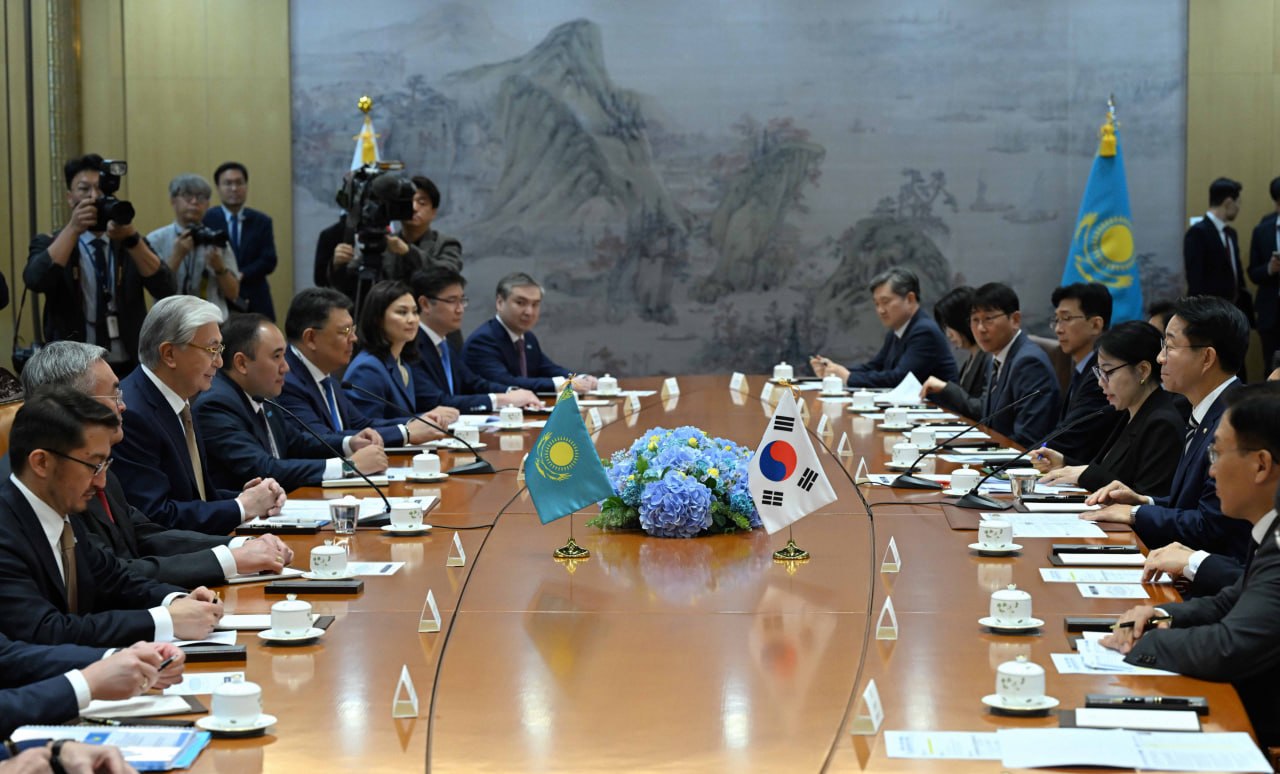
Kazakhstan and South Korea
agree to expand cooperation in energy, nuclear power, critical minerals,
advanced technologies and artificial intelligence
Kazakhstan and South Korea have
agreed to elevate their bilateral ties to a comprehensive strategic
partnership, expanding cooperation beyond traditional energy and trade
relations. The agreement was reached during talks between Kazakh President
Kassym-Jomart Tokayev and South Korean President Lee Jae Myung in Seoul on
September 15.
The talks took place ahead of
the first Central Asia–Republic of Korea Summit, which brought together the
leaders of Kazakhstan, Uzbekistan, Turkmenistan, Kyrgyzstan and Tajikistan.
Against this backdrop, Kazakhstan is emerging as one of Seoul’s key partners in
its broader strategy to strengthen economic ties with Central Asia.
Following the talks, the two
sides agreed to intensify cooperation in trade, energy, industry, transport,
digital technologies, artificial intelligence, nuclear energy and critical
minerals. Kazakh Foreign Minister Mukhtar Tleuberdi had previously said that
Kazakhstan was interested in expanding cooperation beyond the automotive sector
into more technology-intensive areas, including artificial intelligence and
critical minerals.
One of the key outcomes of the
visit was the signing of a memorandum on cooperation in the peaceful use of
nuclear energy. Kazakhstan and South Korea also agreed to expand cooperation in
the oil sector and other high-technology fields. A number of agreements
covering energy, oil, science and technology were signed during the bilateral
talks.
Nuclear cooperation is
particularly significant for Kazakhstan, which has some of the world’s largest
uranium reserves and plays an important role in the global nuclear fuel market.
The two sides also paid
particular attention to critical minerals. South Korean officials view
Kazakhstan as a potentially important supplier of raw materials for
high-technology industries, including lithium and rare metals. South Korean
Prime Minister Han Seong-sook said that cooperation should extend beyond
resource extraction to include processing and the production of higher-value
goods.
The emerging approach is aimed
at developing a more comprehensive supply chain, from geological exploration
and the extraction of Kazakh resources to their processing using South Korean
technologies. This approach is consistent with Seoul’s efforts to diversify its
supplies of strategic raw materials amid the restructuring of global production
and supply chains.
The economic foundation for
further cooperation is already well established. According to CCBS, bilateral
trade between Kazakhstan and South Korea reached $3.17 billion in 2025.
Hundreds of South Korean companies, including Hyundai Motor, Kia, Samsung
Electronics and Doosan, operate in Kazakhstan.
President Tokayev proposed
doubling the volume of bilateral trade. Kazakhstan is also seeking to attract
South Korean investment and technology to modernize its industrial sector,
develop digital infrastructure and establish new manufacturing facilities.
South Korea, for its part,
views Central Asia as a promising source of energy resources and critical
minerals. At the first Central Asia–Republic of Korea Summit, Seoul proposed
expanding cooperation beyond raw material extraction to the development of
complete processing chains. Following three days of talks between South Korea
and the five Central Asian states, more than 70 agreements and memoranda were
reached or signed covering energy, mineral extraction, infrastructure,
technology and investment.
Technological cooperation is
becoming another important component of the new partnership. Seoul is proposing
to apply its expertise in industrial automation, digitalization, artificial
intelligence and resource processing to the modernization of Kazakhstan’s
industrial sector. South Korea has also expressed its readiness to support the
development of smart infrastructure and the introduction of digital
technologies at enterprises across Central Asia.
The expansion of cooperation
comes amid South Korea’s broader and growing focus on Central Asia. Seoul is
seeking to reduce its dependence on a limited number of suppliers of critical
resources while opening new markets for its technologies, capital and
industrial products. Against this background, the new comprehensive strategic
partnership with Kazakhstan could become one of the key bilateral elements of
South Korea’s emerging economic engagement with Central Asia.


 Latest news
Latest news
Latest newsBulgaria Asks NATO to Strengthen Its Defences Amid Black Sea Threats: Sofia Fears Growing Risks to Maritime Shipping
16.Oct.2026
Black Sea Shipping Risks Threaten Bulgaria’s 5 Million Tonnes of Wheat Exports
15.Oct.2026
Georgia’s Foreign Funding and Political Ban Laws Draw Criticism from the Venice Commission
15.Oct.2026
Kazakhstan Promotes a Caspian Green Energy Corridor: Astana Seeks New Routes to the European Market
14.Oct.2026
Inflation in Romania Accelerates to 6.61%: Rising Prices Increase Pressure on Households and the Economy
13.Oct.2026
Can Europe Protect the International Criminal Court from Trump’s Sanctions?
13.Oct.2026
Georgia’s Constitutional Court Continues Case on Banning Opposition Parties: Political Pluralism at Stake
12.Oct.2026
Azerbaijan and Iran Step Up Security Contacts Amid Hijab Protests
12.Oct.2026
Personnel Shortages Complicate Ukrainian Forces’ Rotation: Ukraine Faces Long-Term Challenges on the Front Line
11.Oct.2026
Trump Eases Sanctions on Russian Fuel After Talks with Putin: Kyiv Fears Boost to Moscow’s War Revenues
10.Oct.2026
Putin Seeks to Strengthen Russia’s Influence in the Post-Soviet Space Through the CIS
10.Oct.2026
Russia and the South Caucasus: External Pressure, Political Competition and a Crisis of Trust
10.Oct.2026
Peaceful Settlement Between Armenia and Azerbaijan: Moving from Declarations to Implementation
10.Oct.2026
Moldova Ready to Accept as Many Ukrainians as Necessary if Situation Worsens This Winter
09.Oct.2026
Turkmenistan Turns Avaza into a Regional Diplomatic Hub as Caspian, Central Asian and CIS Agendas Converge
08.Oct.2026