
 17 Oct 2026









Pashinyan Meets Aliyev in Bishkek: Armenia and Azerbaijan Prepare for a New Stage in the Peace Process
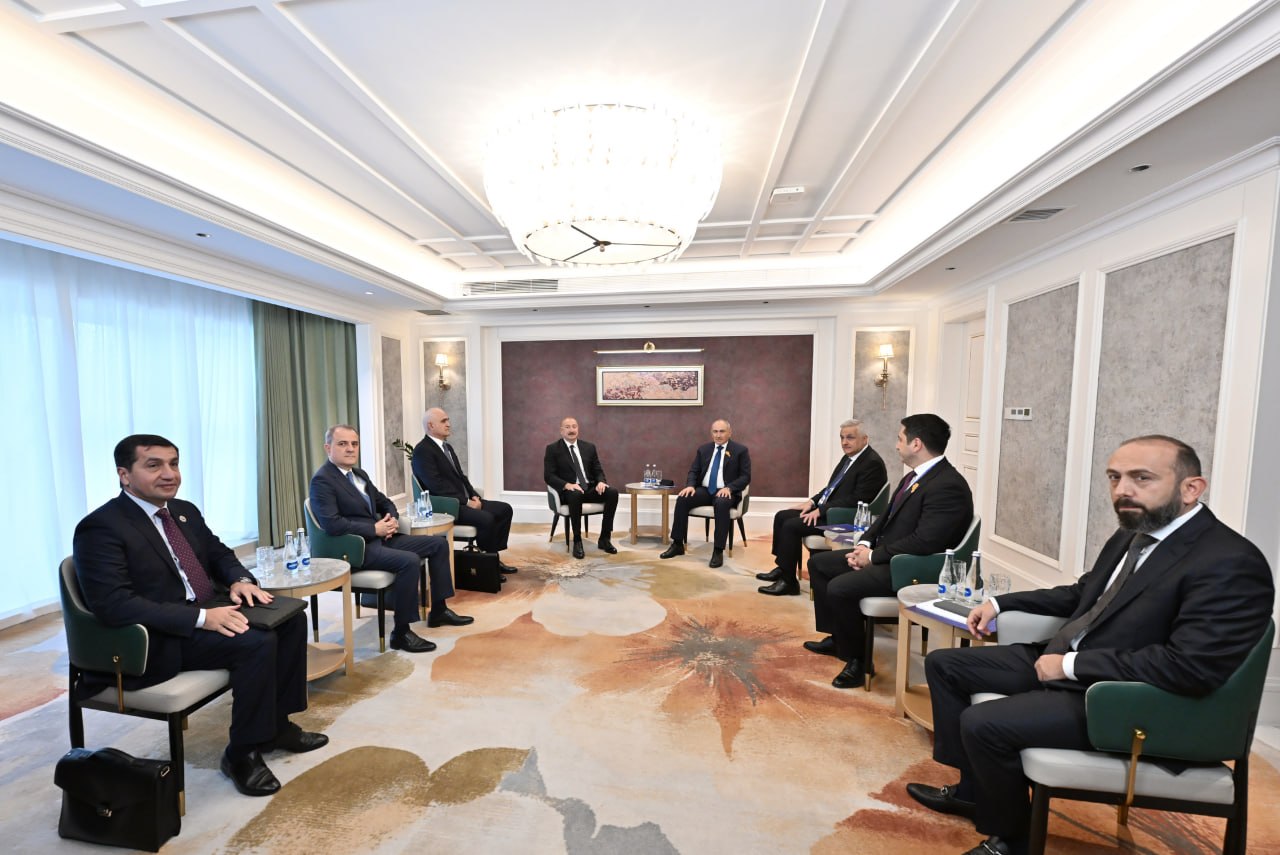
Armenian Prime Minister Nikol Pashinyan held talks with Azerbaijani President Ilham Aliyev in Bishkek. The meeting focused on further progress in the peace process, the delimitation of the Armenian-Azerbaijani border, the development of trade and energy cooperation, and the implementation of the TRIPP transport project. At the same time, according to some information emerging from diplomatic circles, the two sides may have discussed additional steps behind closed doors that could influence the future dynamics of Armenian-Azerbaijani normalization.
Armenian Prime Minister Nikol Pashinyan and Azerbaijani President Ilham Aliyev met on August 31 in Bishkek on the sidelines of the Shanghai Cooperation Organisation summit. The talks became one of the most notable direct contacts between the leaders of Armenia and Azerbaijan amid the ongoing process of normalization.
The discussions focused on agreements reached as part of the Washington process, as well as further practical steps toward their implementation. The sides highlighted the significance of the Washington summit held on August 8, 2025, and the joint declaration signed in the presence of U.S. President Donald Trump. They also noted the agreed text of the agreement on the establishment of peace and interstate relations between Armenia and Azerbaijan.
However, the Bishkek meeting demonstrated that attention is gradually shifting from the text of the peace agreement itself toward the question of how the existing understandings can be put into practice.
Armenia and Azerbaijan Shift Toward an Economic Agenda
One of the most important areas of the talks was the development of trade and economic relations between Armenia and Azerbaijan.
Pashinyan and Aliyev highlighted the first practical results of normalization. In particular, they discussed the export of Azerbaijani petroleum products to Armenia, as well as the transit of grain and other goods to Armenia through Azerbaijani territory.
It should be noted that for many years, economic relations between Armenia and Azerbaijan were virtually nonexistent because of the conflict. Trade operations and transit are now increasingly being viewed as instruments for establishing sustainable peace.
The sides also discussed expanding cooperation in energy, trade, and other areas of the economy. Thus, Armenian-Azerbaijani normalization is gradually acquiring not only a political but also an economic dimension.
TRIPP Becomes One of the Key Elements of the Talks
Particular attention was paid by Pashinyan and Aliyev to the Trump Route for International Peace and Prosperity — TRIPP.
The project is a transport initiative aimed at opening new communications across the South Caucasus.
Yerevan is interested in unblocking regional communications, expanding trade opportunities, and establishing new transport routes. Ensuring transport connectivity with Nakhichevan is of particular importance to Azerbaijan.
As a result, TRIPP is becoming the focus of a complex balance of interests involving Armenia, Azerbaijan, the United States, and other regional actors.
This is why the implementation of the project is gradually moving beyond the framework of a conventional infrastructure initiative and acquiring broader geopolitical significance.
What Did Pashinyan and Aliyev Discuss Behind Closed Doors?
According to some information from our sources in diplomatic circles, Pashinyan and Aliyev discussed not only the areas already agreed upon, but also a possible sequence of further political steps in the Armenian-Azerbaijani normalization process.
This information has not yet been officially confirmed, and it would therefore be premature to speak of any specific agreements.
However, the continuation of contacts between the two sides following the leaders’ meeting indicates that the negotiation process is not limited to protocol-level encounters.
Particular attention is being drawn to the continuation of work at the level of senior representatives from both countries. This may indicate an effort by Yerevan and Baku to translate political understandings into concrete implementation mechanisms.
Border Delimitation Remains a Sensitive Issue
Pashinyan and Aliyev also discussed the process of delimiting the state border.
The sides reaffirmed the need to continue the work of the relevant commissions.
At the same time, no new territorial agreements or specific deadlines for completing the process were publicly announced.
For Armenia, the border issue remains one of the most sensitive elements of the entire peace agenda. Any further decisions will therefore have not only foreign-policy implications but also significant domestic political consequences for Pashinyan’s government.
Why the Meeting Matters Specifically for Armenia
If the transport projects are implemented, Armenia could potentially gain additional trade routes, expand economic ties with neighboring countries, and strengthen its role in regional logistics.
At the same time, Yerevan will have to balance the economic benefits of opening communications with the need to maintain control over its own infrastructure and key areas of national security.
This is precisely where TRIPP becomes particularly important.
Any agreement with Baku remains a subject of intense political debate within Armenia. Pashinyan’s government therefore needs not only to demonstrate progress in foreign policy but also to explain to Armenian society the practical benefits of the country’s emerging regional policy.
The Bishkek talks do not, by themselves, mean that all remaining problems between Armenia and Azerbaijan have been resolved. But they demonstrate a changing nature of the dialogue. Whereas the Armenian-Azerbaijani agenda was previously dominated almost entirely by questions of war and security, trade, transit, energy, and infrastructure are now gradually moving to the forefront.
Pashinyan and Aliyev are increasingly discussing not only what the peace agreement should look like, but also what life should look like after it is implemented. Trade, transit, energy, the border, and TRIPP are gradually shaping a new agenda. And if the information emerging from diplomatic circles about additional discussions is eventually confirmed, Bishkek may prove to have been more than just another meeting between Pashinyan and Aliyev — it could have been a preparatory stage for the next, potentially much more important round of Armenian-Azerbaijani agreements.


 Latest news
Latest news
Latest newsBulgaria Asks NATO to Strengthen Its Defences Amid Black Sea Threats: Sofia Fears Growing Risks to Maritime Shipping
16.Oct.2026
Black Sea Shipping Risks Threaten Bulgaria’s 5 Million Tonnes of Wheat Exports
15.Oct.2026
Georgia’s Foreign Funding and Political Ban Laws Draw Criticism from the Venice Commission
15.Oct.2026
Kazakhstan Promotes a Caspian Green Energy Corridor: Astana Seeks New Routes to the European Market
14.Oct.2026
Inflation in Romania Accelerates to 6.61%: Rising Prices Increase Pressure on Households and the Economy
13.Oct.2026
Can Europe Protect the International Criminal Court from Trump’s Sanctions?
13.Oct.2026
Georgia’s Constitutional Court Continues Case on Banning Opposition Parties: Political Pluralism at Stake
12.Oct.2026
Azerbaijan and Iran Step Up Security Contacts Amid Hijab Protests
12.Oct.2026
Personnel Shortages Complicate Ukrainian Forces’ Rotation: Ukraine Faces Long-Term Challenges on the Front Line
11.Oct.2026
Trump Eases Sanctions on Russian Fuel After Talks with Putin: Kyiv Fears Boost to Moscow’s War Revenues
10.Oct.2026
Putin Seeks to Strengthen Russia’s Influence in the Post-Soviet Space Through the CIS
10.Oct.2026
Russia and the South Caucasus: External Pressure, Political Competition and a Crisis of Trust
10.Oct.2026
Peaceful Settlement Between Armenia and Azerbaijan: Moving from Declarations to Implementation
10.Oct.2026
Moldova Ready to Accept as Many Ukrainians as Necessary if Situation Worsens This Winter
09.Oct.2026
Turkmenistan Turns Avaza into a Regional Diplomatic Hub as Caspian, Central Asian and CIS Agendas Converge
08.Oct.2026