
 17 Oct 2026









Tigran Khzmalyan: Armenia must make a Decisive Choice in Favor of Europe
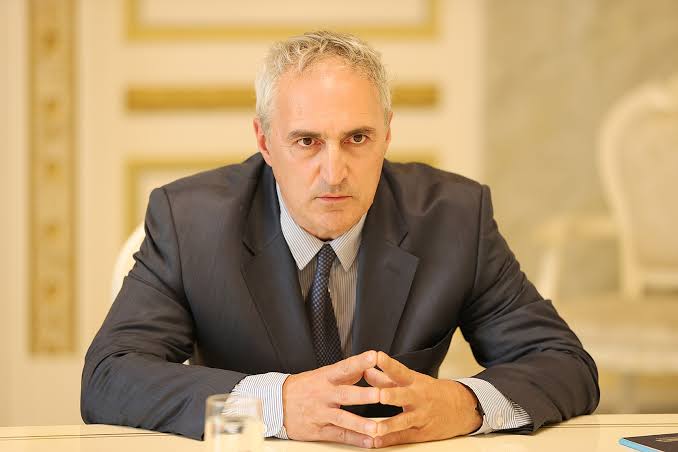
Chairman of the European Party of Armenia Tigran Khzmalian has said that the country’s future development is directly linked to its ability to carry out democratic reforms and establish a clear foreign policy course toward European integration. The politician also criticized the domestic policies of Prime Minister Nikol Pashinyan’s government and Armenia’s continued dependence on Russia.
In an interview, Khzmalian described Armenia’s current political system as “soft authoritarianism”. According to him, despite criminal prosecutions and the arrests of opposition figures, including former presidents of the country, the political system has not undergone fundamental changes.
The politician argues that real decision-making mechanisms remain heavily influenced by major economic and oligarchic groups, while democratic institutions remain insufficiently independent.
Khzmalian paid particular attention to Armenia’s relations with the European Union. He described European integration as an existential issue for the country’s future, emphasizing that it is not merely a foreign policy choice but also a matter of building stable state institutions.
At the same time, the head of the European Party of Armenia criticized the pace of Yerevan’s progress toward the EU. According to him, despite parliament’s adoption of a law launching the process of joining the European Union, there have been insufficient practical steps over the past year and a half that could significantly change the country’s position.
A significant part of Khzmalian’s remarks focused on the Russian factor. He said Armenia continues to maintain substantial economic and infrastructure dependence on Russia. In particular, he referred to the railway infrastructure and energy sector. In the politician’s view, these ties limit Yerevan’s room for an independent foreign policy and make it more difficult for the country to move fully toward closer relations with Western states.
Khzmalian believes that Armenia’s strategic shift must involve not only political declarations but also a gradual reduction in dependence on Russian infrastructure and economic mechanisms.
The politician also addressed the development of transport routes in the South Caucasus. Khzmalian criticized projects involving the creation of new transit links through Armenian territory as part of agreements with Azerbaijan and Turkey. In particular, he opposed what he considers potentially excessive concessions to Baku and Ankara and called on Yerevan to focus on alternative routes.
One of the key priorities he highlighted was the “North-South” project, which, in his assessment, could turn Armenia into an important transit link connecting Iran and India with European markets. According to Khzmalian, developing such a route would allow Armenia not only to benefit economically from transit but also to strengthen its geopolitical agency.
In the final part of his remarks, Khzmalian linked Armenia’s foreign policy course to domestic reforms. According to him, European integration requires not only a change in international partnerships but also a transformation of Armenia’s political system itself. This includes strengthening democratic institutions, ensuring the independence of state structures and upholding the rule of law.
In essence, Khzmalian’s position calls for a comprehensive strategy combining political democratization at home, reduced dependence on Russia, the development of alternative transport and economic ties, and consistent movement toward European institutions.


 Latest news
Latest news
Latest newsBulgaria Asks NATO to Strengthen Its Defences Amid Black Sea Threats: Sofia Fears Growing Risks to Maritime Shipping
16.Oct.2026
Black Sea Shipping Risks Threaten Bulgaria’s 5 Million Tonnes of Wheat Exports
15.Oct.2026
Georgia’s Foreign Funding and Political Ban Laws Draw Criticism from the Venice Commission
15.Oct.2026
Kazakhstan Promotes a Caspian Green Energy Corridor: Astana Seeks New Routes to the European Market
14.Oct.2026
Inflation in Romania Accelerates to 6.61%: Rising Prices Increase Pressure on Households and the Economy
13.Oct.2026
Can Europe Protect the International Criminal Court from Trump’s Sanctions?
13.Oct.2026
Georgia’s Constitutional Court Continues Case on Banning Opposition Parties: Political Pluralism at Stake
12.Oct.2026
Azerbaijan and Iran Step Up Security Contacts Amid Hijab Protests
12.Oct.2026
Personnel Shortages Complicate Ukrainian Forces’ Rotation: Ukraine Faces Long-Term Challenges on the Front Line
11.Oct.2026
Trump Eases Sanctions on Russian Fuel After Talks with Putin: Kyiv Fears Boost to Moscow’s War Revenues
10.Oct.2026
Putin Seeks to Strengthen Russia’s Influence in the Post-Soviet Space Through the CIS
10.Oct.2026
Russia and the South Caucasus: External Pressure, Political Competition and a Crisis of Trust
10.Oct.2026
Peaceful Settlement Between Armenia and Azerbaijan: Moving from Declarations to Implementation
10.Oct.2026
Moldova Ready to Accept as Many Ukrainians as Necessary if Situation Worsens This Winter
09.Oct.2026
Turkmenistan Turns Avaza into a Regional Diplomatic Hub as Caspian, Central Asian and CIS Agendas Converge
08.Oct.2026