
 17 Oct 2026









Putin Authorizes Temporary State Management of Critical Infrastructure Vulnerable to Drone Attacks
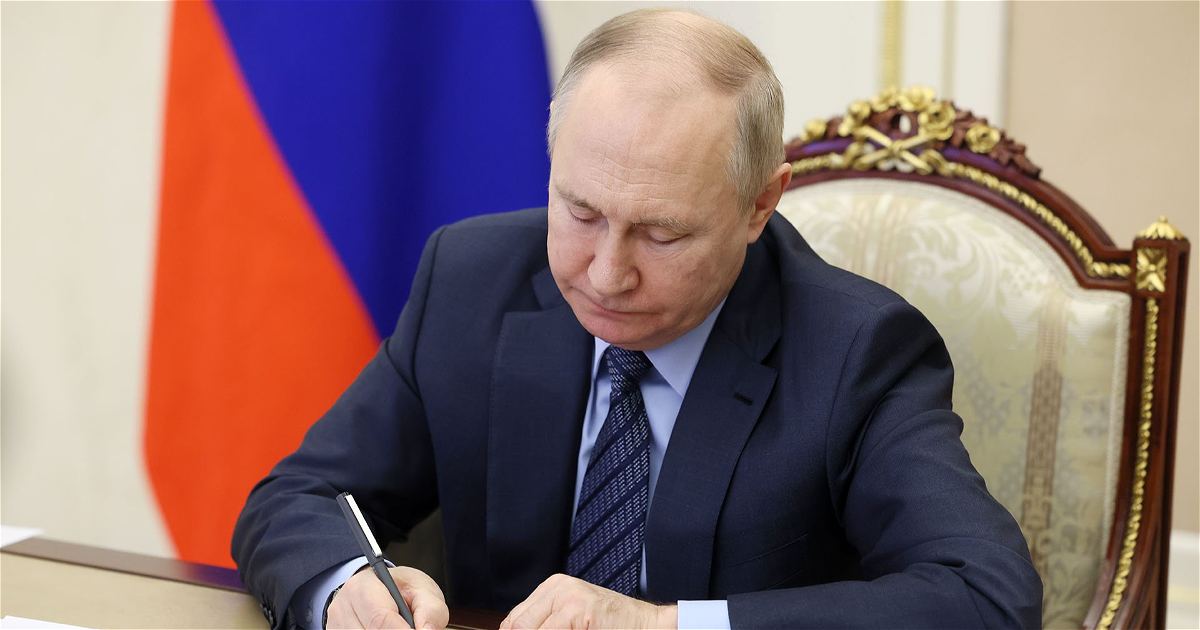
Russian President Vladimir Putin has signed a decree allowing the government to introduce temporary state management over critical infrastructure facilities whose owners fail to ensure adequate security, respond ineffectively to the threat of drone attacks, or fail to restore damaged facilities in a timely manner. Decree No. 604 was signed and published on August 24, 2026.
Under the decree, temporary management may be introduced by a decision of the Russian government based on an order from the president. The measure applies not only directly to infrastructure facilities, but also to the assets of the relevant business entity, its securities, stakes in Russian companies, and property rights.
The list of critical infrastructure covered by the decree includes facilities in the fuel and energy sector, industry, communications, utilities, transport and logistics, and the energy sector, including nuclear facilities. It also covers critical and potentially hazardous facilities, as well as infrastructure considered particularly important for national security and economic stability.
One of the grounds explicitly cited in the decree is the ineffectiveness of measures aimed at preventing attacks involving unmanned aerial vehicles. Another ground is the failure to restore, or the untimely restoration of, normal operations following damage to a facility.
Rosimushchestvo, Russia’s Federal Agency for State Property Management, will generally act as the temporary administrator, although the government may appoint another entity. The temporary administrator will exercise the powers of the owner in relation to the transferred assets but will not have the right to dispose of them. Its responsibilities will also include conducting an inventory and ensuring the preservation of the assets.
Russian First Deputy Prime Minister Denis Manturov said the new mechanism would be applied selectively and does not amount to the nationalization of enterprises. According to him, the measure is intended to provide temporary state involvement in management in order to address specific security concerns.
The introduction of such a mechanism indicates that Russian authorities increasingly view the threat of drone attacks as a factor capable of directly disrupting the operations of major industrial and logistics companies. In recent months, oil, industrial and warehouse infrastructure has been targeted, while damage to major logistics facilities has created consequences extending beyond individual companies to broader supply chains.
The new decree effectively expands the state’s ability to intervene in the management of privately owned assets when their security is deemed inadequate. At the same time, the measure is formally presented not as a transfer of ownership to the state, but as temporary management that must be terminated by a separate government decision, also issued on the basis of a presidential order.
Experts and business representatives will now closely monitor how the government defines the criteria for inadequate infrastructure protection and under what circumstances the new mechanism is put into practice. Its implementation will determine whether the decree remains primarily a tool for protecting strategic facilities or evolves into a broader mechanism for state intervention in the operations of private companies.


 Latest news
Latest news
Latest newsBulgaria Asks NATO to Strengthen Its Defences Amid Black Sea Threats: Sofia Fears Growing Risks to Maritime Shipping
16.Oct.2026
Black Sea Shipping Risks Threaten Bulgaria’s 5 Million Tonnes of Wheat Exports
15.Oct.2026
Georgia’s Foreign Funding and Political Ban Laws Draw Criticism from the Venice Commission
15.Oct.2026
Kazakhstan Promotes a Caspian Green Energy Corridor: Astana Seeks New Routes to the European Market
14.Oct.2026
Inflation in Romania Accelerates to 6.61%: Rising Prices Increase Pressure on Households and the Economy
13.Oct.2026
Can Europe Protect the International Criminal Court from Trump’s Sanctions?
13.Oct.2026
Georgia’s Constitutional Court Continues Case on Banning Opposition Parties: Political Pluralism at Stake
12.Oct.2026
Azerbaijan and Iran Step Up Security Contacts Amid Hijab Protests
12.Oct.2026
Personnel Shortages Complicate Ukrainian Forces’ Rotation: Ukraine Faces Long-Term Challenges on the Front Line
11.Oct.2026
Trump Eases Sanctions on Russian Fuel After Talks with Putin: Kyiv Fears Boost to Moscow’s War Revenues
10.Oct.2026
Putin Seeks to Strengthen Russia’s Influence in the Post-Soviet Space Through the CIS
10.Oct.2026
Russia and the South Caucasus: External Pressure, Political Competition and a Crisis of Trust
10.Oct.2026
Peaceful Settlement Between Armenia and Azerbaijan: Moving from Declarations to Implementation
10.Oct.2026
Moldova Ready to Accept as Many Ukrainians as Necessary if Situation Worsens This Winter
09.Oct.2026
Turkmenistan Turns Avaza into a Regional Diplomatic Hub as Caspian, Central Asian and CIS Agendas Converge
08.Oct.2026