
 17 Oct 2026









Bulgaria on the New Front Line of Confrontation: An Interview with Former Member of the Verkhovna Rada of Ukraine
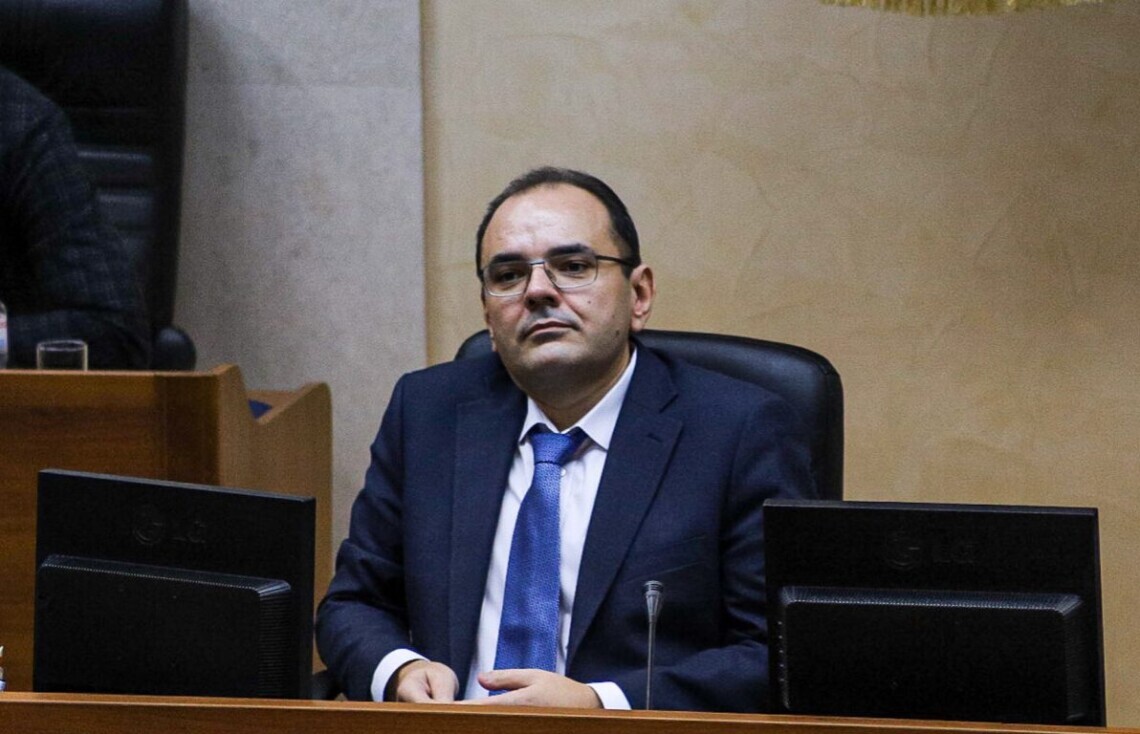
The
deployment of U.S. aerial refueling aircraft at Bulgaria's Bezmer Air Base, the
prospects for Bulgaria's foreign policy, Iran's reaction, the development of
military-technical cooperation between Sofia and Washington, and changes in the
regional security architecture across the Black Sea and Caspian regions were
the main topics of an expert discussion featuring Plamen Petrov,
representative of the Bulgarian Geopolitical Society, and Vitaliy Barvinenko, Director
of the Institute of Danube Studies and former Member of the Ukrainian
Parliament.
According
to the participants, the decision to temporarily deploy U.S. KC-135
Stratotanker aerial refueling aircraft at Bezmer Air Base reflects Bulgaria's
growing role in NATO's logistical infrastructure. The experts noted that the
Bulgarian authorities justify the deployment by citing allied commitments and
the need to strengthen collective security. However, such steps have sparked
considerable domestic political debate.
Particular
attention was devoted to the position of Bulgarian Prime Minister Rumen Radev.
According to Plamen Petrov, the Bulgarian leadership is seeking to pursue a
pragmatic foreign policy by combining the development of a strategic
partnership with the United States while maintaining the support of the
country's more conservative electorate, which advocates protecting national
sovereignty and taking a cautious approach to involvement in international
conflicts.
The
experts also recalled that the deployment of U.S. aircraft prompted a sharp
reaction from Iran, which warned Bulgaria about the consequences of allowing
its territory to be used for U.S. operations against the Islamic Republic.
According to the interview participants, such statements reflect the widening
geographical scope of Middle Eastern tensions and the growing strategic
importance of NATO facilities in Southeastern Europe.
A
significant portion of the discussion focused on the development of
military-technical cooperation between Bulgaria and the United States. The
experts highlighted the ongoing modernization of the Bulgarian Armed Forces,
including the delivery of F-16 Block 70 fighter jets, Stryker armored vehicles,
and the country's participation in U.S. military assistance programs. They also
examined options for further modernizing Bulgaria's air force, including the
possible acquisition of Swedish Gripen fighter aircraft and discussions
regarding the transfer of Soviet-era MiG aircraft to third countries.
According
to the participants, Bulgaria's upcoming presidential election will be an
important factor in determining the country's future foreign policy direction.
The discussion covered potential candidates, including current Vice President
Iliana Yotova, as well as the impact of domestic political competition on
Bulgaria's relations with the European Union, the United States, and Russia.
A
separate segment of the interview focused on the evolving military-political
situation in the Caspian region. The experts analyzed statements made by Kazakh
President Kassym-Jomart Tokayev following attacks on the infrastructure of the
Caspian Pipeline Consortium near Novorossiysk and discussed the potential risks
to Kazakhstan's oil exports.
According
to the participants, the escalation of the Russia-Ukraine conflict is gradually
affecting the Caspian Sea, which is becoming increasingly important as a
transportation and logistics corridor. In this context, the experts also
examined the future of relations between Russia and Azerbaijan, including
growing discussions within the expert community about the possibility of Baku
reconsidering its participation in post-Soviet integration organizations.
Summing up the discussion, the participants concluded that the developments taking place in the Black Sea and Caspian regions are part of a broader transformation of the international security system. In their view, the expansion of NATO's military presence in Eastern Europe, the reshaping of energy routes, the modernization of regional armed forces, and intensifying geopolitical competition will be among the key factors shaping regional developments in the years ahead.


 Latest news
Latest news
Latest newsBulgaria Asks NATO to Strengthen Its Defences Amid Black Sea Threats: Sofia Fears Growing Risks to Maritime Shipping
16.Oct.2026
Black Sea Shipping Risks Threaten Bulgaria’s 5 Million Tonnes of Wheat Exports
15.Oct.2026
Georgia’s Foreign Funding and Political Ban Laws Draw Criticism from the Venice Commission
15.Oct.2026
Kazakhstan Promotes a Caspian Green Energy Corridor: Astana Seeks New Routes to the European Market
14.Oct.2026
Inflation in Romania Accelerates to 6.61%: Rising Prices Increase Pressure on Households and the Economy
13.Oct.2026
Can Europe Protect the International Criminal Court from Trump’s Sanctions?
13.Oct.2026
Georgia’s Constitutional Court Continues Case on Banning Opposition Parties: Political Pluralism at Stake
12.Oct.2026
Azerbaijan and Iran Step Up Security Contacts Amid Hijab Protests
12.Oct.2026
Personnel Shortages Complicate Ukrainian Forces’ Rotation: Ukraine Faces Long-Term Challenges on the Front Line
11.Oct.2026
Trump Eases Sanctions on Russian Fuel After Talks with Putin: Kyiv Fears Boost to Moscow’s War Revenues
10.Oct.2026
Putin Seeks to Strengthen Russia’s Influence in the Post-Soviet Space Through the CIS
10.Oct.2026
Russia and the South Caucasus: External Pressure, Political Competition and a Crisis of Trust
10.Oct.2026
Peaceful Settlement Between Armenia and Azerbaijan: Moving from Declarations to Implementation
10.Oct.2026
Moldova Ready to Accept as Many Ukrainians as Necessary if Situation Worsens This Winter
09.Oct.2026
Turkmenistan Turns Avaza into a Regional Diplomatic Hub as Caspian, Central Asian and CIS Agendas Converge
08.Oct.2026