
 17 Oct 2026









Ukraine Opens a New Front: Strike on Iranian Vessel in the Caspian Sea Could Reshape the War
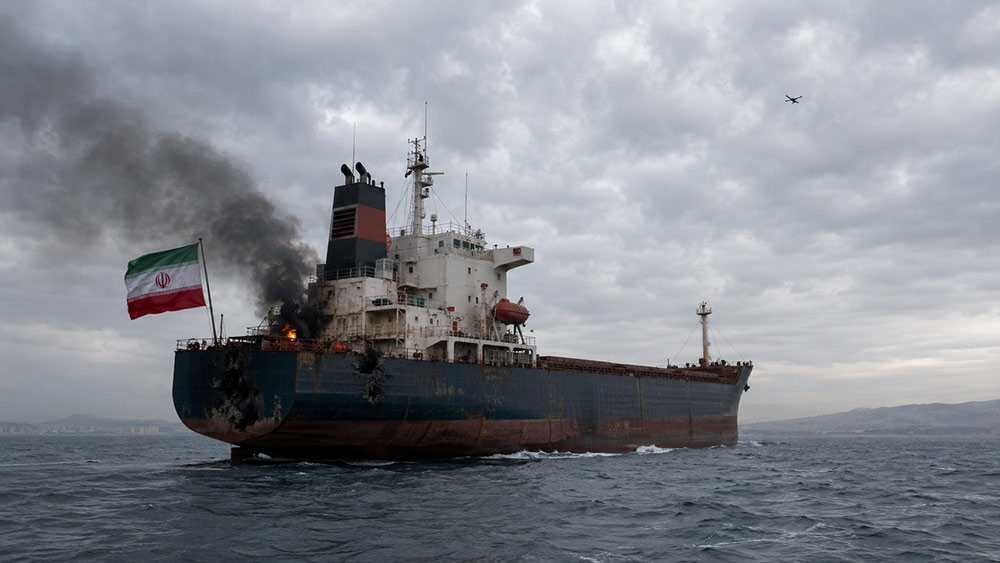
Ukraine has officially
acknowledged conducting an operation targeting maritime supply routes between
Iran and Russia in the Caspian Sea, marking what could be one of the most
significant geographic expansions of the conflict since Russia launched its
full-scale invasion in February 2022. According to President Volodymyr
Zelenskyy, Ukrainian forces targeted vessels transporting military cargo
between Iran and Russia, striking one of the key logistical arteries supporting
Russia's military-industrial complex.
Ukraine's Security Service
(SBU) later stated that the target was an Iranian commercial vessel allegedly
used to transport military cargo, including weapons components and dual-use
equipment destined for Russia. According to Kyiv, the Caspian Sea has become
one of the most secure logistical corridors for Iranian military shipments
since Western sanctions significantly disrupted traditional supply routes.
Iran confirmed that one of its
commercial vessels was attacked. According to Iranian authorities, one crew
member was killed and another was injured. Iran's Foreign Ministry summoned a
Ukrainian diplomat, describing the incident as a violation of international law
and warning that the attack "will not go unanswered."
Turkmenistan also condemned
the use of force in the Caspian Sea, emphasizing the importance of preserving
the region as a zone of peace and cooperation. Ashgabat's statement reflects
growing concern among the Caspian littoral states that the conflict is now
expanding into a region that has largely remained insulated from direct
military confrontation.
However, the significance of the strike extends well beyond the fate of a single vessel. Until now, the Caspian Sea had remained the only major Eurasian maritime basin largely untouched by the war. Unlike the Black Sea, where Russian and Ukrainian naval operations have become routine, the Caspian has long been regarded as a secure landlocked sea shared exclusively by Russia, Iran, Azerbaijan, Kazakhstan, and Turkmenistan. This relative security reportedly encouraged Moscow to redirect part of its sensitive military logistics through the region, assuming it was effectively beyond Ukraine's operational reach.
The operation signals an
important evolution in Ukraine's military strategy. Rather than focusing solely
on oil refineries, air bases, ammunition depots, and defense-industrial
facilities inside Russia, Kyiv now appears increasingly determined to disrupt
the broader international logistics network that sustains Russia's war effort.
The emphasis is shifting from destroying individual military targets to
systematically undermining the supply chains that enable Russia's defense
industry to function.
The choice of an Iranian
vessel is particularly significant. Over the past several years, Iran has
emerged as one of Russia's most important strategic military partners,
supplying attack drones, missile-related components, engines, electronics, and
manufacturing technologies. Despite extensive international sanctions, military
cooperation between Moscow and Tehran has continued to deepen, with the Caspian
Sea serving as one of the most secure transportation routes available to both
countries.
If the Ukrainian strike
significantly disrupted those supply lines, it would demonstrate that no
logistics corridor supporting Russia can be considered completely secure. For
Moscow, this could require a costly redistribution of military resources to
protect shipping lanes, strengthen air defenses in the Caspian region, escort
cargo vessels, and increase the overall cost and complexity of transporting
military equipment.
The political consequences
could prove equally significant. Russia and Iran have effectively established a
strategic partnership built on military cooperation and their shared opposition
to Western sanctions. A direct attack on an Iranian vessel inevitably pulls
Tehran further into the conflict, even if Iran seeks to avoid direct military
confrontation with Ukraine. At the same time, any Iranian response risks
triggering a new round of regional escalation at a moment when tensions across
the Middle East remain exceptionally high.
The incident may also affect
the future of the International North–South
Transport Corridor (INSTC), which Russia, Iran, and India
regard as a strategic alternative to traditional global trade routes. A
critical maritime segment of this corridor passes through the Caspian Sea.
Should the region cease to be viewed as a safe transit zone, insurance
premiums, transportation costs, and investment risks could rise significantly,
undermining the corridor's commercial viability and long-term strategic value.
The strike may also force
other Caspian states to reassess their security policies. Azerbaijan,
Kazakhstan, and Turkmenistan have consistently supported keeping the Caspian
Sea free from military confrontation. If similar incidents become more
frequent, these countries could face increasing pressure to strengthen maritime
surveillance, modernize their naval capabilities, and reconsider regional
security arrangements designed to preserve stability in the basin.

From a military perspective, the
operation highlights another defining feature of modern warfare: geography is
becoming less of a constraint. Long-range drones, covert operations,
intelligence networks, and precision-strike capabilities increasingly allow
militaries to strike critical targets far beyond traditional front lines,
targeting logistics infrastructure rather than battlefield positions alone.
Should attacks on
Russian-Iranian supply routes continue, Moscow may be forced to divert
additional resources away from frontline operations to protect thousands of
kilometers of transport infrastructure stretching from the Baltic and the
Arctic to the Caspian Sea and the Russian Far East. For Ukraine, such
operations may represent a relatively low-cost strategy capable of imposing
disproportionate military, economic, and political costs on Russia.
Ultimately, the incident in the Caspian Sea may represent far more than a single special operation. It could signal a fundamental transformation in the nature of the war itself. If earlier phases of the conflict were primarily defined by battles over territory and military installations, the next phase may increasingly revolve around disrupting international supply chains, strategic transport corridors, and the logistics networks that sustain modern warfare. In the long run, the ability to disrupt these systems may prove just as decisive as success on the battlefield.
CCBS Expert Group


 Latest news
Latest news
Latest newsBulgaria Asks NATO to Strengthen Its Defences Amid Black Sea Threats: Sofia Fears Growing Risks to Maritime Shipping
16.Oct.2026
Black Sea Shipping Risks Threaten Bulgaria’s 5 Million Tonnes of Wheat Exports
15.Oct.2026
Georgia’s Foreign Funding and Political Ban Laws Draw Criticism from the Venice Commission
15.Oct.2026
Kazakhstan Promotes a Caspian Green Energy Corridor: Astana Seeks New Routes to the European Market
14.Oct.2026
Inflation in Romania Accelerates to 6.61%: Rising Prices Increase Pressure on Households and the Economy
13.Oct.2026
Can Europe Protect the International Criminal Court from Trump’s Sanctions?
13.Oct.2026
Georgia’s Constitutional Court Continues Case on Banning Opposition Parties: Political Pluralism at Stake
12.Oct.2026
Azerbaijan and Iran Step Up Security Contacts Amid Hijab Protests
12.Oct.2026
Personnel Shortages Complicate Ukrainian Forces’ Rotation: Ukraine Faces Long-Term Challenges on the Front Line
11.Oct.2026
Trump Eases Sanctions on Russian Fuel After Talks with Putin: Kyiv Fears Boost to Moscow’s War Revenues
10.Oct.2026
Putin Seeks to Strengthen Russia’s Influence in the Post-Soviet Space Through the CIS
10.Oct.2026
Russia and the South Caucasus: External Pressure, Political Competition and a Crisis of Trust
10.Oct.2026
Peaceful Settlement Between Armenia and Azerbaijan: Moving from Declarations to Implementation
10.Oct.2026
Moldova Ready to Accept as Many Ukrainians as Necessary if Situation Worsens This Winter
09.Oct.2026
Turkmenistan Turns Avaza into a Regional Diplomatic Hub as Caspian, Central Asian and CIS Agendas Converge
08.Oct.2026