
 17 Oct 2026









Zelensky Replaces Commander-in-Chief of the Armed Forces: Mykhailo Drapatyi Takes Over from Oleksandr Syrskyi
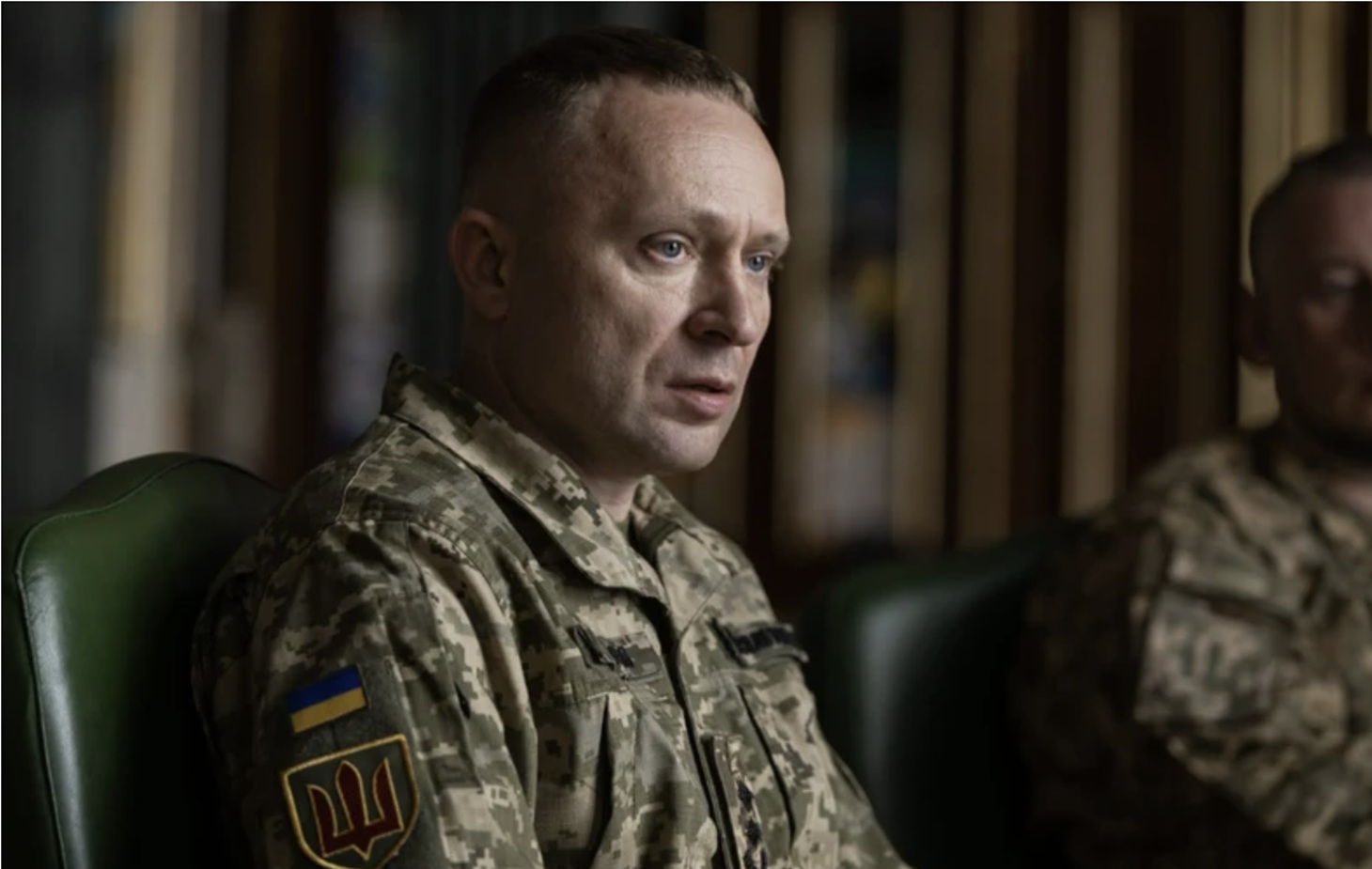
Ukrainian President Volodymyr Zelensky has announced the
most significant reshuffle in the country's military leadership since the start
of Russia's full-scale invasion, appointing Major General Mykhailo Drapatyi as
the new Commander-in-Chief of the Armed Forces of Ukraine. Oleksandr Syrskyi,
who had held the position since February 2024, has been dismissed. The decision
followed several days of large-scale protests in Kyiv and other Ukrainian
cities, where demonstrators demanded not only the reinstatement of former
Defense Minister Mykhailo Fedorov but also a change in the country's military
leadership.
Announcing the appointment, President Zelensky stated that
Ukraine would continue its strategy of increasing pressure on Russia both along
the front line and through strikes on military and logistical infrastructure
deep inside Russian territory. According to the president, the new commander’s
primary mission will be to enhance the effectiveness of the Armed Forces during
the prolonged war and further adapt Ukraine’s military to the realities of
modern warfare.
At 43, Mykhailo Drapatyi is widely regarded as one of
Ukraine’s most respected next-generation military commanders. He first gained
national recognition during the 2014 battles for Mariupol and later commanded
defensive operations in southern and eastern Ukraine, including the Kryvyi Rih,
Kherson, and Kharkiv regions. Throughout the war, Drapatyi has built a
reputation as an advocate of mission-oriented command, military modernization,
and the extensive use of unmanned systems on the battlefield. Many Ukrainian
military analysts had long identified him as one of the leading candidates to
assume the country's highest military post should a change in command occur.
It is worth noting that Oleksandr Syrskyi became
Commander-in-Chief following the dismissal of Valerii Zaluzhnyi in February
2024. Under his leadership, the Ukrainian Armed Forces continued defensive
operations while expanding long-range drone strikes against Russian military
targets. However, criticism of Syrskyi gradually intensified both within the
military and among the public. He was accused of an overly centralized command
style, high personnel losses, and insufficiently rapid implementation of new
technologies and modern combat concepts. These concerns escalated following a
public dispute between Syrskyi and former Defense Minister Mykhailo Fedorov,
who was widely regarded as the driving force behind the digital transformation
of Ukraine’s armed forces. Fedorov’s dismissal became the catalyst for the
largest anti-government protests since the beginning of the full-scale war.
Demonstrators — including active-duty servicemen, veterans, volunteers, and
relatives of military personnel — called for Fedorov’s reinstatement, accelerated
military reforms, and a complete overhaul of the senior military command.
Following consultations with military and political leaders, Zelensky
ultimately decided to replace the Commander-in-Chief.
Many analysts view
Drapatyi’s appointment as an attempt to reboot Ukraine’s military command
system without fundamentally altering the country’s overall military strategy.
Over the past two years, Ukraine has increasingly relied on the mass deployment
of aerial and ground drones, artificial intelligence, automated
command-and-control systems, and long-range precision strike capabilities.
Drapatyi has consistently advocated for accelerating the digitalization of the
armed forces, reforming military training, and granting greater operational
autonomy to field commanders — an approach that aligns with Kyiv’s broader
strategy of achieving technological superiority over its adversary.
Experts note that the
leadership change comes at a particularly challenging moment for Ukraine. Heavy
fighting continues along nearly the entire front line, while Russian forces
maintain pressure in the eastern theater. At the same time, Ukraine continues
to carry out long-range strikes against Russian logistics hubs, air bases, and
energy infrastructure. Against this backdrop, the appointment of a new
Commander-in-Chief is intended not only to improve military effectiveness but
also to demonstrate the political leadership’s willingness to respond to
growing public demands for reform and renewal within the country's armed
forces.
CCBS
Expert Group


 Latest news
Latest news
Latest newsBulgaria Asks NATO to Strengthen Its Defences Amid Black Sea Threats: Sofia Fears Growing Risks to Maritime Shipping
16.Oct.2026
Black Sea Shipping Risks Threaten Bulgaria’s 5 Million Tonnes of Wheat Exports
15.Oct.2026
Georgia’s Foreign Funding and Political Ban Laws Draw Criticism from the Venice Commission
15.Oct.2026
Kazakhstan Promotes a Caspian Green Energy Corridor: Astana Seeks New Routes to the European Market
14.Oct.2026
Inflation in Romania Accelerates to 6.61%: Rising Prices Increase Pressure on Households and the Economy
13.Oct.2026
Can Europe Protect the International Criminal Court from Trump’s Sanctions?
13.Oct.2026
Georgia’s Constitutional Court Continues Case on Banning Opposition Parties: Political Pluralism at Stake
12.Oct.2026
Azerbaijan and Iran Step Up Security Contacts Amid Hijab Protests
12.Oct.2026
Personnel Shortages Complicate Ukrainian Forces’ Rotation: Ukraine Faces Long-Term Challenges on the Front Line
11.Oct.2026
Trump Eases Sanctions on Russian Fuel After Talks with Putin: Kyiv Fears Boost to Moscow’s War Revenues
10.Oct.2026
Putin Seeks to Strengthen Russia’s Influence in the Post-Soviet Space Through the CIS
10.Oct.2026
Russia and the South Caucasus: External Pressure, Political Competition and a Crisis of Trust
10.Oct.2026
Peaceful Settlement Between Armenia and Azerbaijan: Moving from Declarations to Implementation
10.Oct.2026
Moldova Ready to Accept as Many Ukrainians as Necessary if Situation Worsens This Winter
09.Oct.2026
Turkmenistan Turns Avaza into a Regional Diplomatic Hub as Caspian, Central Asian and CIS Agendas Converge
08.Oct.2026