
 17 Oct 2026









Strike on Gas Carrier Near Romania Raises Tensions in the Black Sea
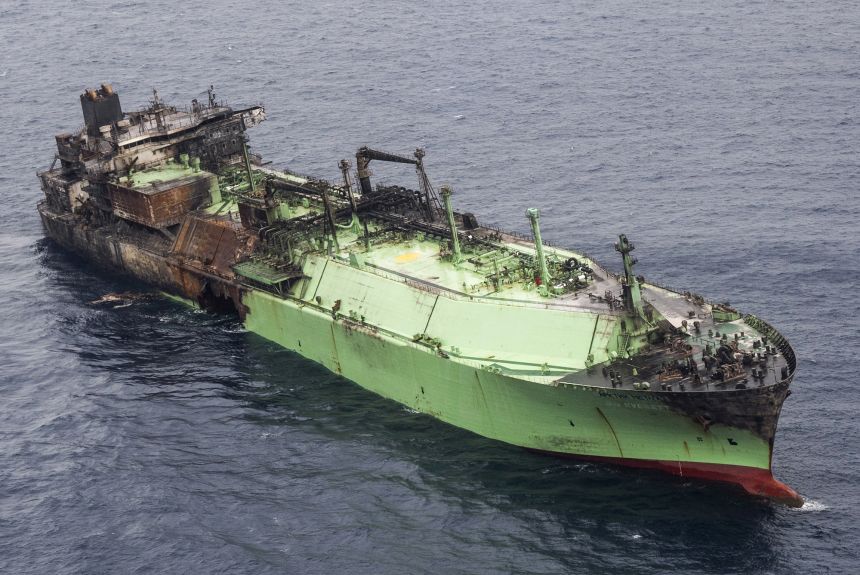
The security situation in the western Black Sea
continues to deteriorate. The LPG carrier “Gas Lisbon”,
transporting liquefied propane from Alexandria, Egypt, to the Ukrainian port of
Reni, sustained significant damage after being struck approximately 20 nautical
miles off the Romanian coast. The incident occurred outside Romania’s
territorial waters but in close proximity to the borders of the NATO member
state.
According to Romanian President Nicușor Dan, the Liberia-flagged
vessel had 17 crew members on board. Three sailors were injured in the incident
and were evacuated by Romanian rescue services. Two rescue vessels operated by
the Romanian Agency for the Rescue of Human Life at Sea (“ARSVOM”), along with a
tugboat, were dispatched to the scene to stabilize the damaged vessel and
prevent it from drifting, thereby reducing risks to maritime navigation.
President Dan stated that Romanian authorities have
launched an official investigation into the circumstances of the incident.
According to his preliminary assessment, the strike was “most likely linked to
Russia’s ongoing aggression against Ukraine”. The investigation aims to
establish the exact cause of the attack and identify those responsible. At the
time of publication, Russian authorities had not commented on the incident.
Moscow has previously denied responsibility for similar attacks, instead
accusing Ukraine of carrying them out or describing such incidents as provocations.
Ukraine also blamed Russia for the attack. Acting Foreign
Minister Andrii Sybiha
described the incident as another example of strikes against civilian shipping
and thanked Romanian authorities for their prompt rescue operation.
According to maritime industry sources, the “Gas Lisbon” was carrying approximately 3,800 tonnes of liquefied propane.
The strike reportedly triggered a fire on board, forcing the crew to abandon
the vessel. Several seafarers were hospitalized with burns and other injuries.
The incident follows a series of recent attacks involving
civilian vessels operating on routes connected to Ukrainian ports. Earlier
reports indicated that a Turkish bulk carrier departing Odesa had been damaged,
while the captain of another commercial vessel was killed in a separate strike
in the Black Sea. These developments point to a growing threat to commercial
shipping throughout the region.
Analysts note that the attack has
implications extending beyond military considerations. The Danube port of Reni has become
one of Ukraine’s most important alternative logistics hubs since the outbreak
of the full-scale war, enabling exports and imports while bypassing the most
dangerous areas of the Black Sea. Any attacks targeting vessels bound for Reni
could disrupt operations along the Danube corridor, increase maritime insurance
premiums, and heighten concerns among international shipping companies.
The incident is particularly sensitive because it occurred
near the coast of Romania, a member of both NATO and the European Union. In
recent months, Romanian authorities have repeatedly reported drone debris and
other consequences of the war reaching areas close to the country's territory,
increasing concerns over security on NATO’s eastern flank. Should the investigation
confirm that the gas carrier was struck as a result of military action, the
incident could become one of the most serious cases affecting international
commercial shipping in the western Black Sea since the beginning of the
conflict.


 Latest news
Latest news
Latest newsBulgaria Asks NATO to Strengthen Its Defences Amid Black Sea Threats: Sofia Fears Growing Risks to Maritime Shipping
16.Oct.2026
Black Sea Shipping Risks Threaten Bulgaria’s 5 Million Tonnes of Wheat Exports
15.Oct.2026
Georgia’s Foreign Funding and Political Ban Laws Draw Criticism from the Venice Commission
15.Oct.2026
Kazakhstan Promotes a Caspian Green Energy Corridor: Astana Seeks New Routes to the European Market
14.Oct.2026
Inflation in Romania Accelerates to 6.61%: Rising Prices Increase Pressure on Households and the Economy
13.Oct.2026
Can Europe Protect the International Criminal Court from Trump’s Sanctions?
13.Oct.2026
Georgia’s Constitutional Court Continues Case on Banning Opposition Parties: Political Pluralism at Stake
12.Oct.2026
Azerbaijan and Iran Step Up Security Contacts Amid Hijab Protests
12.Oct.2026
Personnel Shortages Complicate Ukrainian Forces’ Rotation: Ukraine Faces Long-Term Challenges on the Front Line
11.Oct.2026
Trump Eases Sanctions on Russian Fuel After Talks with Putin: Kyiv Fears Boost to Moscow’s War Revenues
10.Oct.2026
Putin Seeks to Strengthen Russia’s Influence in the Post-Soviet Space Through the CIS
10.Oct.2026
Russia and the South Caucasus: External Pressure, Political Competition and a Crisis of Trust
10.Oct.2026
Peaceful Settlement Between Armenia and Azerbaijan: Moving from Declarations to Implementation
10.Oct.2026
Moldova Ready to Accept as Many Ukrainians as Necessary if Situation Worsens This Winter
09.Oct.2026
Turkmenistan Turns Avaza into a Regional Diplomatic Hub as Caspian, Central Asian and CIS Agendas Converge
08.Oct.2026