
 17 Oct 2026









Ukraine Brings the War to Moscow: Exchange of Strikes Reshapes the Nature of the Conflict
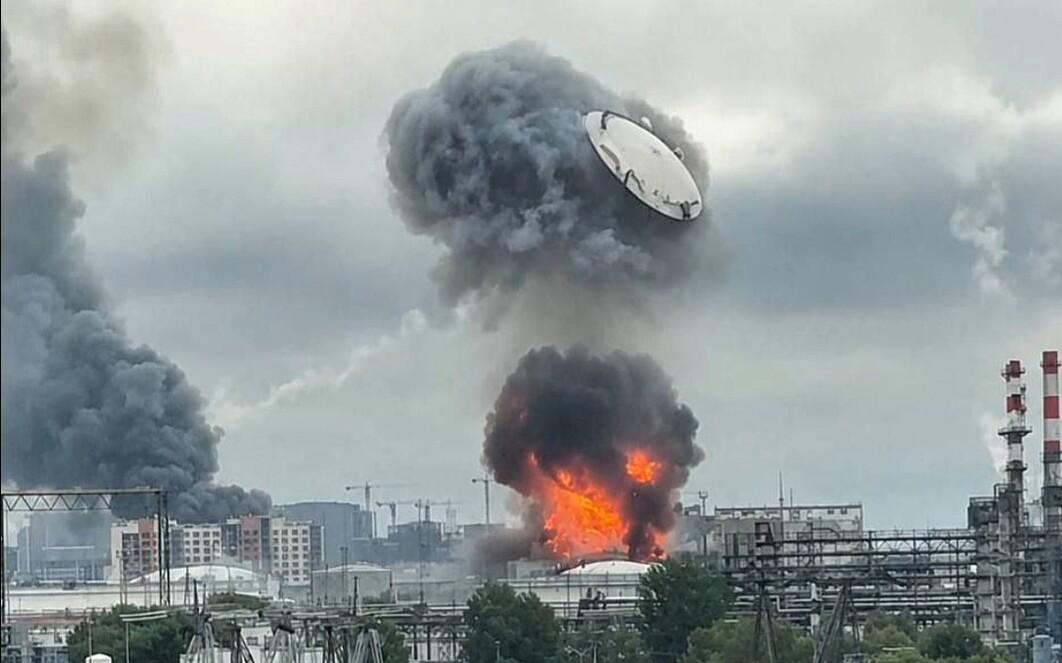
The latest exchange of strikes between Russia and Ukraine — a Russian missile attack on Kyiv followed by Ukrainian strikes on Moscow and a major oil refinery in the Russian capital — signals a new phase of the war, in which Ukraine is increasingly and effectively extending the battlefield deep into Russian territory, systematically targeting the economic foundations of the war effort.
Russian forces carried out another combined missile and drone strike on Kyiv, continuing their campaign of pressure on Ukraine’s infrastructure and urban areas. In response, Ukraine launched one of the most significant attacks on the Moscow region since the start of the full-scale war, hitting an oil refinery that supplies a substantial share of fuel to the capital. The strike triggered fires and disrupted operations at several production units.
From a military perspective, Ukraine’s campaign in recent months has increasingly taken the form of a strategy of “asymmetric attrition”. Lacking a missile arsenal comparable to Russia’s, Kyiv compensates by scaling up long-range drones, combined strike packages, and intelligence-driven targeting chains, enabling repeated strikes on critical assets more than a thousand kilometers from the front line. According to Western analytical centers and energy monitoring groups, such attacks have already led to reduced oil refining volumes in Russia and temporary shutdowns of key refineries.
The selection of targets is particularly significant. Ukrainian strikes are increasingly concentrated on oil refining, logistics, and fuel hubs. This not only reduces direct revenue streams for the Russian economy but also creates a cascading effect: disruptions in fuel processing increase domestic logistical costs, complicate military supply chains, and force the redistribution of air defense assets from the front to strategic infrastructure protection.
Industry sources report that repeated strikes on the Moscow refinery have already caused partial shutdowns and damage to several processing units. The recurring nature of the attacks intensifies a “cumulative wear-and-tear” effect, where even repairs do not eliminate strategic pressure but merely postpone the next disruption.
From an economic standpoint, Ukraine is effectively implementing a model of “indirect sanctions pressure”, in which strikes on infrastructure function as a forced increase in the operational costs of the Russian economy. International analysts note that attacks on refining capacity are already affecting domestic fuel balances and pushing Russia to redirect oil export flows at the expense of internal refining capacity.
Geography is another critical factor. Extending strike reach into the Moscow region carries not only military but also political and psychological implications: the capital is no longer perceived as a symbolically “protected space”, increasing internal pressure on the Russian governance system and undermining the perception of full control over the security environment.
On the Ukrainian side, these strikes also serve as strategic communication. They demonstrate to Western partners Kyiv’s growing ability to independently strike deep economic targets, reducing reliance on a purely defensive support narrative.
Experts further note a broader transformation in the nature of the conflict. The war is increasingly less a conventional front-line confrontation and more a “networked infrastructure conflict”, where the decisive factor is not territorial control but the ability to degrade and restore economic and energy systems faster than the adversary.
Against this backdrop, Ukraine — despite limited resources — is demonstrating increasing effectiveness in building a distributed long-range strike system based on mass drone production and adaptive tactics. Russia, while maintaining superiority in missile strike capacity, is being forced to strengthen domestic defense coverage, thereby reallocating significant portions of its military resources.
Thus, the current escalation reflects not merely another exchange of strikes but the emergence of a new structure of warfare — one of infrastructure-based attritional war, where the main battlefield is no longer the front line, but the energy and industrial resilience of states.
The sociological impact of these developments is also becoming increasingly pronounced. In Ukraine, regular Russian strikes on cities reinforce societal mobilization and consolidate the perception of the war as a long-term existential struggle. In Russia, however, attacks on the capital region create a “de-sacralization of the security center”, as the population is confronted with the vulnerability of a space previously perceived as protected and distant from the war.
CCBS Expert Group


 Latest news
Latest news
Latest newsBulgaria Asks NATO to Strengthen Its Defences Amid Black Sea Threats: Sofia Fears Growing Risks to Maritime Shipping
16.Oct.2026
Black Sea Shipping Risks Threaten Bulgaria’s 5 Million Tonnes of Wheat Exports
15.Oct.2026
Georgia’s Foreign Funding and Political Ban Laws Draw Criticism from the Venice Commission
15.Oct.2026
Kazakhstan Promotes a Caspian Green Energy Corridor: Astana Seeks New Routes to the European Market
14.Oct.2026
Inflation in Romania Accelerates to 6.61%: Rising Prices Increase Pressure on Households and the Economy
13.Oct.2026
Can Europe Protect the International Criminal Court from Trump’s Sanctions?
13.Oct.2026
Georgia’s Constitutional Court Continues Case on Banning Opposition Parties: Political Pluralism at Stake
12.Oct.2026
Azerbaijan and Iran Step Up Security Contacts Amid Hijab Protests
12.Oct.2026
Personnel Shortages Complicate Ukrainian Forces’ Rotation: Ukraine Faces Long-Term Challenges on the Front Line
11.Oct.2026
Trump Eases Sanctions on Russian Fuel After Talks with Putin: Kyiv Fears Boost to Moscow’s War Revenues
10.Oct.2026
Putin Seeks to Strengthen Russia’s Influence in the Post-Soviet Space Through the CIS
10.Oct.2026
Russia and the South Caucasus: External Pressure, Political Competition and a Crisis of Trust
10.Oct.2026
Peaceful Settlement Between Armenia and Azerbaijan: Moving from Declarations to Implementation
10.Oct.2026
Moldova Ready to Accept as Many Ukrainians as Necessary if Situation Worsens This Winter
09.Oct.2026
Turkmenistan Turns Avaza into a Regional Diplomatic Hub as Caspian, Central Asian and CIS Agendas Converge
08.Oct.2026