
 17 Oct 2026









Russia Accused of Intensifying Pressure on Armenia Ahead of June 7 Elections
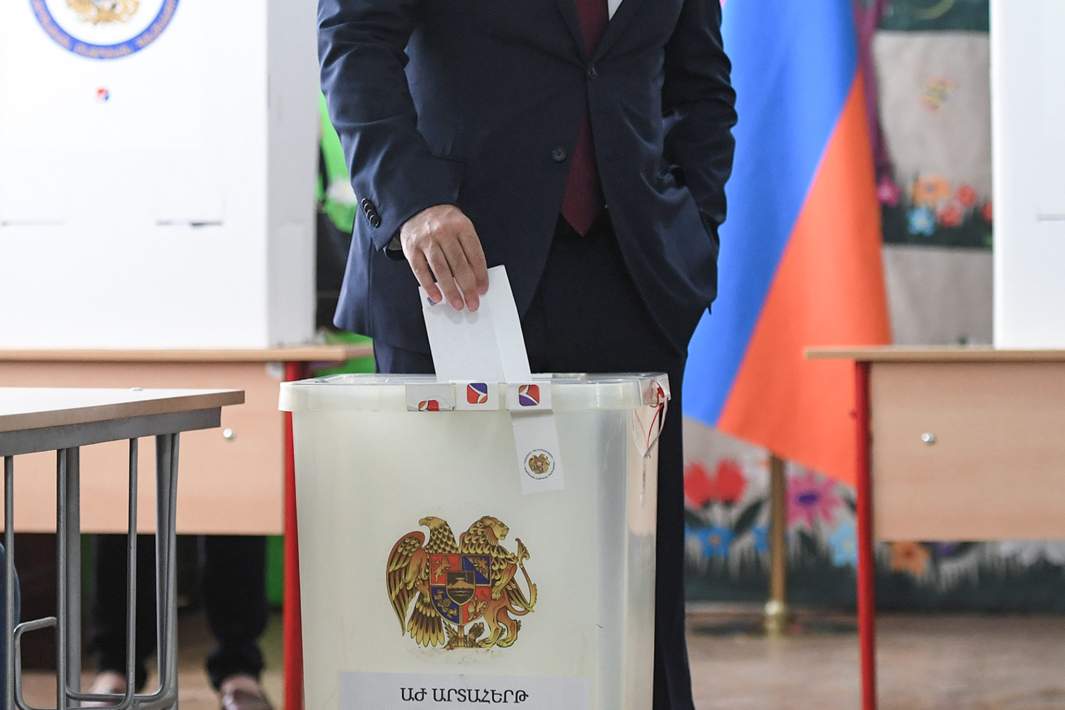
Armenia is heading into parliamentary elections on June 7, amid escalating political and economic pressure from Russia, according to an analysis of recent developments in Armenian-Russian relations.
The election campaign, which began on May 8, has coincided with a marked increase in restrictive measures and political messaging from Moscow. Analysts argue that the Kremlin is seeking to weaken Prime Minister Nikol Pashinyan’s government ahead of the vote and shift public support toward pro-Russian political forces.
Since late May, Russia has introduced a series of trade and regulatory restrictions affecting Armenian exports. The Federal Service for Veterinary and Phytosanitary Surveillance (Rosselkhoznadzor) banned imports of Armenian flowers, followed by restrictions on fresh vegetables, fruits, and berries, including tomatoes, cucumbers, peppers, greens, and strawberries. In parallel, Russia’s consumer protection agency ordered the suspension of sales of 64.5 million bottles of “Jermuk” mineral water across the country.
Additional measures have affected Armenia’s re-export trade in fish products, with certification rights reportedly limited to only two companies. Meanwhile, hundreds of Armenian trucks have been delayed at the Upper Lars border crossing, a key land route to Russia, creating significant disruptions for transport operators.
Economic pressure has also extended to labor migration. On May 29, Russian President Vladimir Putin proposed introducing a patent-based system for Armenian workers in Russia, potentially altering the legal framework for thousands of Armenian labor migrants who currently benefit from simplified employment rules under the Eurasian Economic Union (EAEU).
Energy policy has emerged as another point of tension. According to Armenian sources, Russia has signaled that it may reconsider preferential gas pricing if Armenia continues its political rapprochement with the European Union. Russian officials have repeatedly emphasized that Armenia remains structurally dependent on Russian energy supplies.
At the same time, Moscow has openly expressed support for several Armenian opposition figures, including businessman Samvel Karapetyan and his “Strong Armenia” bloc, former president Robert Kocharyan and his “Armenia” alliance, and Gagik Tsarukyan’s Prosperous Armenia party. These political groups are widely seen as favoring closer ties with Russia.
Russian officials have also called for a nationwide referendum in Armenia on choosing between deeper integration with the European Union or continued membership in the Eurasian Economic Union. The proposal, supported at a recent EAEU summit in Astana, was rejected by Armenian Prime Minister Nikol Pashinyan, who described it as premature and “theoretical,” arguing that Armenia has not formally applied for EU membership.
Pashinyan has stated that Armenia will continue to function within the EAEU while pursuing broader foreign policy diversification.
Observers note that Moscow’s strategy of economic pressure and political signaling may have unintended consequences. Rather than weakening the current government, it could reinforce public support for diversification and sovereignty-oriented policies, particularly among undecided voters.
Some analysts within Russia have also criticized the approach. Political scientist Nikolay Platoshkin described trade restrictions against Armenia as counterproductive, arguing that similar measures in Moldova and Georgia previously pushed those countries to seek alternative markets and partners.
Armenian officials, meanwhile, report that the first shipments of Armenian agricultural products, including roses and vegetables, are now being redirected to European and other international markets. Prime Minister Pashinyan has said that economic pressure from Russia is reinforcing negative perceptions of the EAEU among parts of the Armenian public, while his government continues to emphasize export diversification strategies.
The political debate has also intensified around warnings from Russian and allied officials about a possible “Ukrainian scenario” in Armenia. Belarusian President Alexander Lukashenko cautioned that Armenia should avoid developments similar to those seen in Ukraine, further fueling tensions in the pre-election environment.
Experts, however, largely dismiss such comparisons, noting Armenia’s distinct geopolitical position and lack of a shared border with Russia.
Political analysts argue that the current pressure campaign may be backfiring. According to recent polling trends, parties associated with pro-Russian positions have not strengthened, while support for pro-Western or centrist forces has remained stable or increased.
As Armenia approaches election day, the central question is increasingly framed as a geopolitical choice over sovereignty and foreign alignment. The outcome of the vote will determine not only the country’s domestic political balance but also its strategic orientation between Russia and the West.
Journalyst
Marine KHARATYAN


 Latest news
Latest news
Latest newsBulgaria Asks NATO to Strengthen Its Defences Amid Black Sea Threats: Sofia Fears Growing Risks to Maritime Shipping
16.Oct.2026
Black Sea Shipping Risks Threaten Bulgaria’s 5 Million Tonnes of Wheat Exports
15.Oct.2026
Georgia’s Foreign Funding and Political Ban Laws Draw Criticism from the Venice Commission
15.Oct.2026
Kazakhstan Promotes a Caspian Green Energy Corridor: Astana Seeks New Routes to the European Market
14.Oct.2026
Inflation in Romania Accelerates to 6.61%: Rising Prices Increase Pressure on Households and the Economy
13.Oct.2026
Can Europe Protect the International Criminal Court from Trump’s Sanctions?
13.Oct.2026
Georgia’s Constitutional Court Continues Case on Banning Opposition Parties: Political Pluralism at Stake
12.Oct.2026
Azerbaijan and Iran Step Up Security Contacts Amid Hijab Protests
12.Oct.2026
Personnel Shortages Complicate Ukrainian Forces’ Rotation: Ukraine Faces Long-Term Challenges on the Front Line
11.Oct.2026
Trump Eases Sanctions on Russian Fuel After Talks with Putin: Kyiv Fears Boost to Moscow’s War Revenues
10.Oct.2026
Putin Seeks to Strengthen Russia’s Influence in the Post-Soviet Space Through the CIS
10.Oct.2026
Russia and the South Caucasus: External Pressure, Political Competition and a Crisis of Trust
10.Oct.2026
Peaceful Settlement Between Armenia and Azerbaijan: Moving from Declarations to Implementation
10.Oct.2026
Moldova Ready to Accept as Many Ukrainians as Necessary if Situation Worsens This Winter
09.Oct.2026
Turkmenistan Turns Avaza into a Regional Diplomatic Hub as Caspian, Central Asian and CIS Agendas Converge
08.Oct.2026