
 17 Oct 2026









Thousands Take to the Streets of Tbilisi in Support of Georgia’s European Course
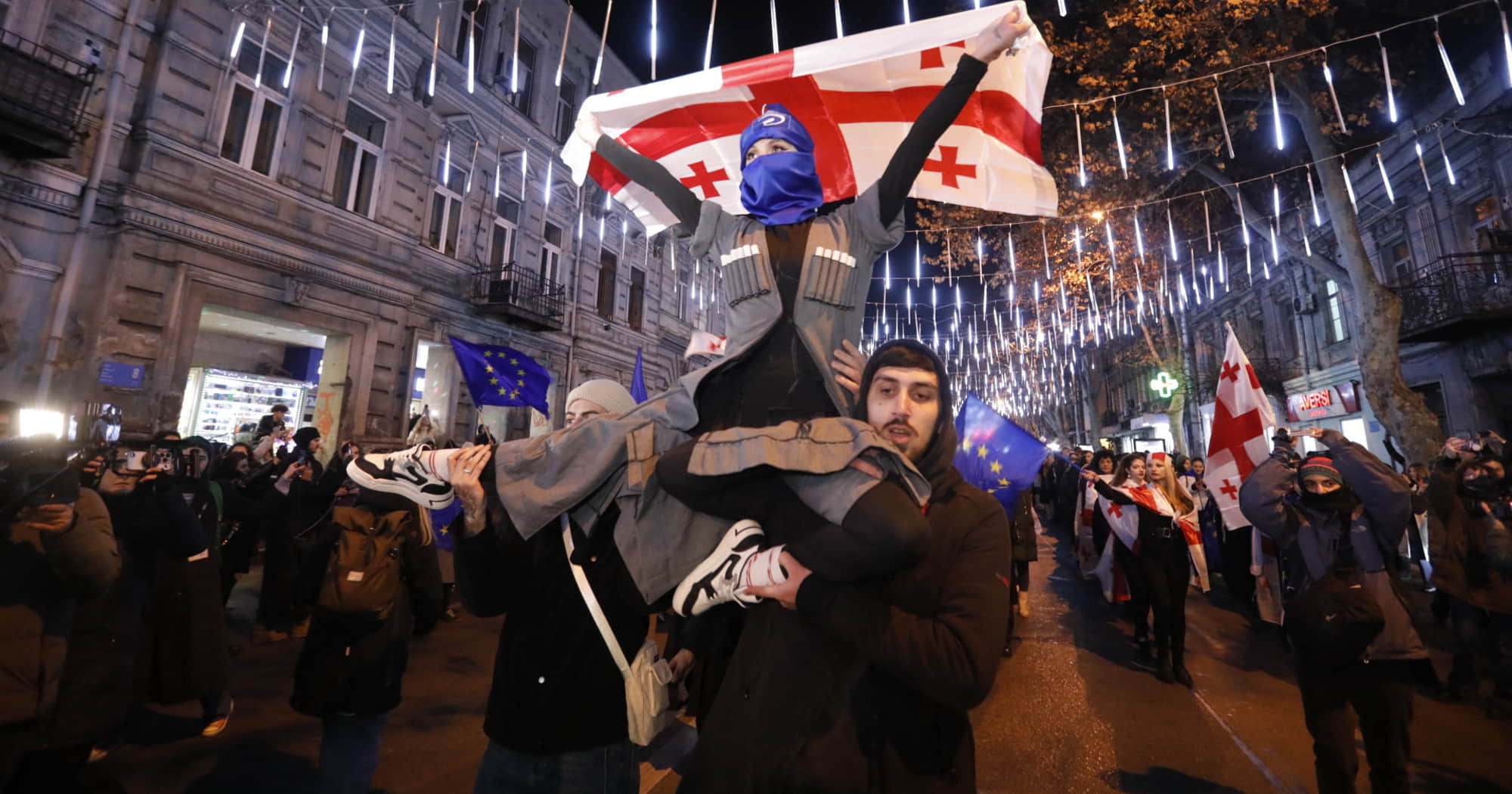
Large-scale
political demonstrations continue in Tbilisi following Georgia’s Independence
Day celebrations. Thousands of opposition supporters once again gathered on the
capital’s central avenues under slogans defending the country’s European
course, democratic institutions, and opposing any increase in Russian influence
over Georgia’s domestic politics. Protesters carried Georgian and European
Union flags while demanding that the authorities accelerate integration with
the EU and implement more transparent political reforms.
The
protests are taking place amid an ongoing political crisis between the ruling
Georgian Dream party and the pro-Western opposition. Opposition groups accuse
the government of drifting away from the country’s European integration path
and attempting to strengthen control over state institutions. The authorities,
in turn, insist that they remain committed to Georgia’s strategic goal of
joining the European Union, while opposing what they describe as “external
pressure” and attempts to destabilize the country through street protests.
The
symbolic connection between the demonstrations and Independence Day gives the
protests additional significance. For a large part of Georgian society,
European integration is viewed not only as a foreign policy choice, but also as
part of the country’s national identity and a guarantee of preserving its
sovereignty. For this reason, the opposition is presenting the rallies as a
struggle for Georgia’s future and its place within the European political
space.
The
situation has drawn increased attention from the European Union and the United
States. Western partners have repeatedly expressed concern in recent months
over growing political tensions inside Georgia, the confrontation between the
government and the opposition, and the slowdown of reforms necessary for
advancing the country’s EU membership aspirations. Officials in Brussels fear
that further polarization within society could complicate Tbilisi’s European
prospects.
Against the backdrop of regional
instability and the ongoing confrontation between Russia and the West, Georgia
once again finds itself at the center of geopolitical competition. For the
United States and the European Union, the country remains an important transit
and political partner in the South Caucasus, while the Georgian authorities are
trying to maintain a balance between European integration, domestic stability,
and pragmatic relations with neighboring states. Experts note that the current
protests demonstrate the continued strong public support in Georgia for the
European course despite the country’s growing internal political polarization.


 Latest news
Latest news
Latest newsBulgaria Asks NATO to Strengthen Its Defences Amid Black Sea Threats: Sofia Fears Growing Risks to Maritime Shipping
16.Oct.2026
Black Sea Shipping Risks Threaten Bulgaria’s 5 Million Tonnes of Wheat Exports
15.Oct.2026
Georgia’s Foreign Funding and Political Ban Laws Draw Criticism from the Venice Commission
15.Oct.2026
Kazakhstan Promotes a Caspian Green Energy Corridor: Astana Seeks New Routes to the European Market
14.Oct.2026
Inflation in Romania Accelerates to 6.61%: Rising Prices Increase Pressure on Households and the Economy
13.Oct.2026
Can Europe Protect the International Criminal Court from Trump’s Sanctions?
13.Oct.2026
Georgia’s Constitutional Court Continues Case on Banning Opposition Parties: Political Pluralism at Stake
12.Oct.2026
Azerbaijan and Iran Step Up Security Contacts Amid Hijab Protests
12.Oct.2026
Personnel Shortages Complicate Ukrainian Forces’ Rotation: Ukraine Faces Long-Term Challenges on the Front Line
11.Oct.2026
Trump Eases Sanctions on Russian Fuel After Talks with Putin: Kyiv Fears Boost to Moscow’s War Revenues
10.Oct.2026
Putin Seeks to Strengthen Russia’s Influence in the Post-Soviet Space Through the CIS
10.Oct.2026
Russia and the South Caucasus: External Pressure, Political Competition and a Crisis of Trust
10.Oct.2026
Peaceful Settlement Between Armenia and Azerbaijan: Moving from Declarations to Implementation
10.Oct.2026
Moldova Ready to Accept as Many Ukrainians as Necessary if Situation Worsens This Winter
09.Oct.2026
Turkmenistan Turns Avaza into a Regional Diplomatic Hub as Caspian, Central Asian and CIS Agendas Converge
08.Oct.2026