
 17 Oct 2026









Politics of Balance: Georgia at the Crossroads of EU and US Interests
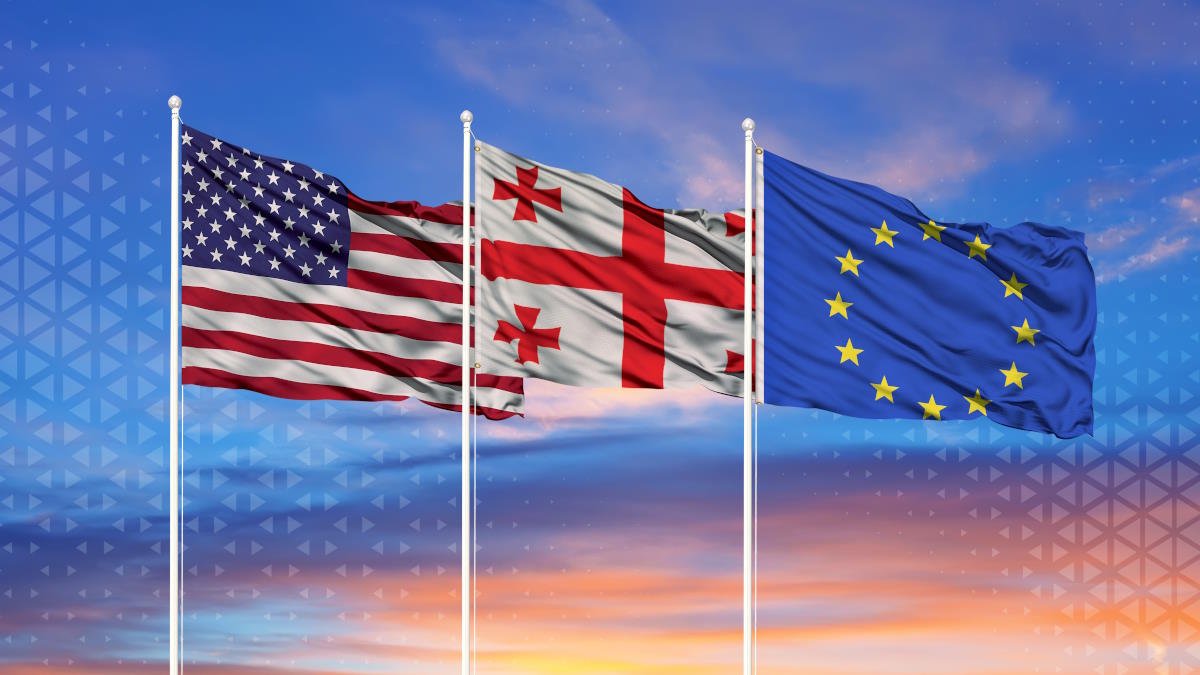
Tensions are rising in Georgia over its foreign policy direction amid increasingly strong signals from both Brussels and Washington. The Secretary General of the ruling Georgian Dream party and Mayor of Tbilisi, Kakha Kaladze, stated that the country remains open to dialogue with the EU, but will not accept the “language of pressure and threats”. According to him, cooperation with European institutions should be based on mutual respect and consideration of national interests, rather than political conditions that could be perceived as interference in domestic affairs.
This rhetoric reflects a broader trend in Georgian politics
in recent months, where the issue of sovereignty is increasingly being
contrasted with the process of European integration. The authorities have been
more actively pointing to the risks of external influence, warning of alleged
attempts to destabilize the domestic political situation. Representatives of
the ruling party argue that certain external actors are interested in deepening
polarization within the country by reinforcing confrontation between the
government and the opposition. At the same time, specific sources of such
influence are rarely identified directly, leaving room for political
interpretation and further intensifying internal tensions.

Kakha Kaladze on European bureaucracy: “Today they are openly opposing
the Georgian state”
Against this backdrop, the expected May visit of
representatives from the United States Department
of State takes on particular significance. Talks with the Georgian
leadership may serve as an indicator of how ready the USA is to expand its engagement in the South
Caucasus. Washington has traditionally supported Georgia’s Euro-Atlantic
aspirations; however, under current conditions, its role may broaden — from
political backing to more active involvement in security and institutional
reform.
Experts note that Georgia is effectively
navigating a complex foreign policy balancing act. On the one hand, the
strategic goal of integration into European and Euro-Atlantic structures
remains unchanged; on the other, the government is becoming increasingly
cautious about the pace and conditions of this process. This duality reflects
not only elite positioning but also public sentiment, where support for the
European path coexists with concerns about potential political and economic
costs.
As a result, the current dynamics are shaping an ambiguous political landscape: the government seeks to maintain control over the domestic agenda while minimizing external pressure, whereas Western partners expect clearer steps from Tbilisi toward democratic reforms and closer alignment with Euro-Atlantic institutions. In the coming months, the nature of the dialogue between Georgia, the EU, and the USA may determine whether the current tensions evolve into sustained political confrontation or transform into a new model of pragmatic cooperation.


 Latest news
Latest news
Latest newsBulgaria Asks NATO to Strengthen Its Defences Amid Black Sea Threats: Sofia Fears Growing Risks to Maritime Shipping
16.Oct.2026
Black Sea Shipping Risks Threaten Bulgaria’s 5 Million Tonnes of Wheat Exports
15.Oct.2026
Georgia’s Foreign Funding and Political Ban Laws Draw Criticism from the Venice Commission
15.Oct.2026
Kazakhstan Promotes a Caspian Green Energy Corridor: Astana Seeks New Routes to the European Market
14.Oct.2026
Inflation in Romania Accelerates to 6.61%: Rising Prices Increase Pressure on Households and the Economy
13.Oct.2026
Can Europe Protect the International Criminal Court from Trump’s Sanctions?
13.Oct.2026
Georgia’s Constitutional Court Continues Case on Banning Opposition Parties: Political Pluralism at Stake
12.Oct.2026
Azerbaijan and Iran Step Up Security Contacts Amid Hijab Protests
12.Oct.2026
Personnel Shortages Complicate Ukrainian Forces’ Rotation: Ukraine Faces Long-Term Challenges on the Front Line
11.Oct.2026
Trump Eases Sanctions on Russian Fuel After Talks with Putin: Kyiv Fears Boost to Moscow’s War Revenues
10.Oct.2026
Putin Seeks to Strengthen Russia’s Influence in the Post-Soviet Space Through the CIS
10.Oct.2026
Russia and the South Caucasus: External Pressure, Political Competition and a Crisis of Trust
10.Oct.2026
Peaceful Settlement Between Armenia and Azerbaijan: Moving from Declarations to Implementation
10.Oct.2026
Moldova Ready to Accept as Many Ukrainians as Necessary if Situation Worsens This Winter
09.Oct.2026
Turkmenistan Turns Avaza into a Regional Diplomatic Hub as Caspian, Central Asian and CIS Agendas Converge
08.Oct.2026