
 17 Oct 2026









Strikes on Fertilizers: How Drone Warfare Is Affecting Global Food Security
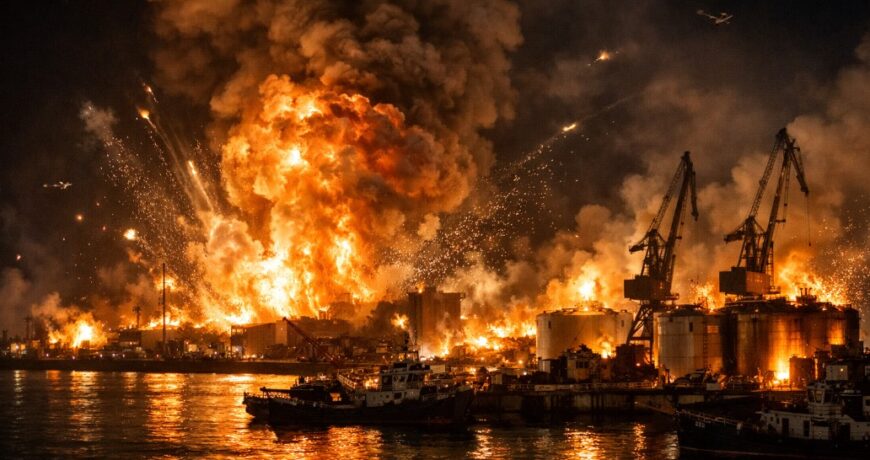
A new, less obvious pressure point has come into focus in the global economy — strikes on industrial infrastructure, particularly fertilizer production in Russia. According to Russian businessman Andrey Melnichenko, drone attacks in recent months have had a noticeable impact on the nitrogen fertilizer sector, one of the most critical for global agriculture. In his assessment, this is no longer about isolated incidents, but rather a factor that is beginning to systematically affect production chains and investment plans.
Melnichenko noted that major chemical enterprises have come under attack, including the Dorogobuzh plant, which is part of the EuroChem group. Temporary shutdowns at such facilities can affect several percent of national nitrogen fertilizer output. A key feature of the industry is that even short-term disruptions have delayed consequences: restoring technological processes takes time, and supply interruptions can affect deliveries in the following months, especially during the planting season.
Russia remains one of the largest players in the global fertilizer market, accounting for a significant share of nitrogen-based product supplies, including ammonia and urea. Its main export markets include countries in Asia, Latin America, and Africa, where agriculture is heavily dependent on imports. As a result, any production constraints within the country quickly translate into rising global prices and increased pressure on agricultural economies, particularly in developing regions.
Additional complexity stems from the industry’s high energy intensity. Nitrogen fertilizer production is directly tied to natural gas prices, which serve as a key input. Amid geopolitical tensions, sanctions pressure, and logistical disruptions, this dependency increases the sector’s vulnerability. Even when demand remains strong, producers must balance costs, infrastructure security, and the risk of further attacks.
Analysts also point to a shift in the nature of risks. While price volatility and trade restrictions were previously the main challenges for the sector, the physical security of production facilities has now moved to the forefront. This requires additional investment in infrastructure protection, modernization of security systems, and diversification of production sites, which could increase production costs in the long term.
The market is already reacting: nitrogen fertilizer prices are gradually rising, and efforts are underway to redirect supply flows. Some countries are seeking to expand domestic production, but quick solutions are limited — building new capacity takes years and requires significant investment. In the short term, this increases dependence on existing suppliers, including Russia.
Experts emphasize that the consequences extend beyond the industrial sector. Higher fertilizer costs directly affect agricultural production costs and, consequently, food prices. Amid existing inflationary pressures, this could become an additional source of instability in global markets and heighten food security risks in vulnerable regions.
Thus, strikes on fertilizer infrastructure are shaping a new reality for the global agricultural sector. For Russia, this means the need to adapt the industry to heightened risks, while for the global market it signals growing uncertainty and a gradual restructuring of supply chains. In the coming months, a key factor will be not only the dynamics of the conflict but also the sector’s ability to respond quickly to new challenges while maintaining stable supplies in a segment critical to the global economy.


 Latest news
Latest news
Latest newsBulgaria Asks NATO to Strengthen Its Defences Amid Black Sea Threats: Sofia Fears Growing Risks to Maritime Shipping
16.Oct.2026
Black Sea Shipping Risks Threaten Bulgaria’s 5 Million Tonnes of Wheat Exports
15.Oct.2026
Georgia’s Foreign Funding and Political Ban Laws Draw Criticism from the Venice Commission
15.Oct.2026
Kazakhstan Promotes a Caspian Green Energy Corridor: Astana Seeks New Routes to the European Market
14.Oct.2026
Inflation in Romania Accelerates to 6.61%: Rising Prices Increase Pressure on Households and the Economy
13.Oct.2026
Can Europe Protect the International Criminal Court from Trump’s Sanctions?
13.Oct.2026
Georgia’s Constitutional Court Continues Case on Banning Opposition Parties: Political Pluralism at Stake
12.Oct.2026
Azerbaijan and Iran Step Up Security Contacts Amid Hijab Protests
12.Oct.2026
Personnel Shortages Complicate Ukrainian Forces’ Rotation: Ukraine Faces Long-Term Challenges on the Front Line
11.Oct.2026
Trump Eases Sanctions on Russian Fuel After Talks with Putin: Kyiv Fears Boost to Moscow’s War Revenues
10.Oct.2026
Putin Seeks to Strengthen Russia’s Influence in the Post-Soviet Space Through the CIS
10.Oct.2026
Russia and the South Caucasus: External Pressure, Political Competition and a Crisis of Trust
10.Oct.2026
Peaceful Settlement Between Armenia and Azerbaijan: Moving from Declarations to Implementation
10.Oct.2026
Moldova Ready to Accept as Many Ukrainians as Necessary if Situation Worsens This Winter
09.Oct.2026
Turkmenistan Turns Avaza into a Regional Diplomatic Hub as Caspian, Central Asian and CIS Agendas Converge
08.Oct.2026