
 17 Oct 2026









EU criticizes Turkish energy exploration in Mediterranean
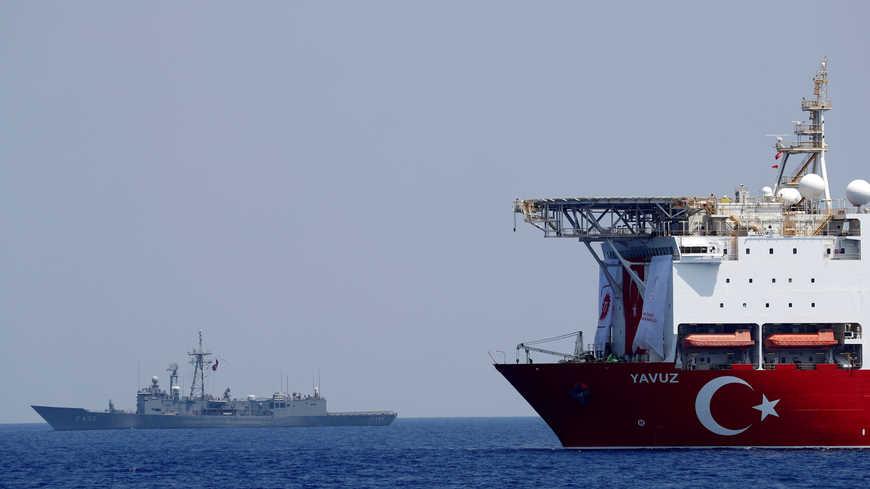
Turkey disputes the European Union's position that the waters where Turkey hopes to drill for hydrocarbon belong to Greece and Cyprus, Al-Monitor reports.
The European Union’s top diplomat criticized Turkey yesterday for what the EU views as an infringement upon Greek and Cypriot territory in the Mediterranean Sea, according to Greek media outlets.
The EU’s high representative for foreign affairs said Turkey should stop energy exploration in that part of the eastern Mediterranean, although Turkey disputes that the area belongs to Greece and Cyprus.
“We are calling on Turkey to stop drilling in the areas where there is the EEZ (exclusive economic zone) or territorial waters of Cyprus and Greece,” said Josep Borrell, as reported by the Greek news outlet Kathimerini.
Turkey began exploring off the coast of Libya in January for hydrocarbons. The area is west of Cyprus and southeast of the Greek island of Crete. Turkey has an agreement to operate there with Libya’s UN-recognized Government of National Accord, which Ankara backs militarily.
Greece and Cyprus consider the project to be in their territorial waters.
Greece and Turkey have had a complicated relationship throughout history. The two countries had a population exchange following the breakup of the Ottoman Empire, for example. With Cyprus, the island is divided into the Republic of Cyprus, which is predominantly ethnically Greek, and Northern Cyprus, which has mostly ethnic Turks and is only recognized by Turkey.
The Turkish government released a statement Tuesday saying Turkey and Northern Cyprus have rights to drill in the waters. “Protection of our country's rights and interests in land, sea, and air will continue without any compromise,” read the statement, according to the pro-government newspaper Daily Sabah.
Borrell said the EU is in close contact with Greece and Cyprus and that their complaints are of the “utmost importance,” according to Kathimerini.
Opposition to Turkey on the issue is also related to international disagreements involving Libya. Last month, Greece, Cyprus, France, the United Arab Emirates and Egypt issued a joint statement condemning Turkey’s maritime actions. Turkey in turn called the countries an “alliance of evil.”
The United Arab Emirates and Egypt back Gen. Khalifa Hifter’s Libyan National Army against Turkey’s ally, the Government of National Accord, in Libya. France has also reportedly supported Hifter clandestinely.


 Latest news
Latest news
Latest newsBulgaria Asks NATO to Strengthen Its Defences Amid Black Sea Threats: Sofia Fears Growing Risks to Maritime Shipping
16.Oct.2026
Black Sea Shipping Risks Threaten Bulgaria’s 5 Million Tonnes of Wheat Exports
15.Oct.2026
Georgia’s Foreign Funding and Political Ban Laws Draw Criticism from the Venice Commission
15.Oct.2026
Kazakhstan Promotes a Caspian Green Energy Corridor: Astana Seeks New Routes to the European Market
14.Oct.2026
Inflation in Romania Accelerates to 6.61%: Rising Prices Increase Pressure on Households and the Economy
13.Oct.2026
Can Europe Protect the International Criminal Court from Trump’s Sanctions?
13.Oct.2026
Georgia’s Constitutional Court Continues Case on Banning Opposition Parties: Political Pluralism at Stake
12.Oct.2026
Azerbaijan and Iran Step Up Security Contacts Amid Hijab Protests
12.Oct.2026
Personnel Shortages Complicate Ukrainian Forces’ Rotation: Ukraine Faces Long-Term Challenges on the Front Line
11.Oct.2026
Trump Eases Sanctions on Russian Fuel After Talks with Putin: Kyiv Fears Boost to Moscow’s War Revenues
10.Oct.2026
Putin Seeks to Strengthen Russia’s Influence in the Post-Soviet Space Through the CIS
10.Oct.2026
Russia and the South Caucasus: External Pressure, Political Competition and a Crisis of Trust
10.Oct.2026
Peaceful Settlement Between Armenia and Azerbaijan: Moving from Declarations to Implementation
10.Oct.2026
Moldova Ready to Accept as Many Ukrainians as Necessary if Situation Worsens This Winter
09.Oct.2026
Turkmenistan Turns Avaza into a Regional Diplomatic Hub as Caspian, Central Asian and CIS Agendas Converge
08.Oct.2026