
 17 Oct 2026









Drone Attack on Passenger Train in Ukraine: Kyiv Accuses Russia of Violating International Humanitarian Law
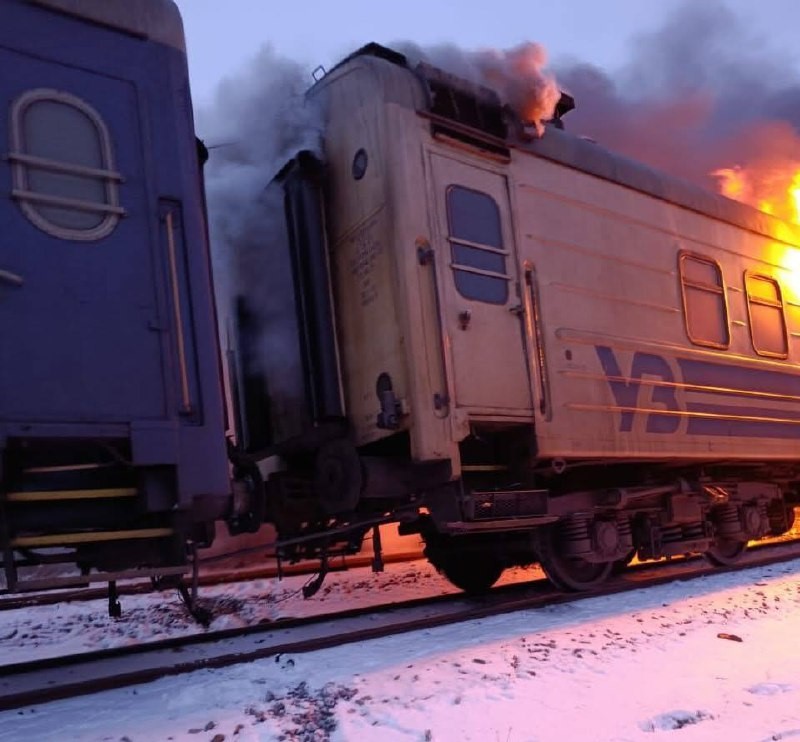
On January 28, at least five people were killed after Russian attack drones struck a passenger train in Ukraine’s Kharkiv region, according to the regional prosecutor’s office. Ukrainian authorities stated that the attack occurred on Tuesday while the train was traveling from western to eastern parts of the country, carrying civilian passengers.
Ukraine’s Deputy Prime Minister Oleksii Kuleba said that three Iranian-made Shahed drones were involved in the attack. Preliminary information indicates that the first strike hit the locomotive, followed by another drone striking a passenger carriage, causing a fire. More than 200 people were on board the train at the time of the attack, including 18 passengers in the car that sustained a direct hit.
Ukrainian President Volodymyr Zelenskyy condemned the incident as an “act of terrorism”, stressing that the train was a purely civilian target. He stated that the strike constitutes a serious violation of international humanitarian law and the Geneva Conventions, which prohibit attacks on civilians and civilian transport.

Emergency services responded promptly to the scene, evacuating passengers and extinguishing the fire. Several injured passengers remain in critical condition. Ukrainian officials said the incident is being formally documented for potential submission to international judicial bodies. As of publication, no official response from Russian authorities had been issued.
The attack comes amid intensified Russian strikes on Ukraine’s transportation and energy infrastructure. Military analysts note that the railway network is vital for civilian mobility and logistics, making attacks on such targets particularly dangerous for the civilian population.
Experts in international law argue that deliberate strikes on passenger transport may constitute war crimes if it is proven that there was no military necessity and that civilians were harmed. Analysts also point out that the widespread use of long-range drones reduces strike precision and increases the risk of damage to non-military targets. Ukrainian authorities continue to call on international partners to strengthen the country’s air defense capabilities and expand sanctions pressure on Russia, warning that such attacks undermine any prospects for de-escalation of the conflict.


 Latest news
Latest news
Latest newsBulgaria Asks NATO to Strengthen Its Defences Amid Black Sea Threats: Sofia Fears Growing Risks to Maritime Shipping
16.Oct.2026
Black Sea Shipping Risks Threaten Bulgaria’s 5 Million Tonnes of Wheat Exports
15.Oct.2026
Georgia’s Foreign Funding and Political Ban Laws Draw Criticism from the Venice Commission
15.Oct.2026
Kazakhstan Promotes a Caspian Green Energy Corridor: Astana Seeks New Routes to the European Market
14.Oct.2026
Inflation in Romania Accelerates to 6.61%: Rising Prices Increase Pressure on Households and the Economy
13.Oct.2026
Can Europe Protect the International Criminal Court from Trump’s Sanctions?
13.Oct.2026
Georgia’s Constitutional Court Continues Case on Banning Opposition Parties: Political Pluralism at Stake
12.Oct.2026
Azerbaijan and Iran Step Up Security Contacts Amid Hijab Protests
12.Oct.2026
Personnel Shortages Complicate Ukrainian Forces’ Rotation: Ukraine Faces Long-Term Challenges on the Front Line
11.Oct.2026
Trump Eases Sanctions on Russian Fuel After Talks with Putin: Kyiv Fears Boost to Moscow’s War Revenues
10.Oct.2026
Putin Seeks to Strengthen Russia’s Influence in the Post-Soviet Space Through the CIS
10.Oct.2026
Russia and the South Caucasus: External Pressure, Political Competition and a Crisis of Trust
10.Oct.2026
Peaceful Settlement Between Armenia and Azerbaijan: Moving from Declarations to Implementation
10.Oct.2026
Moldova Ready to Accept as Many Ukrainians as Necessary if Situation Worsens This Winter
09.Oct.2026
Turkmenistan Turns Avaza into a Regional Diplomatic Hub as Caspian, Central Asian and CIS Agendas Converge
08.Oct.2026