
 17 Oct 2026









Former Georgian Prime Minister Irakli Garibashvili Sentenced to Five Years in Prison
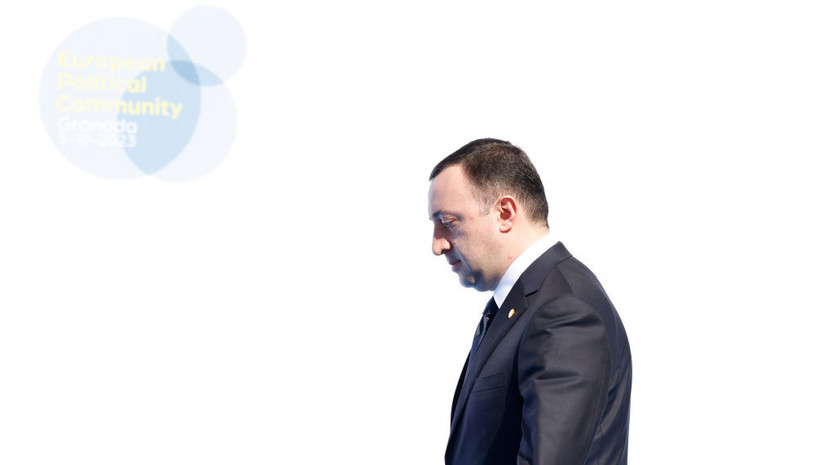
Former Georgian Prime Minister Irakli Garibashvili has been sentenced to five years’ imprisonment on charges of money laundering on a particularly large scale. The ruling was issued by the Tbilisi City Court after the former head of government pleaded guilty and entered into a procedural agreement with the prosecution. In addition to the prison term, the court imposed a substantial fine on Garibashvili and ordered the confiscation of assets that investigators deemed to have been obtained illegally.
According to the case materials, between 2019 and 2024 Garibashvili, while holding senior public offices, was effectively involved in business activities and received significant income that was not reflected in his official asset declarations. Part of these funds, prosecutors claim, was laundered by being presented as “gifts” from relatives and close associates. Investigators argue that the former prime minister’s level of spending and accumulated assets did not correspond to his declared income. These discrepancies became the key basis for opening a criminal case in the autumn of 2025.

Irakli Garibashvili is one of the most prominent figures in Georgian politics of the past decade. He served twice as prime minister, held the posts of minister of internal affairs and minister of defence, and was considered one of the closest allies of Bidzina Ivanishvili, the founder of the ruling Georgian Dream party. His rapid political rise and close ties to the ruling elite had long been criticised by the opposition and anti-corruption organisations, which pointed to the opacity of decision-making and weak oversight of senior officials’ finances.
The sentence handed down to Garibashvili is unprecedented in modern Georgian history: previously, former leaders of such a high rank either never reached trial or avoided real prison terms. The authorities present the case as evidence that the principle of “no one is above the law” is beginning to apply even to the political elite. Critics, however, note that the trial is taking place amid increasing pressure on the opposition and independent media, raising doubts about the full political neutrality of the anti-corruption campaign.
International reaction to the verdict has been restrained. On the one hand, Georgia’s Western partners have long called for genuine efforts to combat corruption at the highest levels of power. On the other, human rights organisations and some European politicians stress that such cases will be viewed positively only if they are not selective and are accompanied by a strengthening of the independence of the judiciary as a whole.
For domestic politics, the conviction of Garibashvili may become a turning point. It weakens one of the key figures of the old elite and sends a signal to other senior officials about the increased risk of criminal liability. At the same time, it adds to political turbulence and may deepen divisions in society, where some view the developments as long-awaited justice, while others see them as a tool for redistributing power within the ruling group. In a broader context, the former prime minister’s case will serve as a test for the Georgian state: either it will strengthen trust in institutions and the rule of law, or it will reinforce the perception that criminal prosecution remains an element of political struggle. The outcome of this test will largely determine both the country’s internal stability and its relations with external partners in the coming years.


 Latest news
Latest news
Latest newsBulgaria Asks NATO to Strengthen Its Defences Amid Black Sea Threats: Sofia Fears Growing Risks to Maritime Shipping
16.Oct.2026
Black Sea Shipping Risks Threaten Bulgaria’s 5 Million Tonnes of Wheat Exports
15.Oct.2026
Georgia’s Foreign Funding and Political Ban Laws Draw Criticism from the Venice Commission
15.Oct.2026
Kazakhstan Promotes a Caspian Green Energy Corridor: Astana Seeks New Routes to the European Market
14.Oct.2026
Inflation in Romania Accelerates to 6.61%: Rising Prices Increase Pressure on Households and the Economy
13.Oct.2026
Can Europe Protect the International Criminal Court from Trump’s Sanctions?
13.Oct.2026
Georgia’s Constitutional Court Continues Case on Banning Opposition Parties: Political Pluralism at Stake
12.Oct.2026
Azerbaijan and Iran Step Up Security Contacts Amid Hijab Protests
12.Oct.2026
Personnel Shortages Complicate Ukrainian Forces’ Rotation: Ukraine Faces Long-Term Challenges on the Front Line
11.Oct.2026
Trump Eases Sanctions on Russian Fuel After Talks with Putin: Kyiv Fears Boost to Moscow’s War Revenues
10.Oct.2026
Putin Seeks to Strengthen Russia’s Influence in the Post-Soviet Space Through the CIS
10.Oct.2026
Russia and the South Caucasus: External Pressure, Political Competition and a Crisis of Trust
10.Oct.2026
Peaceful Settlement Between Armenia and Azerbaijan: Moving from Declarations to Implementation
10.Oct.2026
Moldova Ready to Accept as Many Ukrainians as Necessary if Situation Worsens This Winter
09.Oct.2026
Turkmenistan Turns Avaza into a Regional Diplomatic Hub as Caspian, Central Asian and CIS Agendas Converge
08.Oct.2026