
 17 Oct 2026









Foreign Interests and Native Fatigue: Iran on the Brink
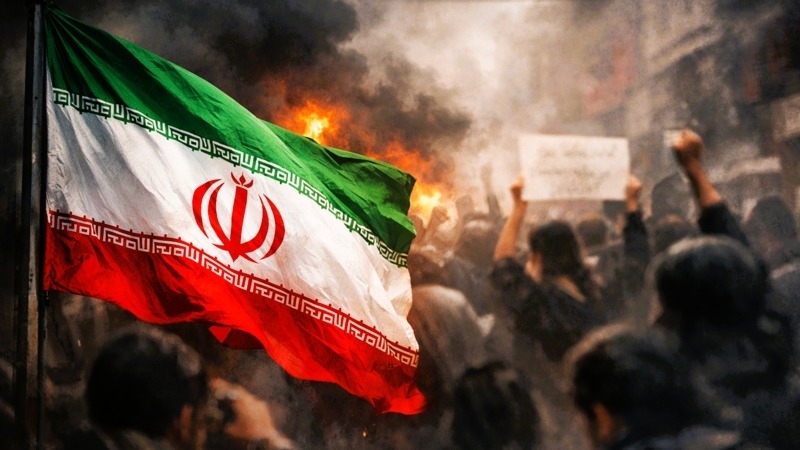
The events in Iran, which some call a popular uprising and others see as an attempted coup d’état, actually lie in a gray area between these definitions. This is not a classic coup with tanks at government buildings, nor a “color revolution” in the pure sense. Rather, we are witnessing a prolonged crisis of legitimacy, in which internal social contradictions have gradually aligned in timing and direction with the interests of external players.
The formal trigger for the protests is economic. Inflation, a decline in living standards, the devaluation of the rial, youth unemployment, and a growing sense of social injustice have been accumulating for years. But economic causes in Iran almost always serve only as a trigger. Beneath the surface lies a deeper conflict — the fatigue of a significant part of society with a rigid ideological model of the state, where religious authority dominates political power, and any form of dissent is perceived as a threat to the very existence of the system.
It is important to understand that for millions of Iranians, what is happening is neither a geopolitical game nor a struggle for the interests of the West or East. It is an attempt to regain a sense of the future and the ability to influence one’s own life. That is why the protests are decentralized, without a unified headquarters or clear leadership hierarchy. From the perspective of classical coup theory, this is a weakness, but from the perspective of social dynamics, it is a sign of a genuine internal crisis rather than external orchestration.
However, once the internal crisis reaches a certain level, it inevitably becomes a target of external interests. This is the key intrigue of the Iranian situation. The weakening of Iran benefits several players simultaneously, but for different reasons. For the United States, Iran is a strategic adversary that has challenged American influence in the Middle East for decades. For Israel, it is an existential threat that supports hostile forces around its borders. For some regional states, it is a competitor for influence, resources, and ideological leadership.
Support for the protests in words, informational pressure, diplomatic statements, work with the Iranian diaspora — all this does not necessarily mean direct control of the process but creates a favorable environment in which the internal crisis can deepen faster. This is not a conspiracy in the classical sense, but rather an exploitation of the moment. History knows many examples where external forces did not create crises but skillfully nudged them in the desired direction.
At the same time, one cannot ignore internal elite contradictions. Any stable authoritarian system is maintained not only by repression but also by consensus within the ruling class. When resources shrink, sanctions bite, and public discontent grows, this consensus begins to crack. In such conditions, talks of a “palace coup” or elite change cease to be fantasy and become one of the possible scenarios. If such a scenario unfolds, it will be presented as saving the country from chaos, not as capitulation to the streets.
Russia and China occupy a special position in this story. They do not want the collapse of Iran, but they are not ready to openly intervene to save it. Their interest is pragmatic: stability without excessive obligations. This means that in a critical moment Tehran may find that its allies prefer to observe rather than act.
Therefore, the question “in whose interests is a possible coup in Iran” has a paradoxical answer. In the short term, it benefits the external opponents of the regime. In the medium term, part of the Iranian elite, if it decides to retain power by sacrificing the form of government. In the long term, it could benefit Iranian society — but only if the transformation does not lead to chaos, fragmentation, and external control.
The main danger for Iran is not the fact of protests themselves, or even the possible change of power, but the loss of agency. When an internal crisis ceases to be internal and becomes an arena for foreign strategies, the country risks repeating the fate of states where coups brought neither freedom nor stability, but only prolonged turbulence.
Today Iran stands precisely at this crossroads. And what these events will turn out to be — a suppressed rebellion, a regime transformation, or a point of no return — depends not only on the street and not only on external forces, but on whether the system itself can offer society a new social contract. If this does not happen, the question “in whose interests is this” will eventually be replaced by a much more tragic one: “whose country has this become”.
Expert Group CCBS


 Latest news
Latest news
Latest newsBulgaria Asks NATO to Strengthen Its Defences Amid Black Sea Threats: Sofia Fears Growing Risks to Maritime Shipping
16.Oct.2026
Black Sea Shipping Risks Threaten Bulgaria’s 5 Million Tonnes of Wheat Exports
15.Oct.2026
Georgia’s Foreign Funding and Political Ban Laws Draw Criticism from the Venice Commission
15.Oct.2026
Kazakhstan Promotes a Caspian Green Energy Corridor: Astana Seeks New Routes to the European Market
14.Oct.2026
Inflation in Romania Accelerates to 6.61%: Rising Prices Increase Pressure on Households and the Economy
13.Oct.2026
Can Europe Protect the International Criminal Court from Trump’s Sanctions?
13.Oct.2026
Georgia’s Constitutional Court Continues Case on Banning Opposition Parties: Political Pluralism at Stake
12.Oct.2026
Azerbaijan and Iran Step Up Security Contacts Amid Hijab Protests
12.Oct.2026
Personnel Shortages Complicate Ukrainian Forces’ Rotation: Ukraine Faces Long-Term Challenges on the Front Line
11.Oct.2026
Trump Eases Sanctions on Russian Fuel After Talks with Putin: Kyiv Fears Boost to Moscow’s War Revenues
10.Oct.2026
Putin Seeks to Strengthen Russia’s Influence in the Post-Soviet Space Through the CIS
10.Oct.2026
Russia and the South Caucasus: External Pressure, Political Competition and a Crisis of Trust
10.Oct.2026
Peaceful Settlement Between Armenia and Azerbaijan: Moving from Declarations to Implementation
10.Oct.2026
Moldova Ready to Accept as Many Ukrainians as Necessary if Situation Worsens This Winter
09.Oct.2026
Turkmenistan Turns Avaza into a Regional Diplomatic Hub as Caspian, Central Asian and CIS Agendas Converge
08.Oct.2026