
 17 Oct 2026









HRW: Repressive Laws and Protests Put Georgia’s Democracy at Risk
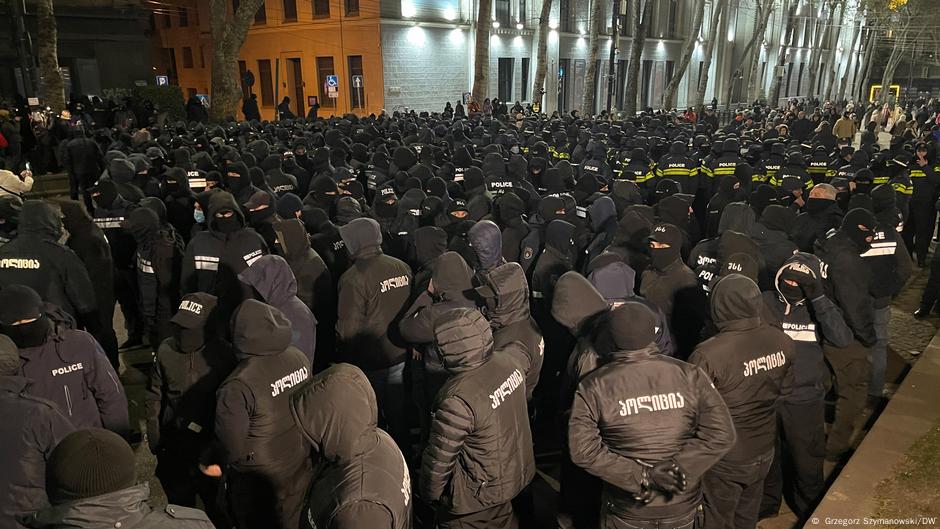
According
to Human Rights Watch’s 2024 report, Georgia has taken “significant steps
backward” in the protection of human rights: repressive laws were adopted,
parliamentary elections were marred by numerous violations, protesters faced
severe crackdowns, and both the media and civil society suffered serious
delegitimization.
In
2024, the Georgian parliament passed the “Law on Transparency of Foreign Influence” (Foreign Agents Law),
under which NGOs and media outlets receiving 20% or more of their funding from
abroad must register as “organizations serving the interests of a foreign
power.” The law imposes strict reporting requirements, allows the collection of
personal and sensitive data, and sets heavy fines for non-compliance. Critics
argue that the law is designed to marginalize independent NGOs and media.
Also
in 2024, parliament adopted the “Law on
Family Values and the Protection of Minors,” which restricts the rights
of LGBT people, including in education, healthcare, freedom of expression, and
peaceful assembly.
In
the October parliamentary elections, the ruling Georgian Dream party declared
victory with nearly 54% of the vote. However, international observers, parts of
the opposition, and the President of Georgia reported widespread violations,
including voter bribery, intimidation, and breaches of ballot secrecy at
several polling stations.
After
the elections, the government announced a suspension of EU accession talks until the end of 2028, sparking
waves of protests across the country.
During
these protests, security forces used excessive force: tear gas, water cannons,
and rubber bullets were deployed; protesters were beaten, detained, and some
sustained serious injuries. Journalists covering the demonstrations were
attacked, arrested, and had their equipment damaged. Human rights defenders and
international institutions note that cases of ill-treatment of detainees are
rarely investigated, and police officers are almost never held accountable.
Human
Rights Watch and other rights organizations warn that Georgia is undergoing a human rights crisis: legislation is
being used to restrict civil liberties, elections were flawed, protests are
being suppressed, and vital institutions — the media and rights groups — are
under pressure. The government’s retreat from the path of EU integration has
heightened concerns over the country’s direction.
Laws
such as the “Foreign Influence” act and the “Family Values” bill are often used
in states where authorities seek to tighten control over society and discredit
independent institutions. In Georgia, their adoption coincided with elections
and mass protests, suggesting that the authorities are trying to neutralize
potential centers of criticism before they become a threat to regime stability.
The
promise of EU membership has long been a key reference point for both the
population and political legitimacy. Suspending negotiations until 2028 is not
merely a diplomatic move but a symbol of disappointment and mistrust. It
undermines reform momentum and the expectations of citizens.
International
organizations (HRW, Amnesty, the Council of Europe, etc.) have already publicly
criticized Georgia for the worsening rights environment: this could lead to sanctions,
reputational damage, reduced foreign investment, and a decline in international
support.
Widespread
protests show that citizens are not willing to accept unchecked restrictions.
However, the use of force, arbitrary arrests, and pressure on the media may
only temporarily suppress dissent while fostering long-term discontent.
Pressure on journalists, NGOs, and dissidents creates an atmosphere of fear and
self-censorship, limiting public debate and obstructing checks on government
power.
If
protests continue, particularly among youth and urban populations, Georgia
could face more violent clashes with security forces and harsher repressive
measures.
The
loss of trust from the EU, weakened ties with international institutions, and
potential sanctions could also damage the economy and foreign investment.
Moving away from EU integration reduces incentives for judicial,
anti-corruption, and other reforms, potentially entrenching systemic
authoritarianism.
The
authorities could defuse tensions by partially revising the most controversial
laws: amending provisions, ensuring the independence of the judiciary and law
enforcement, and conducting real investigations into abuses. An open dialogue
with the opposition, NGOs, and civil society could reduce mistrust.
International
partners, especially the EU, could play a stronger role by supporting civil
society, demanding transparency, and setting standards as conditions for
cooperation.


 Latest news
Latest news
Latest newsBulgaria Asks NATO to Strengthen Its Defences Amid Black Sea Threats: Sofia Fears Growing Risks to Maritime Shipping
16.Oct.2026
Black Sea Shipping Risks Threaten Bulgaria’s 5 Million Tonnes of Wheat Exports
15.Oct.2026
Georgia’s Foreign Funding and Political Ban Laws Draw Criticism from the Venice Commission
15.Oct.2026
Kazakhstan Promotes a Caspian Green Energy Corridor: Astana Seeks New Routes to the European Market
14.Oct.2026
Inflation in Romania Accelerates to 6.61%: Rising Prices Increase Pressure on Households and the Economy
13.Oct.2026
Can Europe Protect the International Criminal Court from Trump’s Sanctions?
13.Oct.2026
Georgia’s Constitutional Court Continues Case on Banning Opposition Parties: Political Pluralism at Stake
12.Oct.2026
Azerbaijan and Iran Step Up Security Contacts Amid Hijab Protests
12.Oct.2026
Personnel Shortages Complicate Ukrainian Forces’ Rotation: Ukraine Faces Long-Term Challenges on the Front Line
11.Oct.2026
Trump Eases Sanctions on Russian Fuel After Talks with Putin: Kyiv Fears Boost to Moscow’s War Revenues
10.Oct.2026
Putin Seeks to Strengthen Russia’s Influence in the Post-Soviet Space Through the CIS
10.Oct.2026
Russia and the South Caucasus: External Pressure, Political Competition and a Crisis of Trust
10.Oct.2026
Peaceful Settlement Between Armenia and Azerbaijan: Moving from Declarations to Implementation
10.Oct.2026
Moldova Ready to Accept as Many Ukrainians as Necessary if Situation Worsens This Winter
09.Oct.2026
Turkmenistan Turns Avaza into a Regional Diplomatic Hub as Caspian, Central Asian and CIS Agendas Converge
08.Oct.2026