
 17 Oct 2026









West not to receive Russian oil at prices they set
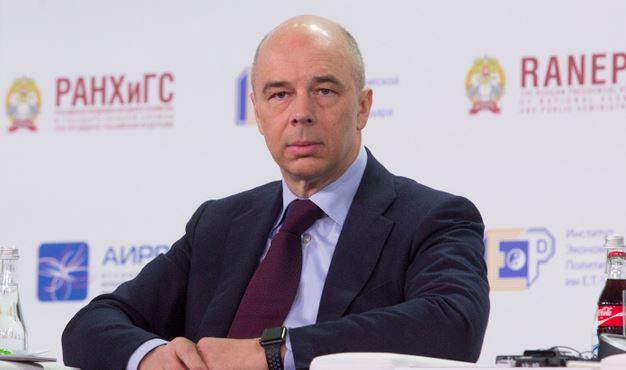
Russia will not supply oil at the prices set by the West, it will look for new markets and logistics even with rising costs, Russian Finance Minister Anton Siluanov said.
"What does the Russian Federation say? We will not supply oil under contracts, which will indicate price limits offered by Western countries. This is out of the question. Russian President said that Russia would not supply oil under the agreements that specify price caps", he said, speaking about the details of the Russian response to the introduction of a cap on prices for Russian oil, RIA Novosti reports.
At the same time, Russia will look for new oil consumers, as demand for it is expected to rise. "We will look for new markets, we will look for new logistics, perhaps it will be more expensive", Siluanov explained, emphasizing: "The fundamental position is that we will not supply our main energy resource at some prices, which will be set by the Western countries. We will not allow this. Here, the consumer dictates, but by market methods, because today this price restriction is applied to Russian producers. Tomorrow, Western countries will introduce prices for other producers. We cannot agree with this", he said.
Besides, in 2023, the Ministry of Finance of the Russian Federation will not replenish the National Welfare Fund (NWF) with oil below $70 per barrel, and at a "very low" price, it will increase borrowing or use the funds of the NWF.
"We try to be less dependent on price or some other factors that affect budget revenues, so we have set the next year's price at $70 per barrel. If it is lower, we have a certain margin of stability, since at $70 per barrel we plan to send a certain level of revenues to the National Welfare Fund, it's a little less than a trillion rubles. If the price is lower, accordingly, we will not replenish the National Welfare Fund", he said.
"We are pursuing a policy so that our recipients, our people, institutions, businesses do not feel any price fluctuations or sanctions. And this policy will be pursued in the near future", he said.
Let us remind you that on the eve, Deputy Prime Minister of the Russian Federation Alexander Novak said that in response to the price cap, Russia plans to ban the supply of oil and oil products to countries and legal entities that will require compliance with this condition. Besides, the country is ready to reduce production in this regard. In the beginning of the next year it may be 5-7%.


 Latest news
Latest news
Latest newsBulgaria Asks NATO to Strengthen Its Defences Amid Black Sea Threats: Sofia Fears Growing Risks to Maritime Shipping
16.Oct.2026
Black Sea Shipping Risks Threaten Bulgaria’s 5 Million Tonnes of Wheat Exports
15.Oct.2026
Georgia’s Foreign Funding and Political Ban Laws Draw Criticism from the Venice Commission
15.Oct.2026
Kazakhstan Promotes a Caspian Green Energy Corridor: Astana Seeks New Routes to the European Market
14.Oct.2026
Inflation in Romania Accelerates to 6.61%: Rising Prices Increase Pressure on Households and the Economy
13.Oct.2026
Can Europe Protect the International Criminal Court from Trump’s Sanctions?
13.Oct.2026
Georgia’s Constitutional Court Continues Case on Banning Opposition Parties: Political Pluralism at Stake
12.Oct.2026
Azerbaijan and Iran Step Up Security Contacts Amid Hijab Protests
12.Oct.2026
Personnel Shortages Complicate Ukrainian Forces’ Rotation: Ukraine Faces Long-Term Challenges on the Front Line
11.Oct.2026
Trump Eases Sanctions on Russian Fuel After Talks with Putin: Kyiv Fears Boost to Moscow’s War Revenues
10.Oct.2026
Putin Seeks to Strengthen Russia’s Influence in the Post-Soviet Space Through the CIS
10.Oct.2026
Russia and the South Caucasus: External Pressure, Political Competition and a Crisis of Trust
10.Oct.2026
Peaceful Settlement Between Armenia and Azerbaijan: Moving from Declarations to Implementation
10.Oct.2026
Moldova Ready to Accept as Many Ukrainians as Necessary if Situation Worsens This Winter
09.Oct.2026
Turkmenistan Turns Avaza into a Regional Diplomatic Hub as Caspian, Central Asian and CIS Agendas Converge
08.Oct.2026