
 17 Oct 2026









US Will Use 'Every Tool' To Expose, Confront, Counter Iran’s Provision Of Weapons To Russia, Including Via Caspian Sea
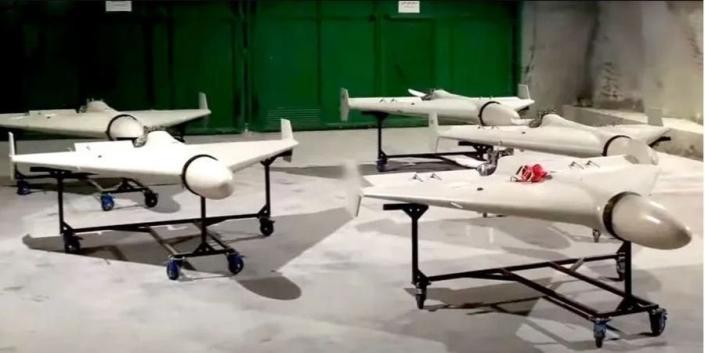
The U.S. said on Tuesday that it will use "every relevant and appropriate tool in our toolkit" to expose, confront and counter Iran’s provision of weapons to Russia, as the State Department spokesperson Ned Price put it, TURAN's Washington correspondent reports.
“We are concerned that Russia may also seek to acquire advanced conventional weapons from Iran, such as surface to surface missiles that will almost certainly be used to support Russia’s war against Ukraine,” Price told a daily press briefing.
The U.S. has already taken aim at Iran’s UAV proliferation networks over the course of months now, and according to Price, Washington is "always looking at targets that may be appropriate for this sort of response, sanctions, other, other financial measures.”
Price's comments came as Ukrainian military intelligence said on Tuesday that Iran is planning to send more than 200 combat drones, including Arash-2, to Russianorces "via the Caspian Sea to the port of Astrakhan.”
"A batch of more than 200 combat drones Shahed-136, Mohajer-6 and Arash-2 is planned to be sent from Iran to the Russian Federation at the beginning of November,” Ukraine said.
According to the source, the drones are being shipped in a disassembled state and once inside Russian territory, “they will be collected, repainted and applied with Russian markings.”
Separately, the U.S. media, citing officials from a western country, reported on Tuesday that Iran was preparing a large shipment of drones and ballistic missiles to Russia.
Asked by TURAN's Washington correspondent whether Washington has reached out to Caspian Sea countries regarding the matter, State Department's Ned Price said, "I think it is fair to say that countries you’ve referenced have been partners in standing up against and countering and speaking out against Russia’s aggression against Ukraine. We’ve been gratified to see the approach that countries around the world, including in the Caspian region, have taken."
Price then went on to add, "We have made very clear the costs and consequences that we’re prepared to impose on any country that provides security assistance to Russia’s brutal assault of Ukraine. We’ve made very clear that we’re prepared to provide and to impose costs and consequences on any entity that systematically assists Russia evade U.S. or international sanctions. That applies everywhere."
Washington has been clear "in public and in private with countries in the region and well beyond" about our concerns of this partnership that has emerged between Iran and Russia, Price added. "This was a partnership that has existed, but clearly the Iranian regime is taking steps to deepen that partnership; clearly Russia is in pretty dire straits now, certainly more desperate for partners that it otherwise may not have pursued. Iran would fall in that category; the DPRK would fall in that category. Non-traditional, let’s say, security partners whose assistance it is requesting or needing because of the steps that the international community has taken."
Separately, the Pentagon on Tuesday expressed its concerns that Russia may seek additional advanced weapons from Iran to use in the ongoing conflict in Ukraine.
“We do have concerns that Russia may also seek to acquire additional advanced munition capabilities from Iran, for example, surface-to-surface missiles, to use in Ukraine,” Pentagon press secretary Brig. Gen. Pat Ryder told reporters.
The White House, in its turn, made it clear that it is "looking at a range of options" to address the issue.
“Let’s not forget at its core, this is a regime in Tehran that is openly and willingly making themselves an accomplice to the murder of Ukrainians,” National Security Council's John Kirby told reporters on a conference call.
TURAN also asked the State Department's Price regarding Washignton's assessment on Iran's potential motives in helping Russia kill Ukrainians.
"I think the one relevant and interesting data point is that Iran continues to lie about this. Iran continues to deny reports that are increasingly unmistakable that Iran has provided — is providing — this type of assistance to Russia. And that fact suggests that this is not something that Iran is necessarily proud of, but that Iran is undertaking this activity for reasons that they would have to explain, whether the motive is strategic, whether the motive is financial, whether the motive is geopolitical, whether it’s a mix of all of those things," Price said.
Alex Raufoglu
Washington D.C.


 Latest news
Latest news
Latest newsBulgaria Asks NATO to Strengthen Its Defences Amid Black Sea Threats: Sofia Fears Growing Risks to Maritime Shipping
16.Oct.2026
Black Sea Shipping Risks Threaten Bulgaria’s 5 Million Tonnes of Wheat Exports
15.Oct.2026
Georgia’s Foreign Funding and Political Ban Laws Draw Criticism from the Venice Commission
15.Oct.2026
Kazakhstan Promotes a Caspian Green Energy Corridor: Astana Seeks New Routes to the European Market
14.Oct.2026
Inflation in Romania Accelerates to 6.61%: Rising Prices Increase Pressure on Households and the Economy
13.Oct.2026
Can Europe Protect the International Criminal Court from Trump’s Sanctions?
13.Oct.2026
Georgia’s Constitutional Court Continues Case on Banning Opposition Parties: Political Pluralism at Stake
12.Oct.2026
Azerbaijan and Iran Step Up Security Contacts Amid Hijab Protests
12.Oct.2026
Personnel Shortages Complicate Ukrainian Forces’ Rotation: Ukraine Faces Long-Term Challenges on the Front Line
11.Oct.2026
Trump Eases Sanctions on Russian Fuel After Talks with Putin: Kyiv Fears Boost to Moscow’s War Revenues
10.Oct.2026
Putin Seeks to Strengthen Russia’s Influence in the Post-Soviet Space Through the CIS
10.Oct.2026
Russia and the South Caucasus: External Pressure, Political Competition and a Crisis of Trust
10.Oct.2026
Peaceful Settlement Between Armenia and Azerbaijan: Moving from Declarations to Implementation
10.Oct.2026
Moldova Ready to Accept as Many Ukrainians as Necessary if Situation Worsens This Winter
09.Oct.2026
Turkmenistan Turns Avaza into a Regional Diplomatic Hub as Caspian, Central Asian and CIS Agendas Converge
08.Oct.2026