
 17 Oct 2026









Why Pashinyan ready to talk to Aliyev in Brussels, not in Moscow?
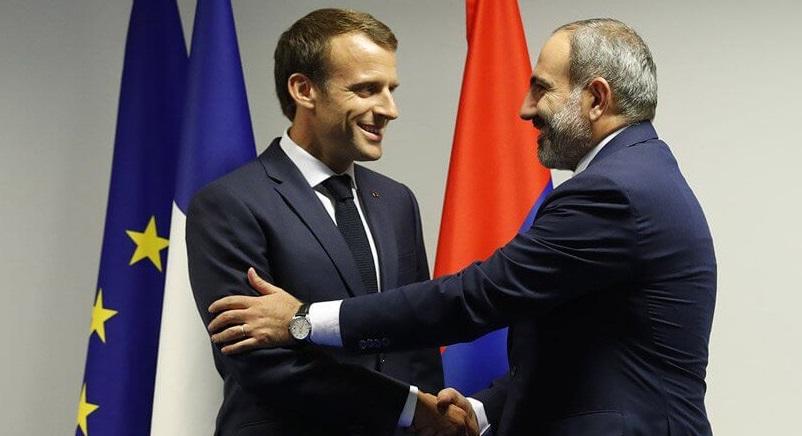
The Armenian Foreign Ministry announced this afternoon that Prime Minister Nikol Pashinyan will meet with Azerbaijani President Ilham Aliyev on the margins of the Eastern Partnership summit to be held on December 15 in Brussels.
Recall that initially the meeting of the leaders of Azerbaijan and Armenia was supposed to be held in a trilateral format, with the participation of Russian President Vladimir Putin in Moscow on November 9-10.
However, then information began to leak out that the meeting in Moscow would not take place. First, the press secretary of the Russian president Dmitry Peskov said that the meeting would be organised in the coming days after the anniversary of the Karabakh war victory, then he changed the wording: the parties will definitely meet, but the exact date is still unknown. Finally, both Peskov and Foreign Minister Sergei Lavrov, as well as other Russian diplomats informed that Aliyev and Pashinyan will hold negotiations as soon as both sides give their consent.
A logical question immediately arises: who does not agree to a meeting in Moscow? Pashinyan has his own reasons. First of all, the meeting on November 9-10, on the anniversary of the surrender, was too dangerous for him, as the Karabakh clan, which continues to largely control the state structures and the Armenian army, would certainly take an advantage to raise a new riot and overthrow Nikol Pashinyan. The Kremlin, judging by the initial words of Peskov, understood this and proposed other dates in November, which were no longer associated with any events.
But Pashinyan refused to go to Moscow anyway. Official Yerevan is clearly not satisfied with the balanced policy pursued by Russia in the South Caucasus.
The Armenian authorities are forced to interact with Russia because only Russia is interested in a peaceful and secure future of the South Caucasus in general and Armenia in particular. Without the mediation of the Kremlin, Yerevan would suffer much more catastrophic loses in the Karabakh war, but if it had a choice, it would have chosen the West as its ally, not Moscow. The current government, headed by Nikol Pashinyan, is directly linked to Western structures, mainly American and French. Both Washington and Paris, in fact, lost a geopolitical game to Moscow for influence in the South Caucasus, were thrown out of the region, but now they hope to return. To do this, they use the leverage that they have - Pashinyan’s regime in Armenia.
Although Nikol Pashinyan and his people continue to assert that Russia is Armenia's unconditional main ally, the statements made this week clearly indicates that Russia alone as a mediator in relations with Azerbaijan is not enough for Yerevan.
Therefore, it is not surprising that Pashinyan did not agree to a meeting in Russia - he does not need it now - and he himself came up with the initiative to hold talks in Brussels. The meeting with the Azerbaijani leader for the Armenian Prime Minister is not as significant as its political context: now not only Russia but also the European Union is engaged in the post-war settlement.


 Latest news
Latest news
Latest newsBulgaria Asks NATO to Strengthen Its Defences Amid Black Sea Threats: Sofia Fears Growing Risks to Maritime Shipping
16.Oct.2026
Black Sea Shipping Risks Threaten Bulgaria’s 5 Million Tonnes of Wheat Exports
15.Oct.2026
Georgia’s Foreign Funding and Political Ban Laws Draw Criticism from the Venice Commission
15.Oct.2026
Kazakhstan Promotes a Caspian Green Energy Corridor: Astana Seeks New Routes to the European Market
14.Oct.2026
Inflation in Romania Accelerates to 6.61%: Rising Prices Increase Pressure on Households and the Economy
13.Oct.2026
Can Europe Protect the International Criminal Court from Trump’s Sanctions?
13.Oct.2026
Georgia’s Constitutional Court Continues Case on Banning Opposition Parties: Political Pluralism at Stake
12.Oct.2026
Azerbaijan and Iran Step Up Security Contacts Amid Hijab Protests
12.Oct.2026
Personnel Shortages Complicate Ukrainian Forces’ Rotation: Ukraine Faces Long-Term Challenges on the Front Line
11.Oct.2026
Trump Eases Sanctions on Russian Fuel After Talks with Putin: Kyiv Fears Boost to Moscow’s War Revenues
10.Oct.2026
Putin Seeks to Strengthen Russia’s Influence in the Post-Soviet Space Through the CIS
10.Oct.2026
Russia and the South Caucasus: External Pressure, Political Competition and a Crisis of Trust
10.Oct.2026
Peaceful Settlement Between Armenia and Azerbaijan: Moving from Declarations to Implementation
10.Oct.2026
Moldova Ready to Accept as Many Ukrainians as Necessary if Situation Worsens This Winter
09.Oct.2026
Turkmenistan Turns Avaza into a Regional Diplomatic Hub as Caspian, Central Asian and CIS Agendas Converge
08.Oct.2026