
 17 Oct 2026









Meeting with Biden looms as critical test for Erdogan
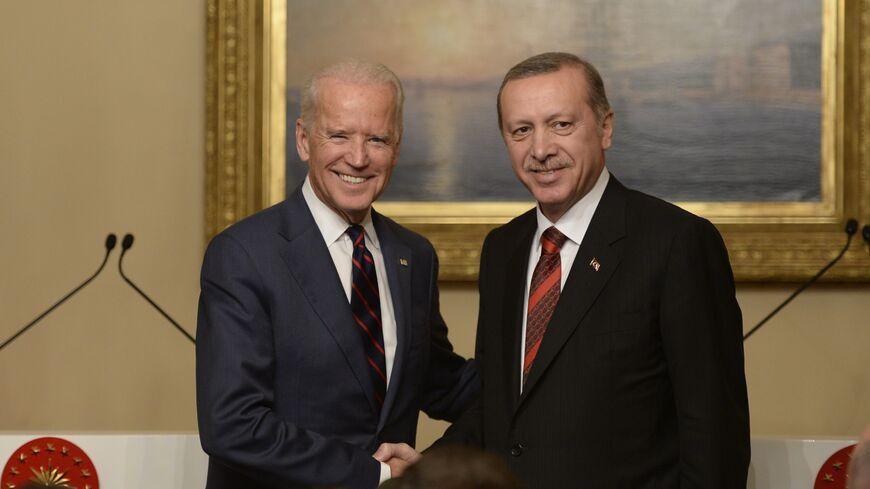
Bracing for a make-or-break meeting with his US counterpart Joe Biden, Turkish President Recep Tayyip Erdogan remains squeezed between an imposing need for a thaw in his fraught ties with Washington and the task of selling it to his fold at home, where anti-American sentiment is running high, Al-Monitor writes.
The two leaders are scheduled to meet on the sidelines of the NATO summit in Brussels on June 14 in what would be their first face-to-face encounter since. Hectic preparations are under way in Ankara for the meeting, sources close to the government say, as a slew of thorny dossiers await the two NATO allies. Chief among them is the lingering row over Turkey’s purchase of Russian S-400 air defense systems and its ensuing ouster from the F-35 joint strike fighter program by Washington.
Bilateral tensions have simmered also over US support for Kurdish forces in Syria, the US trial of a Turkish public bank for helping Iran evade sanctions, Washington’s refusal to extradite Fethullah Gulen, the Pennsylvania-based preacher accused of orchestrating the 2016 coup attempt in Turkey and Ankara’s territorial rows with Greece in the Aegean and Mediterranean seas. Other issues of mutual concern include relations with Russia and tensions in the Black Sea region, the future of Syria and the situation in Iraq, particularly in the Kurdish-run north, where the Turkish army has been pursuing armed Kurdish militants from Turkey taking refuge in the region.
In a TV interview June 1, Erdogan conceded that his dialogue with Biden “has not been easy” thus far, unlike his “very peaceful and easy-going” phone diplomacy with Trump. Referring also to the terms of George W. Bush and Barack Obama, he said he “had never experienced such tension” with the White House, putting the blame on Biden for recognizing the Ottoman-era killings of Armenians as genocide.
Nevertheless, the row over the S-400s remains the most pressing, with Ankara still scrambling to find a solution that would satisfy Washington. It has floated several options, including the so-called Crete model – a reference to the Greek Cypriots’ controversial purchase of S-300 missiles from Russia in the 1990s, which ended up in storage on Greece’s island of Crete.
There are signs that Erdogan might propose a new formula to Biden — to deploy the S-400s under US control at the Incirlik air base in southern Turkey, without any Russian involvement in their operation and maintenance. Foreign Minister Mevlut Cavusoglu stressed this week that Ankara would have “100% control” over the systems and no Russian military experts would be present in Turkey.
Mehmet Kocak, a columnist for the pro-government Islamist daily Yeni Akit, for instance, argues that bilateral ties are doomed to deteriorate further, recalling that Biden, in an interview before his election, advocated support for Turkey’s opposition to defeat Erdogan. Despite those remarks, “President Erdogan congratulated Joe Biden on his election and offered to open a new chapter in bilateral ties, but that, too, has remained unreciprocated,” he writes. According to such isolationist Islamists, any dialogue with Washington would be futile. Similar arguments have been raised by Interior Minister Suleyman Soylu, backed by the Nationalist Movement Party, Erdogan’s de facto coalition partner. Soylu, who insists that the United States was behind the 2016 coup attempt. Patriotic Party leader Dogu Perincek, the foremost voice of the Eurasianists, has recently lashed out at SETA — a government-linked think-tank, from where many presidential aides hail — for trying to “besiege Erdogan” and talk him into changing course toward reconciliation with the United States and Israel.
Meanwhile, as the Turkish Daily Sabah writes, even if a new page opens, nothing will change in the eternal geopolitics of the West with regard to Turkey. The main goal of the West is to avert Turkey’s attention away from Asia and the Middle East and bring it back under the Atlantic control.


 Latest news
Latest news
Latest newsBulgaria Asks NATO to Strengthen Its Defences Amid Black Sea Threats: Sofia Fears Growing Risks to Maritime Shipping
16.Oct.2026
Black Sea Shipping Risks Threaten Bulgaria’s 5 Million Tonnes of Wheat Exports
15.Oct.2026
Georgia’s Foreign Funding and Political Ban Laws Draw Criticism from the Venice Commission
15.Oct.2026
Kazakhstan Promotes a Caspian Green Energy Corridor: Astana Seeks New Routes to the European Market
14.Oct.2026
Inflation in Romania Accelerates to 6.61%: Rising Prices Increase Pressure on Households and the Economy
13.Oct.2026
Can Europe Protect the International Criminal Court from Trump’s Sanctions?
13.Oct.2026
Georgia’s Constitutional Court Continues Case on Banning Opposition Parties: Political Pluralism at Stake
12.Oct.2026
Azerbaijan and Iran Step Up Security Contacts Amid Hijab Protests
12.Oct.2026
Personnel Shortages Complicate Ukrainian Forces’ Rotation: Ukraine Faces Long-Term Challenges on the Front Line
11.Oct.2026
Trump Eases Sanctions on Russian Fuel After Talks with Putin: Kyiv Fears Boost to Moscow’s War Revenues
10.Oct.2026
Putin Seeks to Strengthen Russia’s Influence in the Post-Soviet Space Through the CIS
10.Oct.2026
Russia and the South Caucasus: External Pressure, Political Competition and a Crisis of Trust
10.Oct.2026
Peaceful Settlement Between Armenia and Azerbaijan: Moving from Declarations to Implementation
10.Oct.2026
Moldova Ready to Accept as Many Ukrainians as Necessary if Situation Worsens This Winter
09.Oct.2026
Turkmenistan Turns Avaza into a Regional Diplomatic Hub as Caspian, Central Asian and CIS Agendas Converge
08.Oct.2026