
 17 Oct 2026









Russia Rejects Calls From Europe Court To Release Navalny
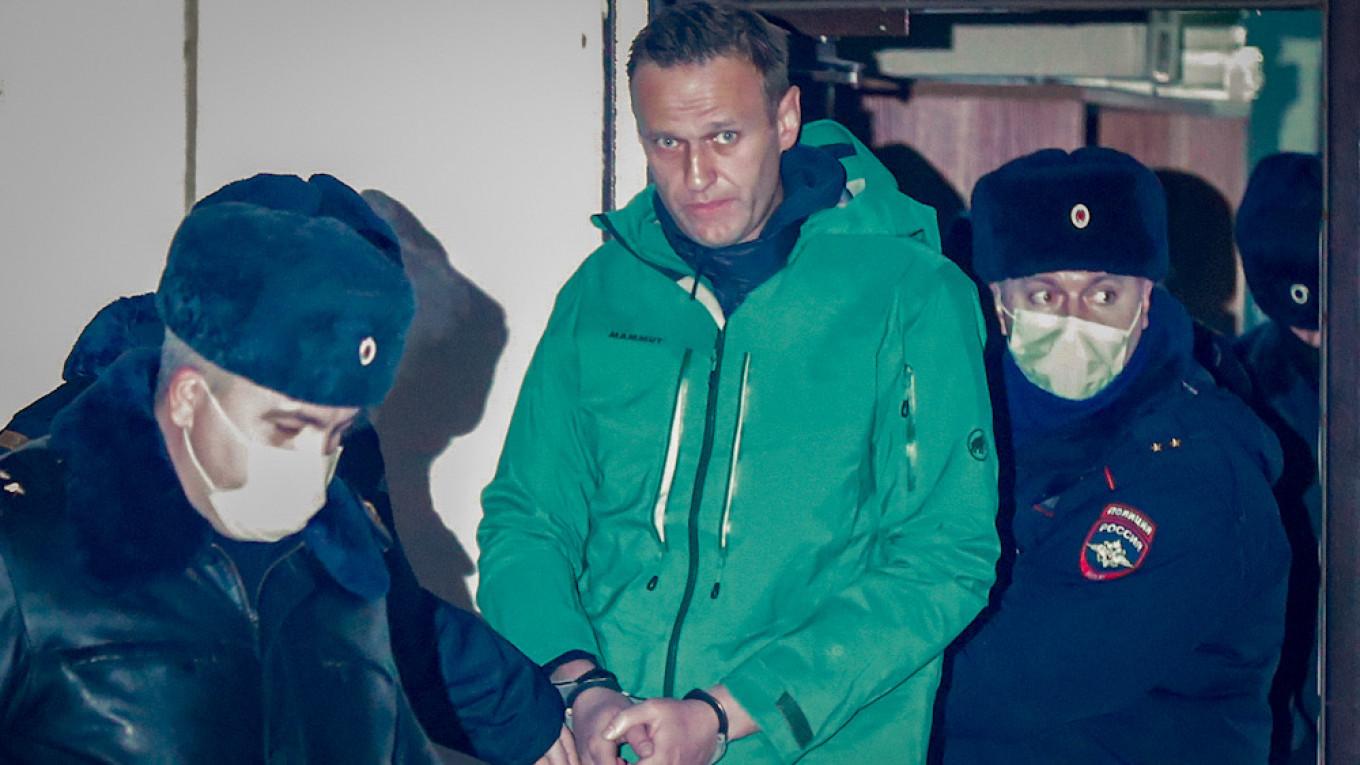
Europe's rights court told Russia on Wednesday to release jailed Kremlin critic Alexei Navalny out of concern for his life, but Moscow swiftly rejected the call.
Navalny, President Vladimir Putin's most outspoken opponent, was arrested and jailed upon returning to Russia last month following months of treatment in Germany for a nerve agent poisoning he blames on the Kremlin.
His jailing sparked the largest anti-government demonstrations in years and a new crisis in Russia's ties with the West, whose leaders are demanding the anti-corruption campaigner be set free.
Navalny, 44, appealed to the European Court of Human Rights (ECHR) for his release on Jan. 20, just days after his arrest at a Moscow airport, saying his life was in danger if he remained in custody.
The Strasbourg-based court said Wednesday it had upheld that request and told Moscow to release Navalny "with immediate effect."
It said that the ruling was taken with "regard to the nature and extent of risk to the applicant's life."
Russia is a member of the Council of Europe, a rights body of which the ECHR is a part. Member states are obliged to enforce ECHR decisions and in the past Russia has done so, including in cases involving Navalny.
But shortly after the court made its decision public, Russia's justice ministry said its demands were "unreasonable and unlawful" and there were no legal grounds to release Navalny.
Justice Minister Konstantin Chuychenko told the Interfax news agency that the ECHR demands represented "clear and gross interference" in the activities of Russia's justice system.
According to constitutional changes introduced in Russia last year, decisions enforced by international treaties may not be executed if they contradict Russia's basic law.
Foreign Ministry spokeswoman Maria Zakharova on Wednesday accused the ECHR of "pressure" on Russia and "interference" in its domestic affairs.
Back in court on Saturday
Navalny is being held in a Moscow detention center after a court ruled earlier this month to convert a suspended sentence for fraud he was handed in 2014 to nearly three years in jail over alleged violations of parole terms.
The ECHR had in 2017 ruled that the decision in that case was "arbitrary" and ordered Russia to pay compensation to Navalny and his brother Oleg, who served jail time.
Navalny will be back in court on Saturday to appeal his jailing in that case and in another trial where he is facing charges of defamation for calling a World War II veteran and others who appeared in a pro-Kremlin video "traitors".
The prosecution has asked the court to fine Navalny 950,000 rubles ($13,000) in the defamation case.
In his complaint to the ECHR, Navalny argued that the Russian government could not provide "sufficient safeguards" for his life and health while he is in custody.
Navalny fell violently ill on a flight over Siberia last August and was airlifted to Berlin for treatment. Western scientists later concluded that he was poisoned with a Soviet-era nerve toxin, Novichok.
While Navalny, whose investigations into the lavish lifestyles of Russia's elite have infuriated many in power, says Putin ordered the attack, the Kremlin has repeatedly denied any involvement.
Navalny's allies on Wednesday insisted that Russia must continue to follow the ECHR's decisions.
"This must happen, it simply cannot be otherwise given that the European Convention [on Human Rights] is part of Russian legislation," his lawyer Olga Mikhailova told AFP.
"Russia has always complied with such decisions and will carry it out now," Ivan Zhdanov, a key Navalny aide and lawyer by training, wrote on Telegram.
The head of Navalny's regional network, Leonid Volkov, said the decision is "binding" for Russia under its obligations as a member of the Council of Europe.
He said that non-compliance could lead to Russia's exclusion from the council and to "numerous and far-reaching consequences," such as the rupture of a number of international agreements.
Other Council of Europe members have refused to enforce the court's rulings, including Turkey which has rejected calls by the court to release a Kurdish political leader and a civil society figure accused of involvement in a 2016 coup attempt.


 Latest news
Latest news
Latest newsBulgaria Asks NATO to Strengthen Its Defences Amid Black Sea Threats: Sofia Fears Growing Risks to Maritime Shipping
16.Oct.2026
Black Sea Shipping Risks Threaten Bulgaria’s 5 Million Tonnes of Wheat Exports
15.Oct.2026
Georgia’s Foreign Funding and Political Ban Laws Draw Criticism from the Venice Commission
15.Oct.2026
Kazakhstan Promotes a Caspian Green Energy Corridor: Astana Seeks New Routes to the European Market
14.Oct.2026
Inflation in Romania Accelerates to 6.61%: Rising Prices Increase Pressure on Households and the Economy
13.Oct.2026
Can Europe Protect the International Criminal Court from Trump’s Sanctions?
13.Oct.2026
Georgia’s Constitutional Court Continues Case on Banning Opposition Parties: Political Pluralism at Stake
12.Oct.2026
Azerbaijan and Iran Step Up Security Contacts Amid Hijab Protests
12.Oct.2026
Personnel Shortages Complicate Ukrainian Forces’ Rotation: Ukraine Faces Long-Term Challenges on the Front Line
11.Oct.2026
Trump Eases Sanctions on Russian Fuel After Talks with Putin: Kyiv Fears Boost to Moscow’s War Revenues
10.Oct.2026
Putin Seeks to Strengthen Russia’s Influence in the Post-Soviet Space Through the CIS
10.Oct.2026
Russia and the South Caucasus: External Pressure, Political Competition and a Crisis of Trust
10.Oct.2026
Peaceful Settlement Between Armenia and Azerbaijan: Moving from Declarations to Implementation
10.Oct.2026
Moldova Ready to Accept as Many Ukrainians as Necessary if Situation Worsens This Winter
09.Oct.2026
Turkmenistan Turns Avaza into a Regional Diplomatic Hub as Caspian, Central Asian and CIS Agendas Converge
08.Oct.2026