
 17 Oct 2026









Turkey Afraid Not So Much of Earthquake in Armenia as of Metsamor NPP
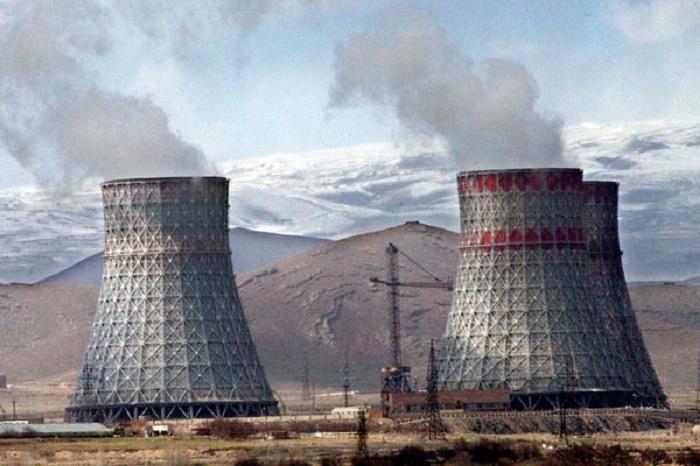
Several earthquakes in Armenia in February, especially the 4.7 magnitude tremors on February 13 in Yerevan and nearby settlements, alarmed the population of the Turkish province of Igdir. Deputy Chairman of the Federation of Turkish Societies of Friendship with Azerbaijan Serdar Unal said that experts in his country pay attention to the location of the Metsamor NPP directly on the tectonic fault line, which creates a huge danger for the entire region. The number of victims in the event of the destruction of this nuclear power plant caused by the earthquake will be immeasurably greater than from the earthquake itself.
Metsamor NPP was built on the basis of old Soviet technologies. In 1989 it was damaged due to the earthquake with a magnitude of 6.9, radiation escaped from the crack, and then the station was closed and resumed work in 1995 after repairs. The nuclear power plant is located 15 km from Igdir, 60 km from Kars, 40 km from Yerevan, 120 km from Azerbaijan, and 100-200 meters from Turkish border villages.
Metsamor NPP, like a time bomb, can explode at any moment, creating devastating consequences for Armenia, Georgia, Iran and Azerbaijan. If there are earth shocks with a force of 6-7-8 points, numerous victims in the region from the accident at this nuclear power plant are inevitable. The European Union and the IAEA have declared this plant the most dangerous nuclear power plant in the world. Uranium is brought to the station by Russian planes.
“I have no idea what will happen in the event of a plane crash,” Unal said.
He called for an immediate shutdown of the Metsamor nuclear power plant, calling it a nightmare and a mortal threat to the population of five countries in the region.
Two people suffered fractures during the Saturday earthquake in Yerevan, the press service of the Armenian Ministry of Health reported. According to Armenian experts, the tension in the area where the Saturday earthquake occurred is gradually decreasing. At the moment, the intensity of aftershocks has weakened.
The Armenian NPP is a nuclear power plant, built from 1969 to 1977 on the territory of the Armenian SSR near the city of Metsamor. It consists of two power units with VVER-440 reactors. The installed thermal capacity of one unit is 1,375 MW, and the electric capacity is 407.5 MW.
The Metsamor NPP has long been a cause for concern: it was built without containment containers and is located in a seismically active zone. In 2011, National Geographic suggested it might be the world's most dangerous nuclear power plant. The West and in particular the United States oppose the modernization of the Metsamor NPP, which is highly outdated and poses a threat to the entire region, putting forward the idea of building a new, "more correct" NPP, with the participation of financial resources and specialists from France or the United States.
The problem of the Armenian NPP cannot but worry Azerbaijan, since, as experts note, in Soviet times there were no conditions in Armenia for the disposal of nuclear waste, and both then and now there are no technologies for its processing. Since the beginning of the 2000s, the near-reactor pool of the Metsamor NPP has been filled, and the reserve compartment is also occupied. The pool of the closed and non-operating reactor has also been filled for many years. The only capacity is a temporary storage facility built by the French.
Azerbaijan believes that the Metsamor NPP is a time bomb for the entire region, and Armenia itself is a giant nuclear burial ground.


 Latest news
Latest news
Latest newsBulgaria Asks NATO to Strengthen Its Defences Amid Black Sea Threats: Sofia Fears Growing Risks to Maritime Shipping
16.Oct.2026
Black Sea Shipping Risks Threaten Bulgaria’s 5 Million Tonnes of Wheat Exports
15.Oct.2026
Georgia’s Foreign Funding and Political Ban Laws Draw Criticism from the Venice Commission
15.Oct.2026
Kazakhstan Promotes a Caspian Green Energy Corridor: Astana Seeks New Routes to the European Market
14.Oct.2026
Inflation in Romania Accelerates to 6.61%: Rising Prices Increase Pressure on Households and the Economy
13.Oct.2026
Can Europe Protect the International Criminal Court from Trump’s Sanctions?
13.Oct.2026
Georgia’s Constitutional Court Continues Case on Banning Opposition Parties: Political Pluralism at Stake
12.Oct.2026
Azerbaijan and Iran Step Up Security Contacts Amid Hijab Protests
12.Oct.2026
Personnel Shortages Complicate Ukrainian Forces’ Rotation: Ukraine Faces Long-Term Challenges on the Front Line
11.Oct.2026
Trump Eases Sanctions on Russian Fuel After Talks with Putin: Kyiv Fears Boost to Moscow’s War Revenues
10.Oct.2026
Putin Seeks to Strengthen Russia’s Influence in the Post-Soviet Space Through the CIS
10.Oct.2026
Russia and the South Caucasus: External Pressure, Political Competition and a Crisis of Trust
10.Oct.2026
Peaceful Settlement Between Armenia and Azerbaijan: Moving from Declarations to Implementation
10.Oct.2026
Moldova Ready to Accept as Many Ukrainians as Necessary if Situation Worsens This Winter
09.Oct.2026
Turkmenistan Turns Avaza into a Regional Diplomatic Hub as Caspian, Central Asian and CIS Agendas Converge
08.Oct.2026