
 17 Oct 2026









Will European Union and Turkey reset relations?
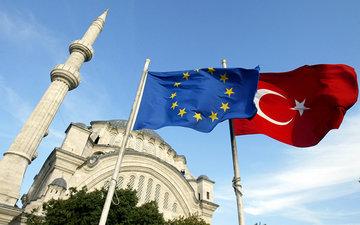
After a rough period, Ankara is making overtures to Brussels. Ilke Toygür, an analyst on European Affairs at Elcano Royal Institute discusses the prospects, the need for the EU to clarify its own position, and the implications of the election of Joe Biden in the article for German Institute for International and Security Affairs.
After a year of continuous tensions, Turkish Foreign Minister Mevlüt Cavusoglu visited Brussels in January to discuss the future of Turkey-EU relations. He and Turkish President Recep Tayyip Erdoğan have both stated that 2021 is the year to set things right with the European Union.
Many in Europe are sceptical, since the current state of democracy and rule of law in Turkey falls well short of the requirements for a candidate country. Furthermore, Turkey’s recent foreign policy moves have also clashed with the interests of its Western allies. While welcoming the intention to improve the overall atmosphere, European decision-makers also want to see credible gestures and concrete actions. Whether or not Turkey continues its charm offensive, Europe should get to work on the long-neglected task of defining its common policy towards Turkey. While Washington may play a helpful role, the real strategic thinking will have to take place in Europe, Brussels and elsewhere.
The EU member states still have no real consensus on common foreign policy making. For all the talk of strategic autonomy, sovereignty and »speaking the language of power« – as High Representative Josep Borrell likes to call it – Europe is not united around any particular line. France and Germany, whose historic rivalry led to the creation of the European Union, also have their differences over the future of the European Common Foreign and Security Policy. French President Emmanuel Macron objects to Europe’s de facto dependency on the United States, arguing that the Union should be self-reliant in security and defence. German officials including Defence Minister Annegret Kramp-Karrenbauer are not necessarily convinced, emphasising that the EU needs the protective umbrella of the United States to guarantee its own security, stability and prosperity.
These difficulties around the design and implementation of the Common Foreign and Security Policy are also manifest in the discussions on relations with Turkey. As an accession candidate, neighbour and strategic ally on migration management and counter-terrorism, Turkey poses a key test for the European Union. Military involvement in Syria, Libya and Nagorno-Karabakh exemplifies Ankara’s increasingly assertive foreign policy and regional ambitions. All these conflicts affect the Union’s immediate neighbourhood. Recent tensions in the Eastern Mediterranean have again shown that Turkey does not hesitate to explicitly oppose its Western allies’ interests. According to both European and US officials, Turkey’s actions have a direct impact on the security and sovereignty of Greece and Cyprus.
In response NATO established a bilateral military de-confliction mechanism between Greece and Turkey, and the two agreed to resume exploratory talks over territorial claims in the Eastern Mediterranean. While these are all positive developments, it will be difficult to establish a truly functioning Turkey-EU relationship as long as the member states cannot agree on the big picture. The European Council decided in December 2020 that »the EU will seek to coordinate on matters relating to Turkey and the situation in the Eastern Mediterranean with the United States«. This was taken as a part of the general reassessment of transatlantic relations following the election of Joe Biden, where Europe is seeking – and expecting – a more coordinated strategy on future challenges – including those posed by NATO allies. The new US president is expected to steer back to multilateralism and international organisations. On his first day in office he signed executive orders restoring US membership of the Paris Climate Agreement and the World Health Organisation. This return to multilateralism will definitely put Brussels and Washington shoulder-to-shoulder on many issues, including the desire to increase NATO’s coherence. This is bad news for all those who claim that the West is in decline, including President Erdoğan of Turkey.
While there are certainly advantages to having a US president who cares about transatlantic relations, the burden of asserting conditionality on democracy and rule of law will still fall on the European Union itself. Washington has always privileged security over values – and expected the EU to play the part of propagating Western values in Turkey. Accordingly, the United States supported the establishment of a customs union, as well as Turkey’s application to join the European Union. But it remains the responsibility of the European Union to find a functioning common framework with Turkey, either as a part of its enlargement policy or within its neighbourhood policy.
It is simply – and obviously – not enough to sign a new deal on managing illegal migration and call it a day. Even if any step towards dialogue is indeed very positive, the European Union should not fall for an easy reset with Turkey. The domestic political dynamics in the country leave no places for reassurance for the European Union that Turkey will keep its intentions of a positive agenda. The ultimate goal must be to reshape the relationship: »to look for mutual strategic interests, the development of a cooperative and reciprocal relationship anchored in common values and principles«, as Josep Borrell recently put it. While short-term interests may be better served by a transactional approach, long-term stability in Turkey-EU relations demands a well-functioning framework rooted in common principles.


 Latest news
Latest news
Latest newsBulgaria Asks NATO to Strengthen Its Defences Amid Black Sea Threats: Sofia Fears Growing Risks to Maritime Shipping
16.Oct.2026
Black Sea Shipping Risks Threaten Bulgaria’s 5 Million Tonnes of Wheat Exports
15.Oct.2026
Georgia’s Foreign Funding and Political Ban Laws Draw Criticism from the Venice Commission
15.Oct.2026
Kazakhstan Promotes a Caspian Green Energy Corridor: Astana Seeks New Routes to the European Market
14.Oct.2026
Inflation in Romania Accelerates to 6.61%: Rising Prices Increase Pressure on Households and the Economy
13.Oct.2026
Can Europe Protect the International Criminal Court from Trump’s Sanctions?
13.Oct.2026
Georgia’s Constitutional Court Continues Case on Banning Opposition Parties: Political Pluralism at Stake
12.Oct.2026
Azerbaijan and Iran Step Up Security Contacts Amid Hijab Protests
12.Oct.2026
Personnel Shortages Complicate Ukrainian Forces’ Rotation: Ukraine Faces Long-Term Challenges on the Front Line
11.Oct.2026
Trump Eases Sanctions on Russian Fuel After Talks with Putin: Kyiv Fears Boost to Moscow’s War Revenues
10.Oct.2026
Putin Seeks to Strengthen Russia’s Influence in the Post-Soviet Space Through the CIS
10.Oct.2026
Russia and the South Caucasus: External Pressure, Political Competition and a Crisis of Trust
10.Oct.2026
Peaceful Settlement Between Armenia and Azerbaijan: Moving from Declarations to Implementation
10.Oct.2026
Moldova Ready to Accept as Many Ukrainians as Necessary if Situation Worsens This Winter
09.Oct.2026
Turkmenistan Turns Avaza into a Regional Diplomatic Hub as Caspian, Central Asian and CIS Agendas Converge
08.Oct.2026