
 17 Oct 2026









Opportunity arises to renew Turkey, EU dialogue: FM Çavuşoğlu
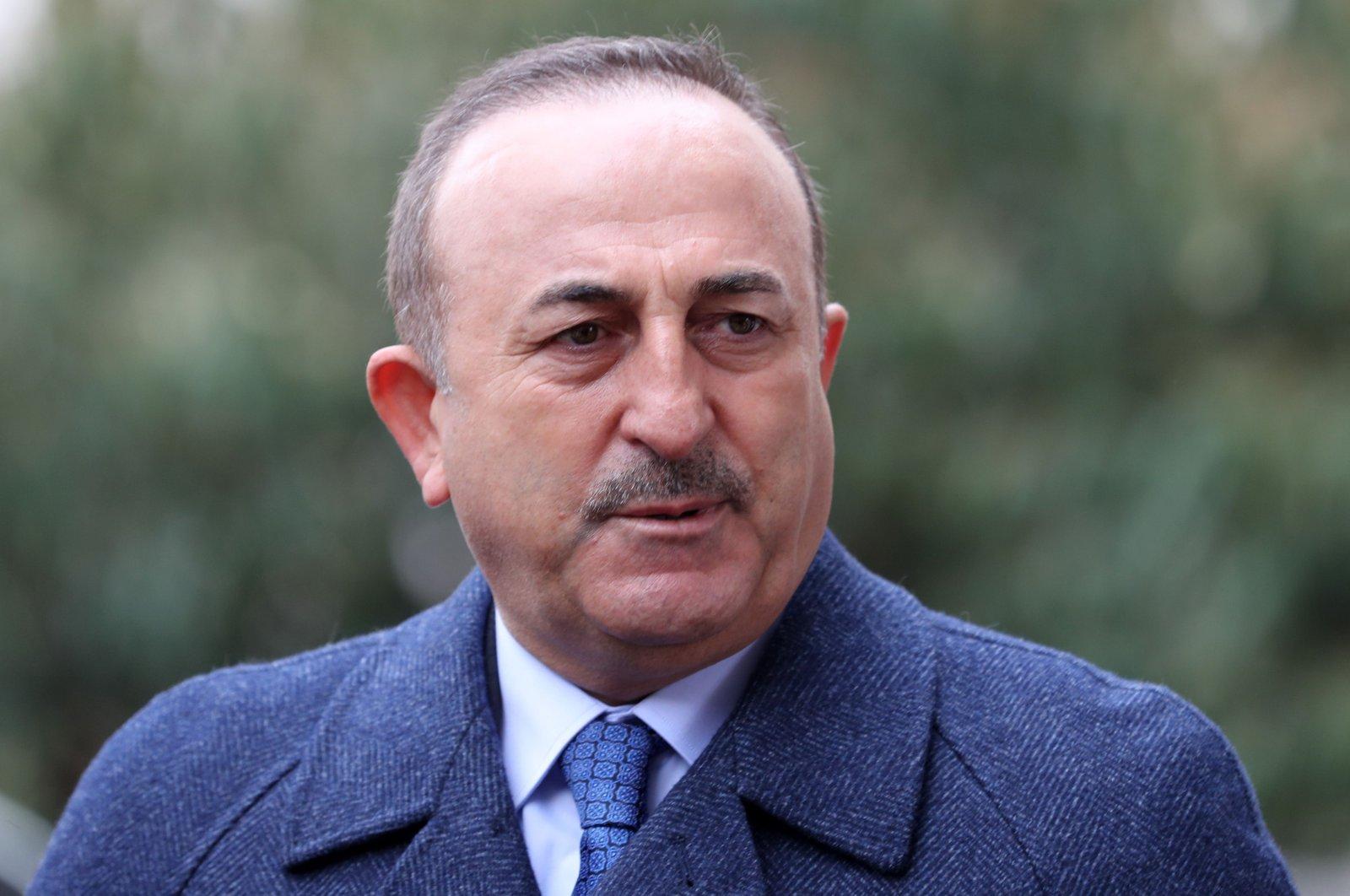
Awindow of opportunity has emerged to revive the dialogue between Turkey and the European Union, Foreign Minister Mevlüt Çavuşoğlu said on Wednesday.
Speaking at an online joint news conference with his Dutch counterpart Stef Blok within the scope of the eighth Turkey-Netherlands Wittenburg Conference, Çavuşoğlu stated that even though 2020 has been a "difficult" year for bilateral ties with the union, 2021 has started with new opportunities.
The foreign minister underlined that in his one-to-one meetings with other countries' foreign ministers, including Belgium, Germany, Italy and Spain, he saw that majority of EU members support having well-established ties with Turkey.
During a meeting in Brussels on Dec. 10, EU leaders decided to draw up a list of Turkish targets to sanction. While France, Greece and the Greek Cypriot administration have pushed hardest for a tough line on Turkey, other EU states led by economic powerhouse Germany have so far been keen on a more diplomatic approach.
Since then, the rhetoric on all sides has mellowed dramatically as Turkey and the bloc voiced their intent to "turn a new page." Turkey has recently reiterated that it is part of the bloc and sees its future in the EU, while it will continue efforts toward full membership. Turkish officials have also said that they hope for progress in 2021 and expect the bloc to take definitive action to this end.
Pointing at the fact that a genuine partnership between the union and Turkey would enable a real change in areas such as the migrant crisis, trade, energy, security and defense, as well as in countries like Syria and Libya, Çavuşoğlu said that with 2016's Migrant Deal, both sides proved their ability to cooperate already.
When it comes to Turkey's expectations, the foreign minister stated that the priority is on updating the terms of the Migrant Deal.
In March 2016, Ankara and Brussels signed an agreement to reduce the number of migrants taking the dangerous Aegean Sea route to Europe and to find a solution for the influx of migrants heading to EU countries.
Under the deal, Turkey was promised 6 billion euros ($6.77 billion) in financial aid to be used by the Turkish government to finance projects for Syrian migrants. Yet Turkey did not undertake the difficult task of shouldering increasing migration from Syria only for the sake of financial assistance but has also demanded visa liberalization for Turkish citizens; likewise, the customs union was to be updated.
Çavuşoğlu added that in renewing the accession talks with the EU, Turkey expects the Netherlands' support.
Regarding bilateral ties with the Netherlands, Çavuşoğlu expressed that this videoconference is a signifier of pursuing high-level dialogue between the two countries.
"From trade and economy to innovation and technology, we have a major potential in our bilateral cooperation. We need constant dialogue to adapt to change and benefit from our potential," he continued, underlining the sensitivity of the pandemic days by labeling them as "extraordinary times."
The foreign minister further emphasized that the two countries have many mutual sides as both countries' people are entrepreneurs with a focus on work.
He also referred to the Turkish community in the Netherlands, highlighting that Turkey backs their successful integration into Dutch society.
Turks are the second-largest ethnic group in the Netherlands following the Dutch, with a population of about 2 million.
Over the past decade, the tolerant political climate designed to allow for the freedom of speech has allowed far-right sympathizers with violent tendencies to expand their scope in Europe, including the Netherlands.
For instance, Turkish mosques in Europe are frequently the target of Islamaphobic attacks, the latest of which took place at a mosque in the city of Zaandam in the northwestern Netherlands in November. Mosques in the Netherlands have endured dozens of attacks of varying extent in recent years. Culprits often attempt to burn the religious buildings down using explosives or Molotov cocktails and deface the walls, spraypainting terrorist symbols and racial slurs.


 Latest news
Latest news
Latest newsBulgaria Asks NATO to Strengthen Its Defences Amid Black Sea Threats: Sofia Fears Growing Risks to Maritime Shipping
16.Oct.2026
Black Sea Shipping Risks Threaten Bulgaria’s 5 Million Tonnes of Wheat Exports
15.Oct.2026
Georgia’s Foreign Funding and Political Ban Laws Draw Criticism from the Venice Commission
15.Oct.2026
Kazakhstan Promotes a Caspian Green Energy Corridor: Astana Seeks New Routes to the European Market
14.Oct.2026
Inflation in Romania Accelerates to 6.61%: Rising Prices Increase Pressure on Households and the Economy
13.Oct.2026
Can Europe Protect the International Criminal Court from Trump’s Sanctions?
13.Oct.2026
Georgia’s Constitutional Court Continues Case on Banning Opposition Parties: Political Pluralism at Stake
12.Oct.2026
Azerbaijan and Iran Step Up Security Contacts Amid Hijab Protests
12.Oct.2026
Personnel Shortages Complicate Ukrainian Forces’ Rotation: Ukraine Faces Long-Term Challenges on the Front Line
11.Oct.2026
Trump Eases Sanctions on Russian Fuel After Talks with Putin: Kyiv Fears Boost to Moscow’s War Revenues
10.Oct.2026
Putin Seeks to Strengthen Russia’s Influence in the Post-Soviet Space Through the CIS
10.Oct.2026
Russia and the South Caucasus: External Pressure, Political Competition and a Crisis of Trust
10.Oct.2026
Peaceful Settlement Between Armenia and Azerbaijan: Moving from Declarations to Implementation
10.Oct.2026
Moldova Ready to Accept as Many Ukrainians as Necessary if Situation Worsens This Winter
09.Oct.2026
Turkmenistan Turns Avaza into a Regional Diplomatic Hub as Caspian, Central Asian and CIS Agendas Converge
08.Oct.2026