
 17 Oct 2026









EU holds off on Turkey sanctions due to positive developments
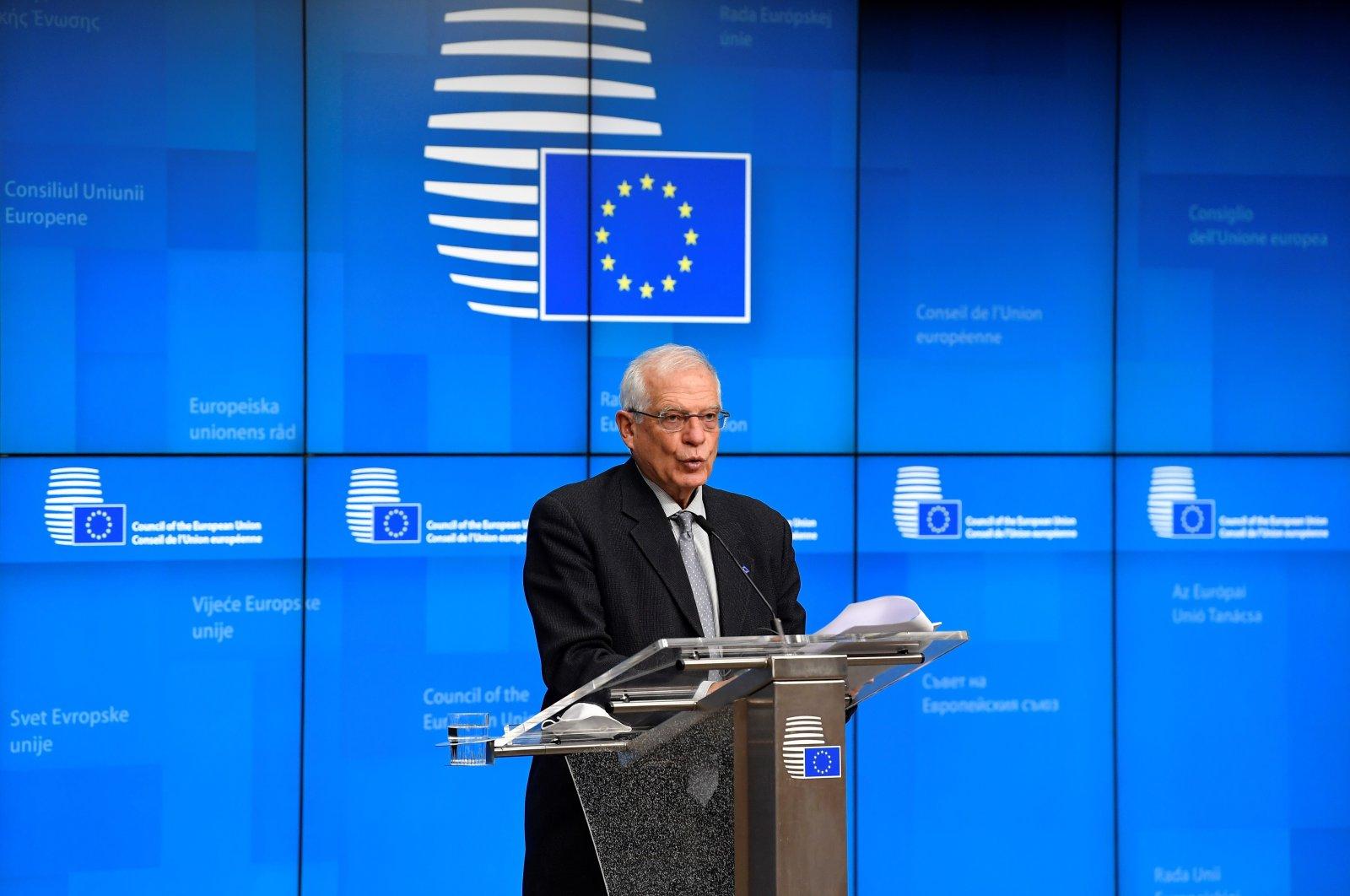
The European Union has decided to hold off on possible sanctions on Turkey due to positive developments in a meeting of the bloc’s foreign ministers Monday.
Speaking after the meeting, Germany’s Foreign Minister Heiko Mass, who was in Turkey last week, said: "We did not decide to sanction Turkey today because we see that there are positive developments.”
"There are no Turkish ships in the contested areas in the Eastern Mediterranean anymore; exploratory talks between Turkey and Greece have begun this evening in Istanbul. Those are all positive signals that we had waited for a long time, which should now not be strained by sanctions,” he added.
But the EU insists Ankara must make good on its diplomatic overtures and the bloc's foreign policy chief Josep Borrell said work on the sanctions is ongoing.
"The list is not ready, but has not been put aside," he said.
During a meeting in Brussels on Dec. 10, EU leaders decided to draw up a list of Turkish targets to sanction. While France, Greece and the Greek Cypriot administration have pushed hardest for a tough line on Turkey, other EU states led by economic powerhouse Germany have so far been keen on a more diplomatic approach.
Since then, the rhetoric on all sides has mellowed dramatically as Turkey and the bloc voiced their intent to "turn a new page." Turkey has recently reiterated that it is part of the bloc and sees its future in the EU, while it will continue efforts toward full membership. Turkish officials have also said that they hope for progress in 2021 and expect the bloc to take definitive action to this end.
Most recently, Turkey and Greece on Monday launched the first direct diplomatic contact in the form of exploratory talks in nearly five years to address their disputes related to sovereignty rights in the Eastern Mediterranean.
The two countries initiated exploratory talks to discuss the issues in the Eastern Mediterranean on March 12, 2002, in an effort to find a fair, sustainable and inclusive solution. These discussions were the 61st of their kind between the nations.
Talks were regularly held up until 2016, but there have been none since then due to political speculation and the Greek side's reluctance to sit down at the negotiating table. Bilateral discussions continued in the form of political consultations but did not return to the exploratory framework.
The Turkish delegation in Istanbul was led by Deputy Foreign Minister Sedat Önal and Presidential Spokesperson Ibrahim Kalın, with retired diplomat Pavlos Apostolidis at the head of the Greek team. While agreeing to meet, the two sides disagreed over what to talk about.
Turkey says everything is on the table: maritime borders and exclusive economic zones in the Aegean Sea, the demilitarization of Greek islands off the Turkish coast and differences over airspace.
Greece only wants to talk about the boundaries of continental shelves in the Aegean and economic zones.
Foreign Minister Mevlüt Çavuşoğlu, who was in Brussels last week to meet top EU officials, said Ankara was prepared for talks without preconditions, unlike Athens.
Turkey and EU member Greece have been at odds on several issues. Turkey, which has the longest continental coastline in the Eastern Mediterranean, has rejected maritime boundary claims made by Greece and the Greek Cypriot administration, stressing that these excessive claims violate the sovereign rights of both Turkey and the Turkish Republic of Northern Cyprus (TRNC).
Turkish leaders have repeatedly stressed that Ankara is in favor of resolving outstanding problems in the region through international law, good neighborly relations, dialogue and negotiations. Instead of opting to solve problems with Ankara through dialogue, Athens has, on several occasions, refused to sit at the negotiation table and opted to rally Brussels to take a tougher stance against Turkey.
In order to find a solution to the dispute that favors all parties, last year Turkey also proposed holding a conference with the participation of each Mediterranean nation, including the Turkish Cypriots, but the EU has yet to provide a concrete answer to the proposal.


 Latest news
Latest news
Latest newsBulgaria Asks NATO to Strengthen Its Defences Amid Black Sea Threats: Sofia Fears Growing Risks to Maritime Shipping
16.Oct.2026
Black Sea Shipping Risks Threaten Bulgaria’s 5 Million Tonnes of Wheat Exports
15.Oct.2026
Georgia’s Foreign Funding and Political Ban Laws Draw Criticism from the Venice Commission
15.Oct.2026
Kazakhstan Promotes a Caspian Green Energy Corridor: Astana Seeks New Routes to the European Market
14.Oct.2026
Inflation in Romania Accelerates to 6.61%: Rising Prices Increase Pressure on Households and the Economy
13.Oct.2026
Can Europe Protect the International Criminal Court from Trump’s Sanctions?
13.Oct.2026
Georgia’s Constitutional Court Continues Case on Banning Opposition Parties: Political Pluralism at Stake
12.Oct.2026
Azerbaijan and Iran Step Up Security Contacts Amid Hijab Protests
12.Oct.2026
Personnel Shortages Complicate Ukrainian Forces’ Rotation: Ukraine Faces Long-Term Challenges on the Front Line
11.Oct.2026
Trump Eases Sanctions on Russian Fuel After Talks with Putin: Kyiv Fears Boost to Moscow’s War Revenues
10.Oct.2026
Putin Seeks to Strengthen Russia’s Influence in the Post-Soviet Space Through the CIS
10.Oct.2026
Russia and the South Caucasus: External Pressure, Political Competition and a Crisis of Trust
10.Oct.2026
Peaceful Settlement Between Armenia and Azerbaijan: Moving from Declarations to Implementation
10.Oct.2026
Moldova Ready to Accept as Many Ukrainians as Necessary if Situation Worsens This Winter
09.Oct.2026
Turkmenistan Turns Avaza into a Regional Diplomatic Hub as Caspian, Central Asian and CIS Agendas Converge
08.Oct.2026