
 17 Oct 2026









Turkey and Greece resume talks on maritime disputes after five-year hiatus
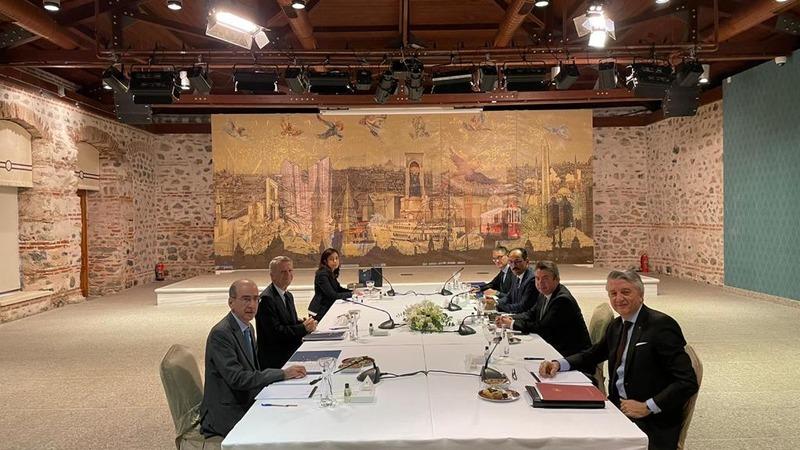
Turkey and Greece resumed talks aimed at addressing long-standing maritime disputes on Monday (25 January), ending a five-year hiatus after months of tension in the eastern Mediterranean.
The neighbouring NATO members are at odds over claims to Mediterranean waters and energy rights, air space and the status of some islands in the Aegean Sea. They made little progress in 60 rounds of talks from 2002 to 2016.
Plans for resuming talks foundered last year over Turkey’s deployment of a seismic survey vessel in contested waters and disagreements over which topics they would cover. The vessel was withdrawn to Turkish shores last year.
Ankara and Athens agreed this month to resume the talks in Istanbul, in a test of Turkey’s hopes of improving its relations with the European Union, which has supported EU-member Greece and threatened sanctions on Turkey.
As the talks resumed, French Defence Minister Florence Parly said France will present proposals to Greece for the renewal of its fleet of frigates, and had finalised a €2.5-billion deal for Greece’s purchase of 18 Dassault-made Rafale fighter jets.
“Under the strong leadership of our president, the solution to all problems, including the Aegean, is possible and our will for this is strong,” said Turkish presidential spokesman Ibrahim Kalin, who was part of Monday’s talks.
Washington welcomed the talks, saying it backed efforts to reduce tension in the eastern Mediterranean. “The United States welcomes…the commitment of both governments to this process,” US State Department spokesperson Ned Price said on Twitter.
The exploratory talks are meant to reach common ground on disputed issues to allow for formal negotiations. But, despite agreeing to resume talks, Ankara and Athens still appeared to disagree over the topics to be covered in the run-up to Monday’s meeting.
Athens has said it will discuss only the demarcation of exclusive economic zones and continental shelf in the Aegean Sea and eastern Mediterranean, not issues of “national sovereignty”, while Ankara has said it wants all issues, including air space and the Aegean islands, on the table.
Greek government spokesman Christos Tarantilis said on Monday Greece was “attending the talks in good faith and expects Turkey to act similarly”, reiterating the Greek position that the talks are unofficial and focused on maritime zones only.
The agenda for Monday’s talks, which lasted more than three hours, was not disclosed. Another round of talks is expected to be held in Athens, a Greek diplomatic source said, without providing any further details.
Despite the technical disagreements, both sides voiced guarded optimism, though they were still trading barbs in the days leading up to Monday’s meetings.
Prime Minister Kyriakos Mitsotakis said last week Greece would approach the talks with optimism but “zero naivety”, while Turkish President Recep Tayyip Erdoğan said he hoped the resumption of talks would herald a new era.
According to analysts, Erdoğan is trying to break his isolation facing a hostile US administration by mending EU relations.


 Latest news
Latest news
Latest newsBulgaria Asks NATO to Strengthen Its Defences Amid Black Sea Threats: Sofia Fears Growing Risks to Maritime Shipping
16.Oct.2026
Black Sea Shipping Risks Threaten Bulgaria’s 5 Million Tonnes of Wheat Exports
15.Oct.2026
Georgia’s Foreign Funding and Political Ban Laws Draw Criticism from the Venice Commission
15.Oct.2026
Kazakhstan Promotes a Caspian Green Energy Corridor: Astana Seeks New Routes to the European Market
14.Oct.2026
Inflation in Romania Accelerates to 6.61%: Rising Prices Increase Pressure on Households and the Economy
13.Oct.2026
Can Europe Protect the International Criminal Court from Trump’s Sanctions?
13.Oct.2026
Georgia’s Constitutional Court Continues Case on Banning Opposition Parties: Political Pluralism at Stake
12.Oct.2026
Azerbaijan and Iran Step Up Security Contacts Amid Hijab Protests
12.Oct.2026
Personnel Shortages Complicate Ukrainian Forces’ Rotation: Ukraine Faces Long-Term Challenges on the Front Line
11.Oct.2026
Trump Eases Sanctions on Russian Fuel After Talks with Putin: Kyiv Fears Boost to Moscow’s War Revenues
10.Oct.2026
Putin Seeks to Strengthen Russia’s Influence in the Post-Soviet Space Through the CIS
10.Oct.2026
Russia and the South Caucasus: External Pressure, Political Competition and a Crisis of Trust
10.Oct.2026
Peaceful Settlement Between Armenia and Azerbaijan: Moving from Declarations to Implementation
10.Oct.2026
Moldova Ready to Accept as Many Ukrainians as Necessary if Situation Worsens This Winter
09.Oct.2026
Turkmenistan Turns Avaza into a Regional Diplomatic Hub as Caspian, Central Asian and CIS Agendas Converge
08.Oct.2026