
 17 Oct 2026









A Theoretical Perspective on the South Caucasus
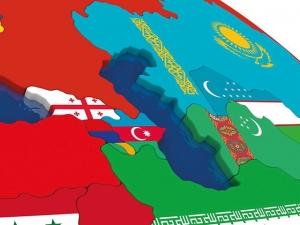
When the second Karabakh War ended, some long-term developments could be singled out to highlight the staggering pace of geopolitical changes in and around the South Caucasus, leading to a definitive trend of undercutting the democratic ideals and concrete achievements made by the region's states.
Take Armenia: its young democracy, with high hopes especially after the 2018 revolution, will now be more dependent on Russia. Here, it is not whether the democratic model is better or not, but rather the need to underline the incompatibility between an aspiring democracy and a large non-democracy such as Russia. Armenian leadership will now have to make extensive concessions to Moscow, which in many cases will involve backtracking in democratic values. Building a fair political system simply cannot go hand-in-hand with the Russian model.
The Karabakh War also signals a regress in Western peacemaking standards. The Western approach to conflict resolution, based on parity rather than geopolitical interests, has been trumped by a Russian alternative. Moscow is not looking towards a definitive resolution of the conflict (a tradition Moscow has pursued in other territorial conflicts), but rather towards its protraction, but under its close watch so as to increase its geopolitical influence. From a Russian perspective, the country will continue to influence Armenia and Azerbaijan, even to a much larger extent than it was before.
The war also indicates the end of Armenia’s attempts to have a multi-vector foreign policy, which was already under immense pressure. Continuous failures were present all along the road, but the biggest manifest has been an over-reliance on Russia. The 2016 fighting showed the limits. Armenian politicians tried to build ties with other regional powers afterwards, but the Russian influence remained incremental. The growing reduction in the symmetry of this alliance culminated in the 2020 war with Azerbaijan, when the limits of Yerevan's maneuvering abilities were underlined. The war also essentially killed any remnants of multi-axial policy efforts: from now on, Armenia's dependence on Russia will be more pronounced, with no viable geopolitical alternatives.
The three South Caucasus states are divided by larger regional powers, which signals the increased fracturing of the region. The return of Turkey and the increased presence of the Russian military may also mean the resurrection of a great power competition, where military power, infrastructure projects as well as economic strength are all translated into actual geopolitical influence, harming accessibility to the region and limiting hopes for a long-term conflict resolution.
The time when the West viewed the South Caucasus as a monolithic entity is gone. A diversified foreign policy should be applied, allowing an adaptation to the changing circumstances on the ground. Policy toward each state of the region should be different, and the West should become more geopolitical in its approach. Turkey’s recent suggestion to create a six-nation pact involving the South Caucasus states, plus Russia, Turkey and Iran, is a good indication of Western political regress from the region.
Western regress has been in play for quite some time already; the Karabakh War has just burst it open to the public. The West’s need to be more proactive is now critical. Much will depend on the US and its new administration, but the West will have to seek a certain, even if limited, understanding with Turkey to salvage the deteriorating situation in the South Caucasus.
By Emil Avdaliani


 Latest news
Latest news
Latest newsBulgaria Asks NATO to Strengthen Its Defences Amid Black Sea Threats: Sofia Fears Growing Risks to Maritime Shipping
16.Oct.2026
Black Sea Shipping Risks Threaten Bulgaria’s 5 Million Tonnes of Wheat Exports
15.Oct.2026
Georgia’s Foreign Funding and Political Ban Laws Draw Criticism from the Venice Commission
15.Oct.2026
Kazakhstan Promotes a Caspian Green Energy Corridor: Astana Seeks New Routes to the European Market
14.Oct.2026
Inflation in Romania Accelerates to 6.61%: Rising Prices Increase Pressure on Households and the Economy
13.Oct.2026
Can Europe Protect the International Criminal Court from Trump’s Sanctions?
13.Oct.2026
Georgia’s Constitutional Court Continues Case on Banning Opposition Parties: Political Pluralism at Stake
12.Oct.2026
Azerbaijan and Iran Step Up Security Contacts Amid Hijab Protests
12.Oct.2026
Personnel Shortages Complicate Ukrainian Forces’ Rotation: Ukraine Faces Long-Term Challenges on the Front Line
11.Oct.2026
Trump Eases Sanctions on Russian Fuel After Talks with Putin: Kyiv Fears Boost to Moscow’s War Revenues
10.Oct.2026
Putin Seeks to Strengthen Russia’s Influence in the Post-Soviet Space Through the CIS
10.Oct.2026
Russia and the South Caucasus: External Pressure, Political Competition and a Crisis of Trust
10.Oct.2026
Peaceful Settlement Between Armenia and Azerbaijan: Moving from Declarations to Implementation
10.Oct.2026
Moldova Ready to Accept as Many Ukrainians as Necessary if Situation Worsens This Winter
09.Oct.2026
Turkmenistan Turns Avaza into a Regional Diplomatic Hub as Caspian, Central Asian and CIS Agendas Converge
08.Oct.2026