
 17 Oct 2026









PACE concerned about tension between two Armenian institutions
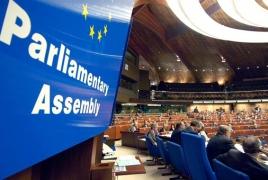
The Parliamentary Assembly of the Council of Europe (PACE) has expressed concern over "the high level of tension" between the Armenian Prime Minister’s Office and the Presidency of the Constitutional Court, reported PanArmenian.
“We are very concerned by the high level of tension between two State institutions in Armenia, the Prime Minister’s Office and the Presidency of the Constitutional Court,” said the co-rapporteurs of the Parliamentary Assembly of the Council of Europe for the monitoring of Armenia, Andrej Šircelj (Slovenia, EPP/CD) and Kimmo Kiljunen (Finland, SOC).
“Checks and balances are essential in any democratic system. This implies that all institutional powers must act according to the rule of law, and respect it in their deeds and words, including with regard to the principle of the presumption of innocence. If they fail to interact according to these principles, they undermine and damage each other. We are therefore worried about the long-term damage these tensions, that have reached an unprecedented level, could inflict on the judiciary as a whole, in which trust is already very low,” they said.
“So far, the Government and the Parliament have respected legal procedures to resolve the situation. Moreover, the authorities have requested the opinion of the Venice Commission on the mechanism for early retirement of judges of the Constitutional Court. According to European standards, the Venice Commission underlined that early retirements should be strictly voluntarily and that this principle needs to be observed. As co-rapporteurs, we will closely monitor that the Armenian authorities continue to act in this way, even if the objective of this mechanism, to uphold the spirit of the constitutional amendments of 2015, seems valid,” they added.
“We have already emphasised the need for political players to refrain from actions and statements that could be perceived as exerting pressure on the judiciary. In addition, we call on all parties to lower tension,” said the co-rapporteurs.
“Finally, these tensions should not overshadow the need for reforms in Armenia, whether it be those in preparation or those that have already been launched in many areas of interest for the Council of Europe,” they concluded.


 Latest news
Latest news
Latest newsBulgaria Asks NATO to Strengthen Its Defences Amid Black Sea Threats: Sofia Fears Growing Risks to Maritime Shipping
16.Oct.2026
Black Sea Shipping Risks Threaten Bulgaria’s 5 Million Tonnes of Wheat Exports
15.Oct.2026
Georgia’s Foreign Funding and Political Ban Laws Draw Criticism from the Venice Commission
15.Oct.2026
Kazakhstan Promotes a Caspian Green Energy Corridor: Astana Seeks New Routes to the European Market
14.Oct.2026
Inflation in Romania Accelerates to 6.61%: Rising Prices Increase Pressure on Households and the Economy
13.Oct.2026
Can Europe Protect the International Criminal Court from Trump’s Sanctions?
13.Oct.2026
Georgia’s Constitutional Court Continues Case on Banning Opposition Parties: Political Pluralism at Stake
12.Oct.2026
Azerbaijan and Iran Step Up Security Contacts Amid Hijab Protests
12.Oct.2026
Personnel Shortages Complicate Ukrainian Forces’ Rotation: Ukraine Faces Long-Term Challenges on the Front Line
11.Oct.2026
Trump Eases Sanctions on Russian Fuel After Talks with Putin: Kyiv Fears Boost to Moscow’s War Revenues
10.Oct.2026
Putin Seeks to Strengthen Russia’s Influence in the Post-Soviet Space Through the CIS
10.Oct.2026
Russia and the South Caucasus: External Pressure, Political Competition and a Crisis of Trust
10.Oct.2026
Peaceful Settlement Between Armenia and Azerbaijan: Moving from Declarations to Implementation
10.Oct.2026
Moldova Ready to Accept as Many Ukrainians as Necessary if Situation Worsens This Winter
09.Oct.2026
Turkmenistan Turns Avaza into a Regional Diplomatic Hub as Caspian, Central Asian and CIS Agendas Converge
08.Oct.2026