
 18 Oct 2026









- Ukrainian President Volodymyr Zelensky, his Russian counterpart Vladimir Putin, French President Emmanuel Macron, and German Chancellor Angela Merkel met in Paris on December 9, 2019, to discuss ways to end the war in Donbas.
- They reaffirmed their commitment to the full and comprehensive ceasefire regime by the end of 2019 and supported the arrangement within the Trilateral Contact Group in Minsk on the disengagement of troops and weapons at three new sites in eastern Ukraine by the end of March 2020.
- The leaders encouraged the TCG to promote the release and exchange of held persons by the end of the year on an "all for all" basis, starting with "all identified for all identified persons."
- The parties expressed their interest in reaching agreements within the Normandy format and the TCG on all legal aspects of the law on the special order of local self-government (on the special status) of certain areas in Donetsk and Luhansk regions – as specified in the Comprehensive Package of Measures for the Implementation of Minsk agreements of 2015 – to ensure its continued application.
"No substance" for Zelensky-Putin meeting yet, Kremlin spox says
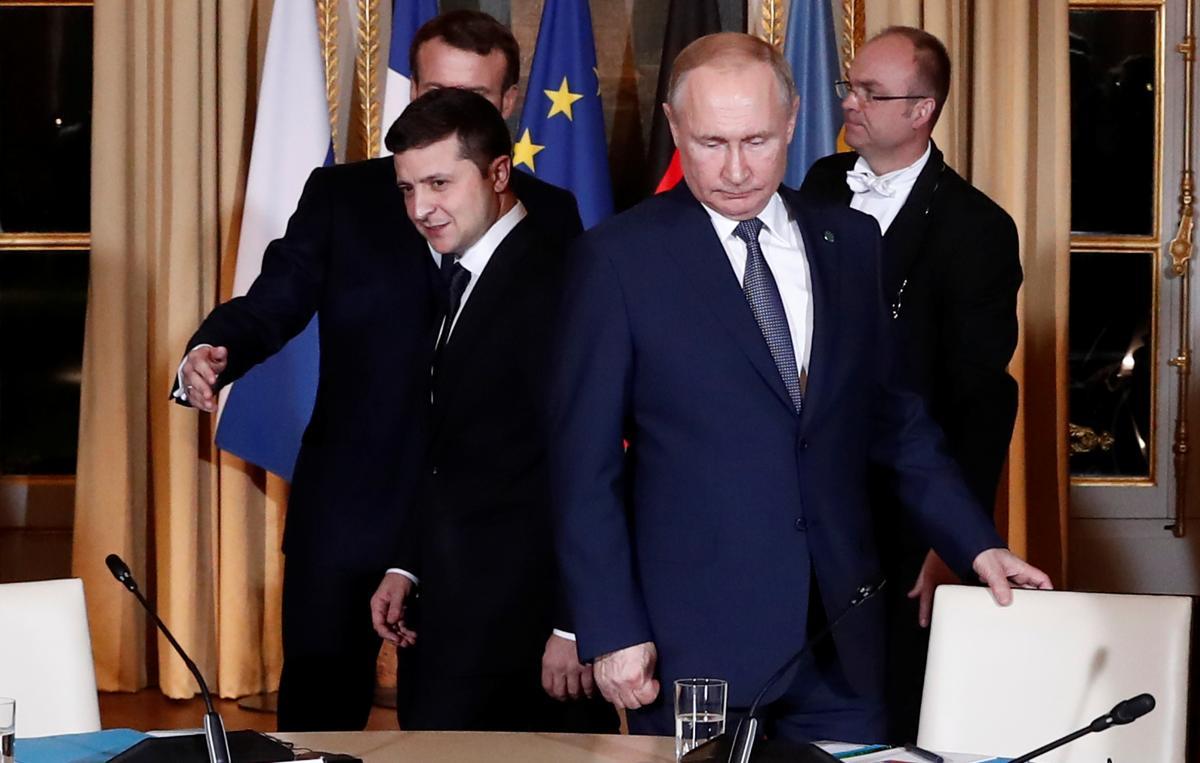
Peskov expressed confidence only the implementation of the agreements reached a year ago at the Normandy Four summit in Paris could be the "substance."
Russian president's press secretary Dmitry Peskov has said a "substance" should be prepared for a new meeting between Ukrainian President Volodymyr Zelensky and Russian President, but so far it does not exist.
"Nobody needs a meeting for the sake of meeting. Any meeting of the heads of state should be well prepared," he told journalists, answering a question from an UNIAN correspondent in Russia about when a new meeting between the presidents could take place with the mediation of France and Germany.
"But they need some kind of substance they can grab onto so that they could string some understanding on it, but so far we have no substance," Peskov said.
The press secretary expressed confidence only the implementation of the agreements reached a year ago at the Normandy Four summit in Paris could be the "substance."
"In this regard, the situation is difficult," he added.
Normandy Four summit: Background


 Latest news
Latest news
Latest newsBulgaria Asks NATO to Strengthen Its Defences Amid Black Sea Threats: Sofia Fears Growing Risks to Maritime Shipping
16.Oct.2026
Black Sea Shipping Risks Threaten Bulgaria’s 5 Million Tonnes of Wheat Exports
15.Oct.2026
Georgia’s Foreign Funding and Political Ban Laws Draw Criticism from the Venice Commission
15.Oct.2026
Kazakhstan Promotes a Caspian Green Energy Corridor: Astana Seeks New Routes to the European Market
14.Oct.2026
Inflation in Romania Accelerates to 6.61%: Rising Prices Increase Pressure on Households and the Economy
13.Oct.2026
Can Europe Protect the International Criminal Court from Trump’s Sanctions?
13.Oct.2026
Georgia’s Constitutional Court Continues Case on Banning Opposition Parties: Political Pluralism at Stake
12.Oct.2026
Azerbaijan and Iran Step Up Security Contacts Amid Hijab Protests
12.Oct.2026
Personnel Shortages Complicate Ukrainian Forces’ Rotation: Ukraine Faces Long-Term Challenges on the Front Line
11.Oct.2026
Trump Eases Sanctions on Russian Fuel After Talks with Putin: Kyiv Fears Boost to Moscow’s War Revenues
10.Oct.2026
Putin Seeks to Strengthen Russia’s Influence in the Post-Soviet Space Through the CIS
10.Oct.2026
Russia and the South Caucasus: External Pressure, Political Competition and a Crisis of Trust
10.Oct.2026
Peaceful Settlement Between Armenia and Azerbaijan: Moving from Declarations to Implementation
10.Oct.2026
Moldova Ready to Accept as Many Ukrainians as Necessary if Situation Worsens This Winter
09.Oct.2026
Turkmenistan Turns Avaza into a Regional Diplomatic Hub as Caspian, Central Asian and CIS Agendas Converge
08.Oct.2026