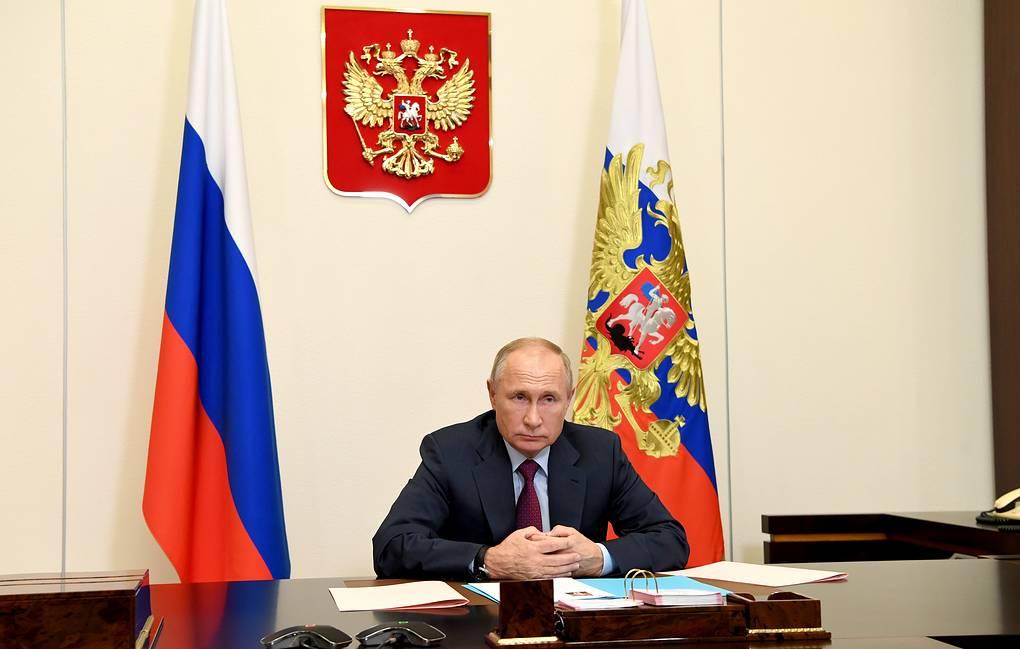
Attempts to undermine conclusions of Nuremberg trials threaten global security, Putin says

    According to the Russian president, the decisions passed by the military tribunals back in 1946 remain a reliable foundation for a constructive dialogue and cooperation to this day

    Attempts to undermine the principles based on the conclusions of the Nuremberg trials threaten global security, Russian President Vladimir Putin said in his address to the participants of the Lessons of Nuremberg forum on Friday.

    The Russian leader said that it is a duty of the entire global community to guard the decisions of the Nuremberg trials, noting that "these are the principles that underlie the values of the post-war world order and the norms of the international law."


    "To this day they remain a firm reliable foundation for a constructive dialogue and cooperation, whilst forgetting and attempting to undermine them is a blow to ensuring security on the entire planet," Putin said, noting that this is precisely the reason "Russia persistently raises these questions at all negotiation platforms."

    "We constantly turn to the lessons of the Nuremberg trials, understanding their importance for the assertion of historical truth, in order to counteract the intentional distortions and falsifications of the events of the Second World War in a conclusive and well-founded way, especially the unscrupulous dishonest attempts to justify and even glorify Nazi criminals and their accomplices," the Russian president stressed.


    Putin expressed hope that this forum will contribute to the modern interpretation of the historical heritage of the Nuremberg trials, while the results and the recommendations by the forum participants will be relevant for the global community.


    #POLITICS
    #SECURITY
    #RUSSIA
    #PUTIN
    #DIPLOMATY

    20.11.2020 12:20


Latest news

    Bulgaria Asks NATO to Strengthen Its Defences Amid Black Sea Threats: Sofia Fears Growing Risks to Maritime Shipping

    16.Oct.2026

    Black Sea Shipping Risks Threaten Bulgaria’s 5 Million Tonnes of Wheat Exports

    15.Oct.2026

    Georgia’s Foreign Funding and Political Ban Laws Draw Criticism from the Venice Commission

    15.Oct.2026

    Kazakhstan Promotes a Caspian Green Energy Corridor: Astana Seeks New Routes to the European Market

    14.Oct.2026

    Inflation in Romania Accelerates to 6.61%: Rising Prices Increase Pressure on Households and the Economy

    13.Oct.2026

    Can Europe Protect the International Criminal Court from Trump’s Sanctions?

    13.Oct.2026

    Georgia’s Constitutional Court Continues Case on Banning Opposition Parties: Political Pluralism at Stake

    12.Oct.2026

    Azerbaijan and Iran Step Up Security Contacts Amid Hijab Protests

    12.Oct.2026

    Personnel Shortages Complicate Ukrainian Forces’ Rotation: Ukraine Faces Long-Term Challenges on the Front Line

    11.Oct.2026

    Trump Eases Sanctions on Russian Fuel After Talks with Putin: Kyiv Fears Boost to Moscow’s War Revenues

    10.Oct.2026

    Putin Seeks to Strengthen Russia’s Influence in the Post-Soviet Space Through the CIS

    10.Oct.2026

    Russia and the South Caucasus: External Pressure, Political Competition and a Crisis of Trust

    10.Oct.2026

    Peaceful Settlement Between Armenia and Azerbaijan: Moving from Declarations to Implementation

    10.Oct.2026

    Moldova Ready to Accept as Many Ukrainians as Necessary if Situation Worsens This Winter

    09.Oct.2026

    Turkmenistan Turns Avaza into a Regional Diplomatic Hub as Caspian, Central Asian and CIS Agendas Converge

    08.Oct.2026

All news