
 17 Oct 2026









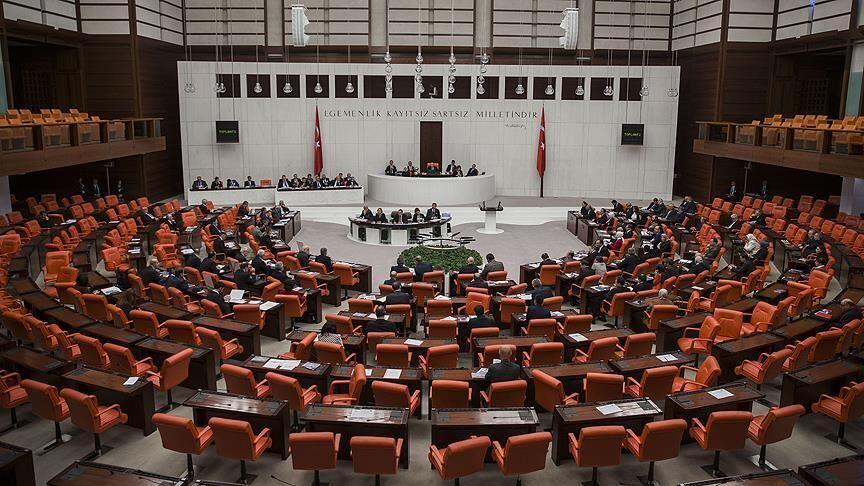
A presidential motion for the deployment of Turkish troops to Azerbaijan to jointly monitor with Russia the ceasefire between Armenia and Azerbaijan in Nagorno-Karabakh has been submitted to the Parliament as Ankara and Moscow continue to talk about the modalities of the joint mission.
Signed by Turkey’s President Recep Tayyip Erdoğan, the motion suggests that deploying Turkish troops to Azerbaijan is in line with the national interest of Turkey and will serve the regional peace, stability and prosperity. It seeks a one-year mandate for the troops to be positioned at the joint center upon the request of Azerbaijan.
“Azerbaijan has achieved a great success by liberating its territories under the occupation as a result of a counter-offensive [against Armenia] using its right to self-defense. The Azerbaijani advance as a result of its counter-operation has resulted in a new situation in the field,” said the motion.
The motion underlined that dispatching Turkish troops to Azerbaijan was convenient with the terms of the Turkey-Azerbaijan strategic partnership and mutual assistance agreement of 2010 as well as with the relevant resolutions of the U.N. Security Council and Organization of Security and Cooperation in Europe (OSCE) that register the territorial integrity of Azerbaijan.
It cites the objectives of the deployment of the troops to fulfill the Turkey-Azerbaijan deal, to instate a ceasefire, to prevent truce violation, and to contribute to the regional peace and stability.
The scope of the Turkish deployment and all other details, including how many troops will be sent will later be decided by President Erdoğan after the parliament grants necessary authorization, according to the motion.
Motion to be discussed on Tuesday
Article 92 of the Turkish constitution obligates the executive-branch to get authorization from the parliament for the deployment of the Turkish troops abroad.
The parliament is set to discuss the motion on Nov. 17, according to the reports. All the political parties except for the People’s Democratic Party (HDP) are expected to vote in favor of the motion.
Apart from the NATO missions in Afghanistan and Bosnia, Turkey has troops in Iraq, Syria, Lebanon, Mali and the Central African Republic.
Turkey-Russia continue talks
A ceasefire deal between Armenia and Azerbaijan that brought about a ceasefire and return of the occupied Azerbaijani territories also stipulates the formation of a Turkish-Russian observation center on the Azerbaijani territories to watch and report the truce.
Turkish and Russian senior military and civilian officials have started to discuss the technical aspects of the center and its working procedures since the last weekend. They will continue with their discussions in the coming days as well, the diplomatic sources said. An agreement between Turkey and Russia will be submitted to the Azerbaijani authorities for a final approval.
The presidential motion recalled that Azerbaijan won a great victory as a result of a six-week armed conflict against Armenia, and Turkey has provided all sorts of support to the Azerbaijani government in its fight to liberate its lands from three-decade occupation.


 Latest news