
 17 Oct 2026









Fuad Shahbazov: Russia will not resist if Azerbaijan keeps territorial gains
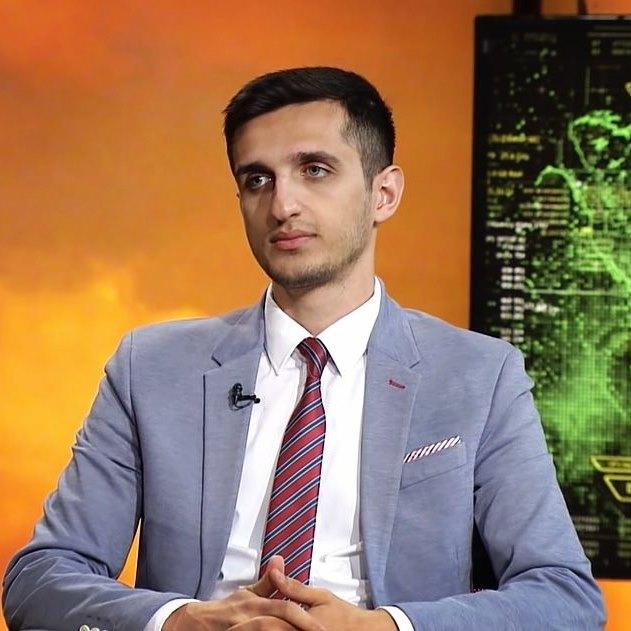
Fuad Shahbazov, Senior Analyst at Baku-based Center for Strategic Communications
- A real war between Armenians and Azerbaijanis has been going on in Nagorno-Karabakh in the last 3 weeks. Russia doesn’t yet express clear support for its ally Armenia? What caused this? May we expect Russia to be an impartial mediator between the two warring parties?
The fact that Russian has not interfered in the conflict yet indicates that the current situation suits Moscow fine. Russia has always been a key actor in the conflict but largely failed to offer a real solution plan for nearly 30 years. Though, Russia sees Armenia as an important ally while dubs Azerbaijan as a strategic partner. Moscow will not resist if Azerbaijan keeps territorial gains, but it is utterly dissatisfied with Turkey's growing role in the region. Reportedly, Azerbaijani Armed Forces had managed to liberate several substantial settlements, which cause an outcry in Yerevan itself. Therefore, the separatist forces in the Nagorno-Karabakh region and official Yerevan deliberately seek for more significant Russian mediation than ever. However, the Kremlin apprehends that Azerbaijan will not be satisfied with peace within the aforementioned conditions. So, it is expected that Russia's pressure will likely grow on both sides to halt the escalation to strengthen its ''peacemaker image.''
- Turkey gives its unequivocal support for Azerbaijan. How far this support can go? May we expect Turkey to send troops in Karabakh?
Turkey is a natural ally of Azerbaijan since it regained independence in 1991. In addition to that, Baku and Ankara are bounded historically and culturally, which makes things easier. Throughout these years, Azerbaijan established very close links with Turkey, particularly defense cooperation, by importing Turkish-made weaponry and training its military personnel in Turkey. Since 2012, Baku and Ankara annually arrange joint military drills involving ground forces and air forces. Today, we are witnessing Turkey's open and robust support on a high level, which gives Azerbaijan additional leverage over Armenia.
Nevertheless, Azerbaijan has around 80.000 active military personnel, with over 200.000 reserve, which makes the deployment of additional Turkish ground forces in the region unnecessary. Turkey mostly supports Azerbaijan by providing it with the recently developed UAVs like Bayraktar-TB2. Today, Bayraktar TB-2 destroyed a vast proportion of Armenia's military vehicles, while no single Bayraktar drone has been shot during the escalation.
- Do you think that the current war in Karabakh could lead to an open clash between Russia and Turkey, or is it more likely that Moscow and Ankara will come to an agreement, as they did in Syria?
In my opinion, there is no enough space in the Karabakh conflict for open Turkey-Russia confrontation like in Syria and Idlib. Rather this confrontation will be strictly diplomatic and likely to affect political rhetoric on both sides. No doubt that Turkey seeks to expand in the South Caucasus region apart of the MENA region, triggering Russian interests. Although Russia sees the South Caucasus region as its geopolitical backyard, the recent geopolitical turmoil in the post-Soviet space makes other regional powers like Turkey obtain a greater role in settlement of the Nagorno-Karabakh conflict.
- Do you expect a truce between Armenians and Azerbaijanis to be reached in the near future? If so, what will be due to – the changed balance of power on the front line or strong international pressure?
It is less likely that Armenia and Azerbaijan will agree to a ceasefire as there is a huge confidence problem between Baku-Yerevan, although Russia acts as a mediator in the negotiation process. From Azerbaijan's point of view, another ceasefire will only postpone the conflict's solution, mostly when the armed forces liberated up to 78 settlements.
If to look at online maps, it becomes clear that the southern front has been already collapsed as Azerbaijani troops established control over the Khudaferin bridge alongside the Iranian border. According to Armenian media - heavy clashes are still underway, particularly in Aghdere and Kelbajar directions, which are of strategic importance for Armenian forces. If successful in that direction, Azerbaijan forces will advance in Khankendi (Stepanakert) direction very soon.


 Latest news
Latest news
Latest newsBulgaria Asks NATO to Strengthen Its Defences Amid Black Sea Threats: Sofia Fears Growing Risks to Maritime Shipping
16.Oct.2026
Black Sea Shipping Risks Threaten Bulgaria’s 5 Million Tonnes of Wheat Exports
15.Oct.2026
Georgia’s Foreign Funding and Political Ban Laws Draw Criticism from the Venice Commission
15.Oct.2026
Kazakhstan Promotes a Caspian Green Energy Corridor: Astana Seeks New Routes to the European Market
14.Oct.2026
Inflation in Romania Accelerates to 6.61%: Rising Prices Increase Pressure on Households and the Economy
13.Oct.2026
Can Europe Protect the International Criminal Court from Trump’s Sanctions?
13.Oct.2026
Georgia’s Constitutional Court Continues Case on Banning Opposition Parties: Political Pluralism at Stake
12.Oct.2026
Azerbaijan and Iran Step Up Security Contacts Amid Hijab Protests
12.Oct.2026
Personnel Shortages Complicate Ukrainian Forces’ Rotation: Ukraine Faces Long-Term Challenges on the Front Line
11.Oct.2026
Trump Eases Sanctions on Russian Fuel After Talks with Putin: Kyiv Fears Boost to Moscow’s War Revenues
10.Oct.2026
Putin Seeks to Strengthen Russia’s Influence in the Post-Soviet Space Through the CIS
10.Oct.2026
Russia and the South Caucasus: External Pressure, Political Competition and a Crisis of Trust
10.Oct.2026
Peaceful Settlement Between Armenia and Azerbaijan: Moving from Declarations to Implementation
10.Oct.2026
Moldova Ready to Accept as Many Ukrainians as Necessary if Situation Worsens This Winter
09.Oct.2026
Turkmenistan Turns Avaza into a Regional Diplomatic Hub as Caspian, Central Asian and CIS Agendas Converge
08.Oct.2026