
 17 Oct 2026









- NKR should fully participate in all stages of a peaceful and final settlement;
- Sovereignty, independence , the territorial integrity and security of NKR cannot under any circumstances be endangered or become a subject of bargaining;
- without recognition of the right of the people of NKR to self-determination, substantive discussions between the parties are impossible;
- the exclusion of attempts to settle the conflict by force or the threat of using force, since the Armenian and Azerbaijani peoples deserve to live in peace. Otherwise, NKR is ready to give a disproportionate response if attacked by Azerbaijan and shift military action to Azerbaijan's territory;
- unilateral or disproportionate concessions on the part of the NKR authorities are excluded;
- the rights of (Armenian) refugees and internally displaced persons should be taken into account on an equal basis with the rights of Azerbaijani refugees and internally displaced persons;
- the international community (first of all, the OSCE and the co-chairing countries) should exclude the violation and limitation of the rights of NKR due to the confrontation and the international status of the republic, including the possibility of its participation in international humanitarian programs.
In Nagorno-Karabakh, de facto president outlines his red lines for conflict resolution
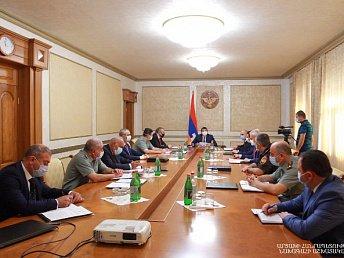
The de facto president of the self-declared Nagorno-Karabakh Republic (NKR), Arayik Harutyunyan has outlined his red lines for a negotiations for the resolution of the conflict which has been ongoing for decades. Speaking today at the first meeting of the Security Council of the self-declared republic he said that he was ready for a peaceful solution, but this needed to be based on seven principles, which he outlined, namely
Armenian sources often refer to the Nagorno-Karabakh Republic as Artsakh.
The Nagorno-Karabakh Republic (Artsakh) is not recognised by any country, but has existed de facto since 1994 with the support of Armenia. Arayik Harutyunyan has been president of the de facto republic since May 2020. Azerbaijan insists that Nagorno-Karabakh is a part of Azerbaijan under international law.


 Latest news
Latest news
Latest newsBulgaria Asks NATO to Strengthen Its Defences Amid Black Sea Threats: Sofia Fears Growing Risks to Maritime Shipping
16.Oct.2026
Black Sea Shipping Risks Threaten Bulgaria’s 5 Million Tonnes of Wheat Exports
15.Oct.2026
Georgia’s Foreign Funding and Political Ban Laws Draw Criticism from the Venice Commission
15.Oct.2026
Kazakhstan Promotes a Caspian Green Energy Corridor: Astana Seeks New Routes to the European Market
14.Oct.2026
Inflation in Romania Accelerates to 6.61%: Rising Prices Increase Pressure on Households and the Economy
13.Oct.2026
Can Europe Protect the International Criminal Court from Trump’s Sanctions?
13.Oct.2026
Georgia’s Constitutional Court Continues Case on Banning Opposition Parties: Political Pluralism at Stake
12.Oct.2026
Azerbaijan and Iran Step Up Security Contacts Amid Hijab Protests
12.Oct.2026
Personnel Shortages Complicate Ukrainian Forces’ Rotation: Ukraine Faces Long-Term Challenges on the Front Line
11.Oct.2026
Trump Eases Sanctions on Russian Fuel After Talks with Putin: Kyiv Fears Boost to Moscow’s War Revenues
10.Oct.2026
Putin Seeks to Strengthen Russia’s Influence in the Post-Soviet Space Through the CIS
10.Oct.2026
Russia and the South Caucasus: External Pressure, Political Competition and a Crisis of Trust
10.Oct.2026
Peaceful Settlement Between Armenia and Azerbaijan: Moving from Declarations to Implementation
10.Oct.2026
Moldova Ready to Accept as Many Ukrainians as Necessary if Situation Worsens This Winter
09.Oct.2026
Turkmenistan Turns Avaza into a Regional Diplomatic Hub as Caspian, Central Asian and CIS Agendas Converge
08.Oct.2026