
 02 Sep 2026









Russia Turns East: Putin Seeks to Offset the Breakdown of Ties with the West
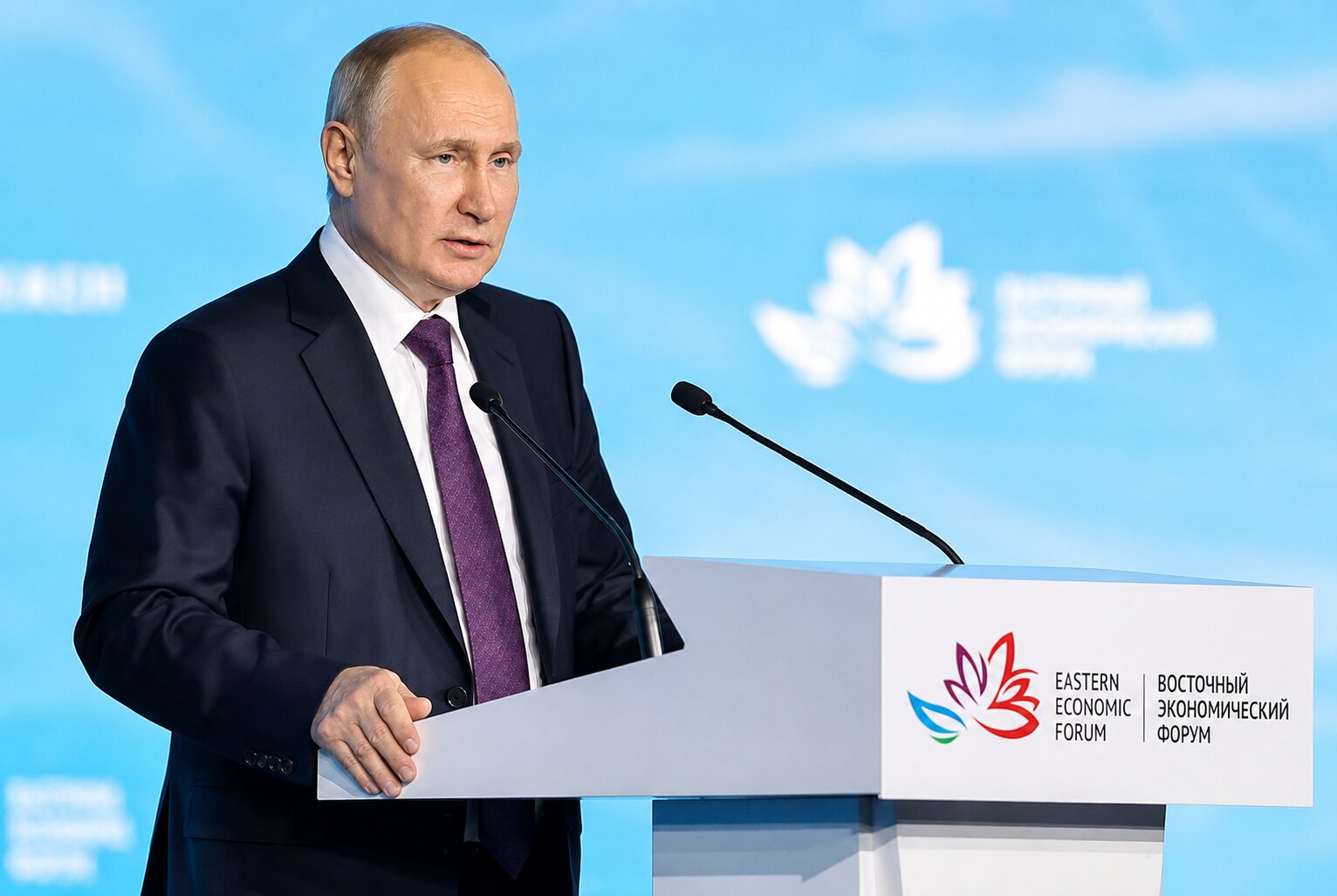
Russian President Vladimir Putin has arrived in Vladivostok to attend the Eastern Economic Forum, where Moscow is once again emphasizing closer ties with Asian countries. However, the Kremlin’s high-profile display of cooperation with China and other regional states reflects not only its strategic interest in Asia, but also the consequences of Russia’s continuing economic rupture with the West.
Vladimir Putin is in Vladivostok on September 2–3, taking part in events at the Eastern Economic Forum. The Russian side is focusing on the development of the Far East, investment, energy, transport and expanding cooperation with countries across the Asia-Pacific region.
At the same time, the forum’s current geography highlights just how significantly the structure of Russia’s foreign economic relations has changed in recent years.
From Western Markets to Asian Markets
Following the outbreak of the war in Ukraine, Russia faced a major reduction in its economic and political ties with the United States and European countries. Western nations imposed restrictions on Russia’s energy sector, banks, industry, technology and transportation sectors.
As a result, Moscow significantly accelerated the redirection of trade toward China, India, Central Asian countries and Southeast Asia.
The Kremlin presents this process as a long-term “pivot to the East.” However, Western analysts point to another dimension: Russia has effectively been forced to seek alternative markets and partners after losing a significant share of its traditional European markets.
This is particularly evident in the energy sector. China and India have gained the opportunity to purchase Russian energy resources on terms that allow them to secure significant price advantages.
As a result, Russia’s dependence on Asian demand is becoming one of the key factors shaping its foreign economic policy.
China Holds a Special Position
China is of particular importance to Moscow.
On the sidelines of the forum, Putin met with Chinese Vice Premier Ding Xuexiang. China remains one of Russia’s most important economic partners, while bilateral trade and energy cooperation have acquired strategic importance for Moscow.
However, the Russian-Chinese partnership cannot be viewed as an equal relationship across all areas. China’s economy is significantly larger than Russia’s, while Beijing has far greater options when it comes to choosing suppliers and markets. This gives Chinese companies considerable leverage in negotiations with Russian partners.
Zvezda and the Push for Domestic Infrastructure
During his visit, Putin toured the Zvezda shipbuilding complex in Primorsky Krai. Particular attention was given to the construction of large vessels, including ice-class LNG carriers intended to operate along the Northern Sea Route.
Moscow is seeking to build its own infrastructure that would allow it to export energy resources toward Asian markets while reducing dependence on traditional European routes. The Kremlin views the Northern Sea Route as a potential alternative to existing transportation corridors between Europe and Asia.
However, implementing these plans requires enormous investment, advanced shipbuilding infrastructure and access to technology. Technological restrictions remain one of the most serious challenges facing Russian industry.
The Far East as a Geopolitical Foothold
For Moscow, the development of the Far East has both economic and geopolitical significance.
Vladivostok and other territories in the Russian Far East are expected to serve as a bridge between the Russian economy and Asian markets.
Moscow plans to expand transportation corridors, modernize ports, increase energy exports and attract Asian investment. At the same time, the region faces demographic and infrastructure challenges. Vast distances, high logistics costs and labor shortages complicate the implementation of large-scale projects.
The Kremlin therefore faces the task of demonstrating that the “pivot to the East” can become not merely a temporary response to sanctions, but a sustainable economic model.
The West Remains a Factor in Russian Policy
Despite Moscow’s demonstrative focus on Asia, Western countries remain an important factor for the Russian economy.
Sanctions restrict Russian companies’ access to capital, technology and equipment. Export and import restrictions have forced Russian businesses to search for alternative suppliers and restructure their logistics chains.
Against this backdrop, the Eastern Economic Forum has become an important political showcase for the Kremlin: Moscow is seeking to demonstrate that Russia’s international isolation is not complete.
However, the presence of representatives from China, Indonesia, Mongolia and other countries does not necessarily mean that a fully developed alternative to the Western economic system is emerging.
Many Asian countries continue to maintain relations with both Russia and Western states, avoiding a clear choice between the two sides.
A Pivot to the East or a New Dependency?
The key question raised by the Eastern Economic Forum is whether Russia is genuinely building a new independent economic model or simply adapting to the consequences of deteriorating relations with the West.
Redirecting exports toward Asia provides Moscow with new opportunities, but it also increases its dependence on a limited number of major buyers — above all China and India.
Putin’s “pivot to the East” can therefore be viewed both as a long-term strategy and as a forced response to changes in the international economic environment. Vladivostok has become a symbol of Russia’s new reality: Moscow is attempting to replace its lost Western ties with Asian partners.


 Latest news
Latest news
Latest newsPashinyan puts Putin on notice: Armenia is no longer willing to make decisions under pressure from Moscow
02.Sep.2026
Russia Turns East: Putin Seeks to Offset the Breakdown of Ties with the West
02.Sep.2026
Romania Faces Political Deadlock: Nicusor Dan Moves to Form a New Government
01.Sep.2026
Pashinyan Meets Aliyev in Bishkek: Armenia and Azerbaijan Prepare for a New Stage in the Peace Process
01.Sep.2026
Ukraine Plans to Present Allies with a New War Strategy and Seek Early EU Funding
31.Aug.2026
The Mecca Pact — Protection or a Trap for Turkiye?
30.Aug.2026
Tigran Khzmalyan: Armenia must make a Decisive Choice in Favor of Europe
30.Aug.2026
Bulgaria to Strengthen Its Black Sea Fleet: Sofia to Receive Seven Minehunter Vessels
29.Aug.2026
Russia Intensifies Strikes on Ukraine’s Infrastructure, Targeting Warehouses and Logistics Hubs
28.Aug.2026
A New Economic Framework for Central Asia and the Caucasus: The Role of Azerbaijan and Uzbekistan
28.Aug.2026
Moscow Warns London: Russia Considers Strikes on British Military Targets
27.Aug.2026
Kazakhstan Launches a New Economic Strategy: GDP Growth, Investment and Pension Reform
27.Aug.2026
CIA Director Visits Moscow: Trump Hopes for Results
26.Aug.2026
Former Ukrainian Defense Minister Warns of Risk of Gradual Defeat in War with Russia
25.Aug.2026
Putin Authorizes Temporary State Management of Critical Infrastructure Vulnerable to Drone Attacks
24.Aug.2026