
 17 Oct 2026









London Summit: Europe Strengthens Support for Kyiv and Calls for a Role in Peace Negotiations
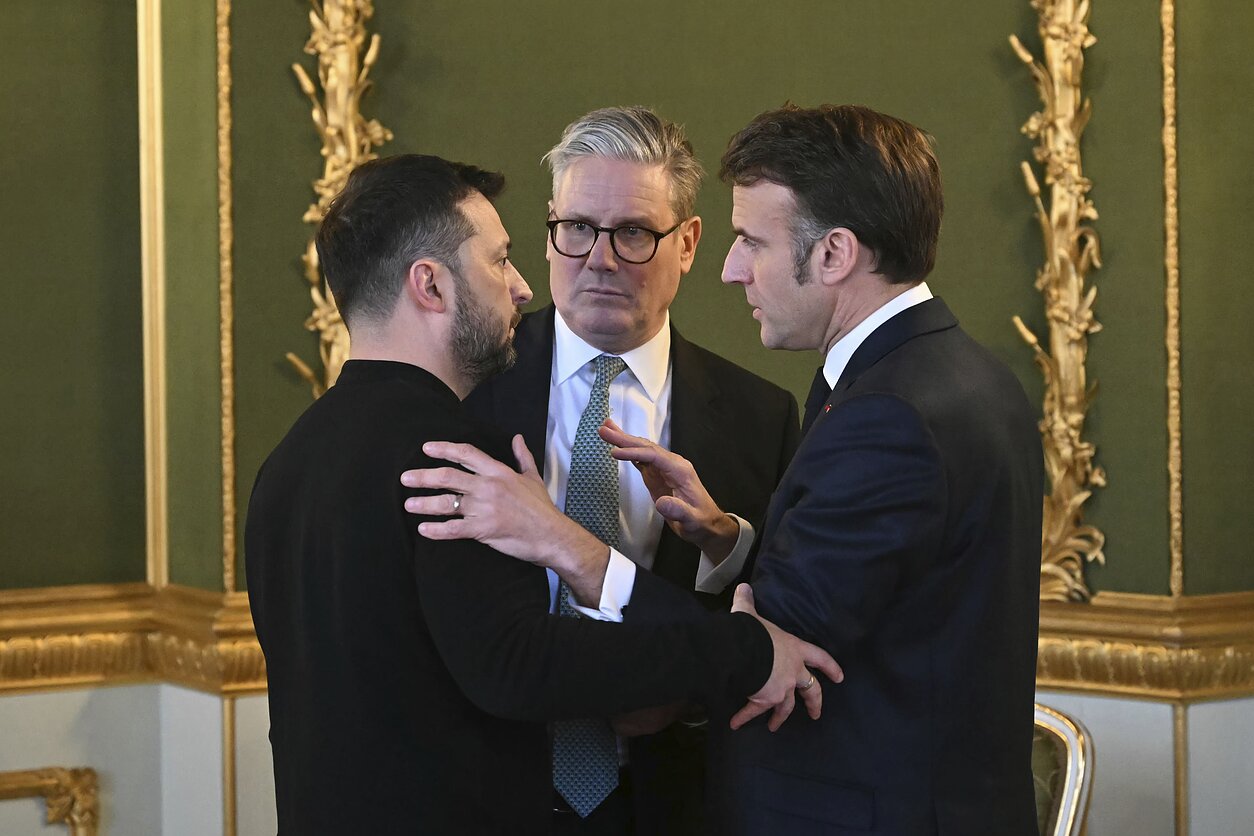
Ukrainian President Volodymyr Zelenskyy held talks in London with UK Prime Minister Keir Starmer, French President Emmanuel Macron, and German Chancellor Friedrich Merz amid ongoing discussions on possible pathways to ending the war between Ukraine and Russia. Following the meeting, the leaders reaffirmed their support for Kyiv’s initiative to organize direct talks between Zelenskyy and Russian President Vladimir Putin, emphasizing that Europe must play a full and meaningful role in any negotiation process alongside the United States.
The discussions took place in the E3+Ukraine format, bringing together the United Kingdom, France, Germany, and Ukraine. The main focus of the meeting was strengthening Ukraine’s defense capabilities, particularly its air defense systems, as well as coordinating further diplomatic efforts among Western allies. Zelenskyy stressed that Kyiv urgently needs additional missiles for air defense systems as Russia has intensified its aerial attacks in recent weeks.
In a joint statement, the European leaders endorsed a diplomatic resolution to the conflict and outlined several principles they believe should form the foundation of future negotiations. These include an immediate ceasefire, legally binding security guarantees for Ukraine, the preservation of Ukraine’s right to determine its own foreign policy course, and compensation for war-related damages. London, Paris, and Berlin also emphasized that any future settlement must not undermine European security or Ukraine’s prospects for further integration into Western political and economic institutions.
Zelenskyy’s visit to London comes at a particularly challenging time for Kyiv. Russia continues to reject negotiations based on Ukraine’s terms, insisting that any settlement must address Moscow’s broader security concerns and territorial demands. While the Kremlin has signaled a cautious willingness to discuss certain peace initiatives, the positions of Moscow and Kyiv remain fundamentally divided on key issues.
The political significance of the London meeting extends beyond the immediate discussions. The summit served as a demonstration of Europe’s determination to maintain influence over the peace process and ensure that critical decisions regarding the conflict are not made without the participation of both Europe and Ukraine. In recent months, concerns have grown in European capitals that potential negotiations between Moscow and Washington could shape a new security framework without adequately reflecting European interests.
Analysts note that the current diplomatic efforts reflect Europe’s attempt to develop a unified strategy ahead of any future peace process. The United Kingdom, France, and Germany are seeking both to reaffirm their long-term commitment to Ukraine and to prepare the groundwork for a possible transition from military confrontation to political dialogue. However, the prospects for a breakthrough remain limited due to deep disagreements over territory, security guarantees, and Ukraine’s future status.
According to experts, the London summit sent a clear signal that European powers intend to play a more active role in shaping the conditions of any future peace settlement. Support for Kyiv’s initiatives from Europe’s leading nations strengthens Ukraine’s position on the international stage. Nevertheless, meaningful progress toward peace will require all parties involved in the conflict to demonstrate a willingness to seek mutually acceptable solutions. For now, the London summit is best viewed as an effort to consolidate Europe’s position ahead of a potentially new phase of diplomatic negotiations.


 Latest news
Latest news
Latest newsBulgaria Asks NATO to Strengthen Its Defences Amid Black Sea Threats: Sofia Fears Growing Risks to Maritime Shipping
16.Oct.2026
Black Sea Shipping Risks Threaten Bulgaria’s 5 Million Tonnes of Wheat Exports
15.Oct.2026
Georgia’s Foreign Funding and Political Ban Laws Draw Criticism from the Venice Commission
15.Oct.2026
Kazakhstan Promotes a Caspian Green Energy Corridor: Astana Seeks New Routes to the European Market
14.Oct.2026
Inflation in Romania Accelerates to 6.61%: Rising Prices Increase Pressure on Households and the Economy
13.Oct.2026
Can Europe Protect the International Criminal Court from Trump’s Sanctions?
13.Oct.2026
Georgia’s Constitutional Court Continues Case on Banning Opposition Parties: Political Pluralism at Stake
12.Oct.2026
Azerbaijan and Iran Step Up Security Contacts Amid Hijab Protests
12.Oct.2026
Personnel Shortages Complicate Ukrainian Forces’ Rotation: Ukraine Faces Long-Term Challenges on the Front Line
11.Oct.2026
Trump Eases Sanctions on Russian Fuel After Talks with Putin: Kyiv Fears Boost to Moscow’s War Revenues
10.Oct.2026
Putin Seeks to Strengthen Russia’s Influence in the Post-Soviet Space Through the CIS
10.Oct.2026
Russia and the South Caucasus: External Pressure, Political Competition and a Crisis of Trust
10.Oct.2026
Peaceful Settlement Between Armenia and Azerbaijan: Moving from Declarations to Implementation
10.Oct.2026
Moldova Ready to Accept as Many Ukrainians as Necessary if Situation Worsens This Winter
09.Oct.2026
Turkmenistan Turns Avaza into a Regional Diplomatic Hub as Caspian, Central Asian and CIS Agendas Converge
08.Oct.2026