
 15 Sep 2026









HEMUS 2026 Highlights Bulgaria's Growing Role in European Defense
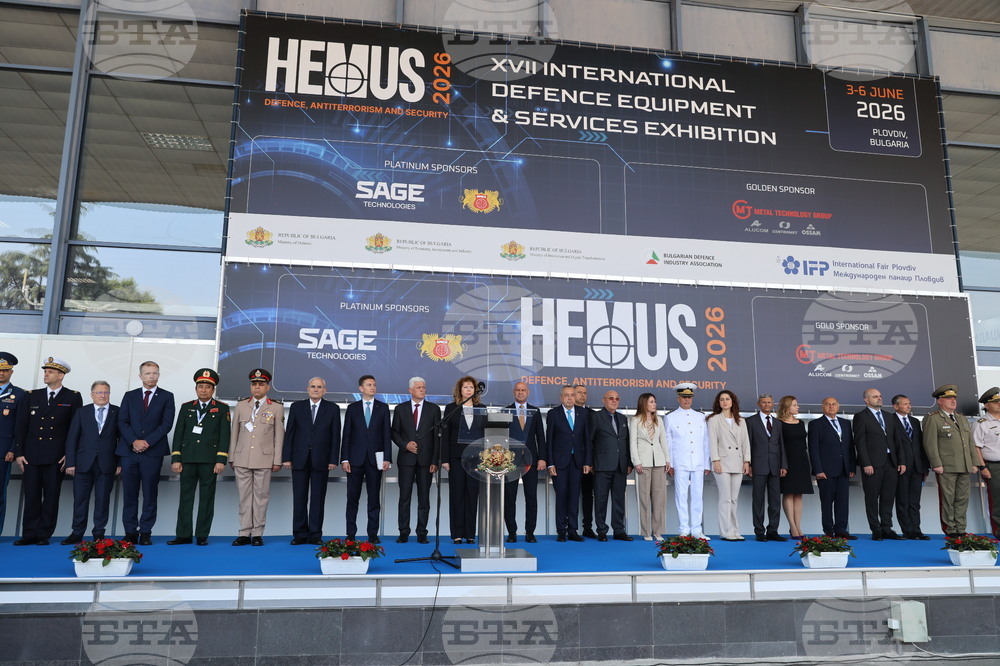
In Plovdiv, the 17th International Exhibition of Defence Equipment and Services HEMUS 2026 has concluded. The event is the country’s largest defense forum and one of the most significant military-industrial exhibitions in Southeast Europe.
The exhibition was held from June 3 to June 6 at the International Fair Plovdiv under the patronage of Bulgaria’s Ministry of Defence, Ministry of Economy, and Ministry of Innovation. This year’s forum once again highlighted the country’s growing role as one of the key centers of defense production and military cooperation in the Balkans.
HEMUS 2026 brought together around 200 companies and organizations from 28 countries, including Germany, Romania, Spain, Czechia, Turkiye, the United States, France, Italy, Poland, Israel, the United Kingdom, and others, as well as official delegations from more than 16 countries. Compared with previous editions, the number of Bulgarian exhibitors increased significantly, reflecting the rapid growth of the national defense industry amid the large-scale modernization of NATO armed forces and rising demand for military equipment across Europe.
Particular attention at the exhibition was given to unmanned systems, robotic platforms, electronic warfare capabilities, drone-detection technologies, and artificial intelligence-based solutions. For the first time in the forum’s history, a dedicated demonstration area was established for unmanned and autonomous systems, underscoring the shift in defense industry priorities following the experience of the war in Ukraine and other recent conflicts.
Modern examples of ground combat equipment, aviation weapons, air defense systems, communications, and intelligence technologies were showcased in both the static and demonstration areas of the exhibition. The opening of the event was accompanied by demonstration flights of new F-16 Block 70 fighter jets, which Bulgaria is receiving as part of its air force modernization program, as well as displays of other aircraft operated by the Bulgarian Armed Forces.
As part of the forum, an industrial summit was held with the participation of NATO representatives, defense companies, research centers, and startups. The main topics of discussion included the rearmament of European armies, the development of defense supply chains, the localization of weapons production within the European Union, and the introduction of new digital technologies into the military sphere.
The exhibition took place during a period of significant growth in defense spending across Europe. Following the start of Russia’s full-scale war against Ukraine, EU and NATO countries substantially increased investments in defense, creating new opportunities for arms manufacturers in Central and Eastern Europe. Bulgaria, with its developed defense industry and production infrastructure inherited from the Warsaw Pact era, is seeking to secure a more prominent role in European rearmament programs and joint weapons production initiatives.
According to analysts, HEMUS 2026 demonstrated that Bulgaria’s defense industry is gradually transforming from a regional producer of specific types of military equipment into a full-fledged participant in the broader European defense ecosystem. At the same time, the forum’s focus on drones, artificial intelligence, and advanced technologies reflects how countries across the region are adapting to the realities of modern warfare, where digital capabilities, autonomous systems, and network-centric operations are becoming increasingly decisive.


 Latest news
Latest news
Latest newsArmenia Energy Diversification: Testing the Limits of Dependence on Russian Gas
15.Sep.2026
Tbilisi Distances Itself from Brussels as Kobakhidze Intensifies Criticism of European Policy
14.Sep.2026
Russia Fuel Crisis Gives the US a New Diplomatic Leverage Tool
14.Sep.2026
Trump Calls on Zelenskyy to Stop Strikes on Russian Oil Infrastructure
13.Sep.2026
Ukraine Expands Pressure on Russia’s Shadow Fleet: Moscow’s Oil Logistics Under Threat
13.Sep.2026
The Riga Conference: Europe Prepares for Long-Term Confrontation with Russia and Reshapes Its Security Architecture
12.Sep.2026
A “Sanctions-Resilient” Route: Modernizing Logistics in Dagestan to Strengthen the North–South Corridor
11.Sep.2026
Black Sea Shield: How the War in Ukraine Forced Romania to Rewrite Its Defense Strategy
11.Sep.2026
Moldova Accelerates EU Integration: Brussels Forced to Increase Resources
10.Sep.2026
Russia Intensifies Strikes on Ukraine After US Talks with Moscow and Kyiv
09.Sep.2026
Georgia Accelerates Middle Corridor Development: Tbilisi Bets on Transit between Asia and Europe
08.Sep.2026
Russia is Losing its Oil Buffer: The War is Beginning to Reshape the Country’s Energy Model
08.Sep.2026
Washington Opens a New Front of Pressure on Ankara: Sanctions on Turkish Bank Test the Limits of US-Turkiye Relations
07.Sep.2026
Iran is losing its main Trump Card: Hormuz is no longer an absolute lever of pressure on the Global Economy
06.Sep.2026
The China Factor in Georgia: Tbilisi Builds a New Geopolitical Pillar
06.Sep.2026