
 15 Sep 2026









Iran is losing its main Trump Card: Hormuz is no longer an absolute lever of pressure on the Global Economy
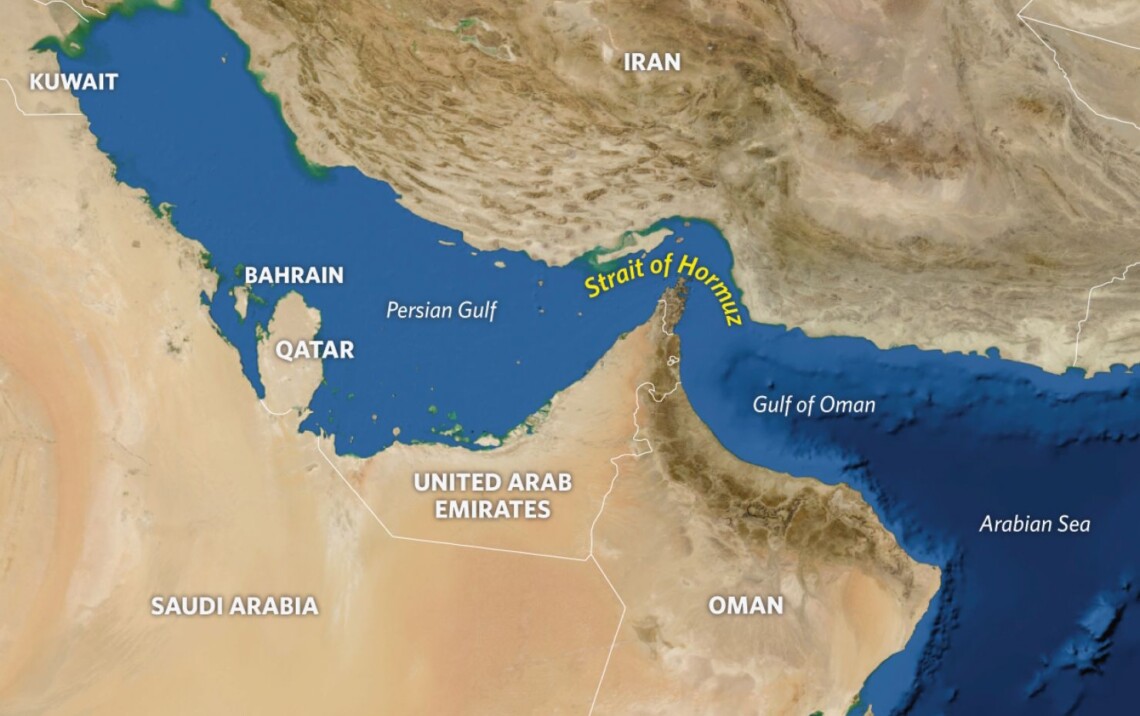
Iran is gradually losing part of the strategic advantage that control over the Strait of Hormuz has given it for decades. Tehran expected the threat of prolonged disruption to shipping to trigger a global energy shock and force the United States to make concessions. However, the global economy has begun to adapt: oil companies are using alternative routes, regional states are expanding their ability to bypass the strait, while Washington is simultaneously increasing pressure on Iran’s oil sector.
The Strait of Hormuz remains one of the world’s most important energy chokepoints. Before the current conflict, roughly one-fifth of global oil supplies and significant volumes of liquefied natural gas passed through the strait. As a result, Iran’s ability to threaten freedom of navigation has traditionally been regarded as one of Tehran’s most effective tools for exerting pressure on the United States and its allies.
However, the current crisis has demonstrated an unexpected trend for Iran: the longer restrictions on shipping remain in place, the more actively the global energy system searches for ways to bypass Hormuz.
According to CCBS, six months into the conflict, Washington is gradually achieving what years of sanctions failed to accomplish: US pressure has significantly restricted Iran’s oil exports while simultaneously reducing the effectiveness of Tehran’s threats to the global energy market.
Tehran’s strategy was relatively straightforward. Iran had the ability to threaten one of the world’s major maritime chokepoints. Any serious disruption to tanker traffic was expected to cause oil and gas shortages, drive up prices, and increase pressure from businesses on Western governments.
In such a situation, the United States would face a dual challenge: on the one hand, the need to maintain military pressure on Iran; on the other, the risk of triggering a global energy crisis.
But the effect Tehran expected has remained limited. Global markets have begun adapting to the new conditions. Saudi Arabia and other Gulf states are using alternative infrastructure, including pipelines that allow part of their exports to reach ports outside the Hormuz route. At the same time, countries in the region are accelerating projects aimed at expanding alternative export capacity.
This does not mean that Hormuz has lost its importance. On the contrary, its importance remains enormous. But dependence on the strait no longer appears as absolute as it did before the crisis.
One of the most important consequences of the crisis has been a change in the behavior of energy markets. Companies no longer view the uninterrupted operation of Hormuz as a guaranteed condition for long-term planning. Instead, they are incorporating additional routes, strategic reserves, alternative sources of supply, and the use of overland infrastructure into their strategies.
Saudi Arabia, for example, can use its pipeline system connecting oil fields in the east of the country with ports on the Red Sea. This allows part of its export flows to bypass Hormuz. Other Gulf states are also seeking to expand their export capabilities through alternative routes. Each new alternative route reduces the potential economic damage caused by restrictions on traffic through Hormuz and, consequently, weakens Tehran’s bargaining power.
A strategic paradox is emerging. The longer Iran threatens to block Hormuz, the stronger the incentive it creates for its adversaries to invest in bypassing the route. Before the conflict, Hormuz was viewed as a virtually irreplaceable energy corridor. Now, however, governments and oil companies have a powerful incentive to develop alternatives.
That is why the current crisis could have consequences extending far beyond the war itself. Even after normal shipping resumes, countries may maintain investments in alternative pipelines, terminals, and backup routes. As a result, the share of global energy flows that depend exclusively on Hormuz could gradually decline.
At the same time, it would be a mistake to conclude that Hormuz has ceased to be a strategic asset for Tehran. Shipping through the strait has indeed fallen sharply. The average number of commercial vessels passing through Hormuz over the ten-day period ending September 7 fell to approximately 10 vessels per day, the lowest level since May. Before the conflict, more than 100 commercial vessels passed through the strait each day.
Iran therefore retains the ability to create serious disruptions to international trade. Any new attacks, mining operations, missile strikes, or threats against tankers could sharply increase insurance and transportation costs and force companies to reroute their vessels.
Moreover, the fact that vessels are now passing through Hormuz far less frequently demonstrates that the military threat remains serious enough to discourage commercial operators from using the strait. The issue, therefore, is not the disappearance of Iran’s leverage, but its gradual erosion.
An even more serious problem for Tehran is that restrictions on shipping are working against Iran itself. The US naval blockade has already brought Iranian oil exports through Hormuz close to a standstill. According to CCBS, Iranian oil loadings fell from approximately 2 million barrels per day in March to 220,000–255,000 barrels per day in August.
This represents a dramatic reduction in Iran’s foreign-currency revenues. Iran has therefore found itself in a strategic trap.
If Tehran completely blocks Hormuz, it will strike at the global energy market but simultaneously undermine its own ability to export oil. If it allows shipping to return to normal, it gives up a significant part of its bargaining leverage.
For this reason, the most rational strategy for Iran is increasingly becoming one of controlled pressure rather than a total blockade.
Washington, judging by its actions in recent months, appears to be seeking precisely this outcome. The US strategy is not limited to ensuring freedom of navigation; it also seeks to deprive Tehran of revenues from its main export commodity.
This creates a fundamentally new situation: Iran remains capable of threatening the global energy market, but the United States has gained the ability to simultaneously damage Iran’s oil exports.
That changes the balance. Previously, the threat of closing Hormuz was primarily an offensive instrument for Iran. It is increasingly becoming a double-edged weapon.
The United States is also seeking to use the crisis to accelerate the development of alternative routes. The US administration has already publicly promoted reducing the global market’s dependence on Hormuz through new pipelines and overland transportation routes.
The strait cannot realistically be fully replaced in the near term. Experts point out that existing infrastructure does not have sufficient capacity to completely compensate for the volumes that traditionally pass through Hormuz. But Washington may be seeking a different outcome: not to make Hormuz irrelevant, but to make it less indispensable. That alone could significantly reduce the political value of Iran’s threats.
CCBS Research Desk


 Latest news
Latest news
Latest newsArmenia Energy Diversification: Testing the Limits of Dependence on Russian Gas
15.Sep.2026
Tbilisi Distances Itself from Brussels as Kobakhidze Intensifies Criticism of European Policy
14.Sep.2026
Russia Fuel Crisis Gives the US a New Diplomatic Leverage Tool
14.Sep.2026
Trump Calls on Zelenskyy to Stop Strikes on Russian Oil Infrastructure
13.Sep.2026
Ukraine Expands Pressure on Russia’s Shadow Fleet: Moscow’s Oil Logistics Under Threat
13.Sep.2026
The Riga Conference: Europe Prepares for Long-Term Confrontation with Russia and Reshapes Its Security Architecture
12.Sep.2026
A “Sanctions-Resilient” Route: Modernizing Logistics in Dagestan to Strengthen the North–South Corridor
11.Sep.2026
Black Sea Shield: How the War in Ukraine Forced Romania to Rewrite Its Defense Strategy
11.Sep.2026
Moldova Accelerates EU Integration: Brussels Forced to Increase Resources
10.Sep.2026
Russia Intensifies Strikes on Ukraine After US Talks with Moscow and Kyiv
09.Sep.2026
Georgia Accelerates Middle Corridor Development: Tbilisi Bets on Transit between Asia and Europe
08.Sep.2026
Russia is Losing its Oil Buffer: The War is Beginning to Reshape the Country’s Energy Model
08.Sep.2026
Washington Opens a New Front of Pressure on Ankara: Sanctions on Turkish Bank Test the Limits of US-Turkiye Relations
07.Sep.2026
Iran is losing its main Trump Card: Hormuz is no longer an absolute lever of pressure on the Global Economy
06.Sep.2026
The China Factor in Georgia: Tbilisi Builds a New Geopolitical Pillar
06.Sep.2026