
 15 Sep 2026









Russia Intensifies Strikes on Ukraine After US Talks with Moscow and Kyiv
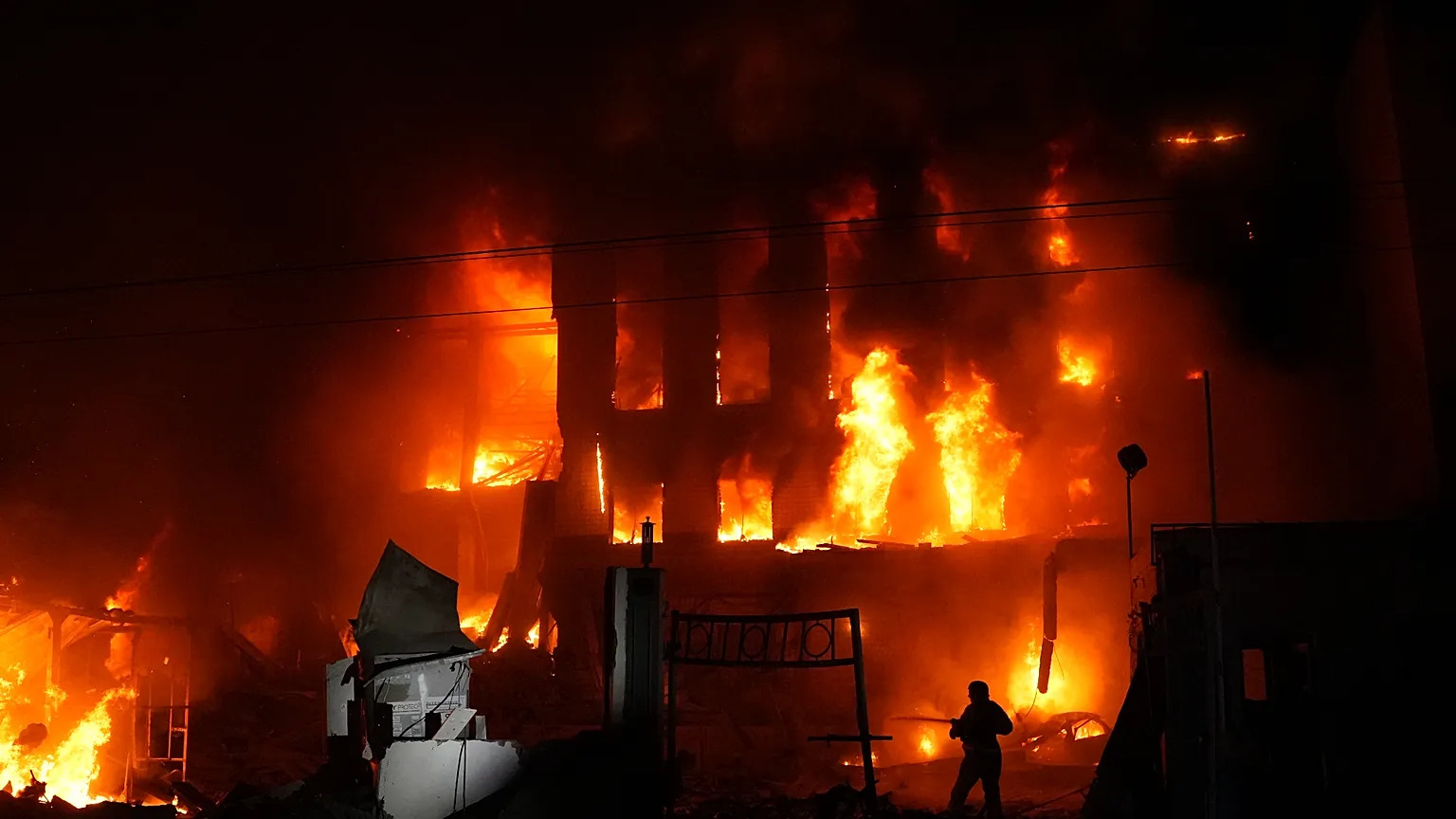
Russian forces have once again intensified airstrikes against Ukraine following a series of diplomatic contacts between representatives of the United States, Russia, and Ukraine. On September 9, Russian drones attacked border infrastructure in the Odesa region and also targeted Kyiv. The new wave of strikes came shortly after US representatives Steve Witkoff and Jared Kushner visited Moscow and Kyiv in an effort to give fresh momentum to negotiations aimed at ending the war.
According to Ukrainian authorities, Russian drones struck the Starokozache–Tudora border crossing between Ukraine and Moldova in the Odesa region. Two people were killed and three others were injured in the attack. Operations at the crossing were suspended. Kyiv believes that strikes against border crossings are part of a broader campaign targeting Ukraine’s logistics and trade routes.
At the same time, Russian drones attacked Kyiv. According to Ukrainian authorities, one person was killed and 14 others were injured. The strikes caused fires and disruptions to urban infrastructure.
The attack near the Moldovan border is particularly significant for Ukraine. Following repeated strikes against Black Sea port infrastructure, overland routes through Moldova and Romania have become increasingly important for Ukrainian trade. Border crossings are used to transport goods between Ukraine and the European Union, meaning that damage to such facilities could cause additional delays and increase transportation costs.
Ukrainian authorities believe that Moscow is seeking to simultaneously target several elements of Ukraine’s economy, including ports, warehouses, transport hubs, energy facilities, and border infrastructure. Kyiv has also reported damage to logistics facilities and warehouses, which is already affecting domestic supply chains.
The latest wave of strikes is particularly notable because it followed renewed diplomatic activity by Washington. US representatives Steve Witkoff and Jared Kushner first held talks with Vladimir Putin in Moscow and then traveled to Kyiv, where they met with President Volodymyr Zelenskyy. The purpose of the visit was to revive the negotiating process and explore a formula that could lead to an end to the war.
The talks did not produce a breakthrough. However, Zelenskyy said that the US side had presented “decent ideas” and that discussions on a possible peace agreement would continue.
One possible next step is a new meeting involving Ukraine, Russia, and the United States. Turkiye, the United Arab Emirates, and Switzerland have been mentioned as potential venues. However, no specific date or final format for such a meeting has yet been determined.
The talks also addressed narrower issues where agreements could potentially be easier to reach, including the protection of energy infrastructure, grain exports, and prisoner exchanges.
Despite the diplomatic activity, fundamental differences between Moscow and Kyiv remain unresolved. One of the main outstanding issues is the future of the occupied territories, particularly Donbas. Moscow continues to insist on its territorial demands, while Kyiv remains unwilling to agree to transferring Ukrainian territory to Russia as part of a peace settlement.
For this reason, the negotiating process has not yet moved toward a full ceasefire. Another significant development was a subsequent phone call between US President Donald Trump and Vladimir Putin. According to Trump, the Russian president expressed a willingness to discuss a deal on Ukraine. However, no concrete agreement on ending hostilities was announced following the conversation.
Against the backdrop of diplomatic contacts, both sides are continuing their military campaigns. Ukraine is carrying out long-range strikes against Russian military and energy infrastructure. Volodymyr Zelenskyy reported Ukrainian attacks on facilities in the Novorossiysk area and other Russian regions. Kyiv is seeking to demonstrate that it can inflict damage on Russian infrastructure at considerable distances from the front line. Russia, in turn, continues to use large-scale drone and missile attacks against Ukrainian cities and infrastructure.
The expansion of the risk zone beyond Ukraine is also raising concern. Recently, a drone believed to be of Russian origin entered the airspace of Moldova, Romania, and Ukraine and reportedly came close to the aircraft carrying Volodymyr Zelenskyy after his departure from Chisinau. Moldovan authorities temporarily closed the country’s airspace.
The latest developments demonstrate the main paradox of the current stage of the conflict: diplomatic contacts between Washington, Moscow, and Kyiv have resumed, while the intensity of military operations remains high. Washington is seeking to move the parties toward a political settlement, but Moscow and Kyiv are still using military pressure as a means of strengthening their respective negotiating positions.
According to CCBS assessments, the attack on the Ukrainian-Moldovan border crossing indicates that Russia’s strategy is gradually moving beyond direct pressure on the front line. Strikes against logistics routes, energy facilities, and trade infrastructure may be viewed as an attempt to weaken Ukraine’s economic resilience while simultaneously increasing the cost of continuing the war for Kyiv.


 Latest news
Latest news
Latest newsArmenia Energy Diversification: Testing the Limits of Dependence on Russian Gas
15.Sep.2026
Tbilisi Distances Itself from Brussels as Kobakhidze Intensifies Criticism of European Policy
14.Sep.2026
Russia Fuel Crisis Gives the US a New Diplomatic Leverage Tool
14.Sep.2026
Trump Calls on Zelenskyy to Stop Strikes on Russian Oil Infrastructure
13.Sep.2026
Ukraine Expands Pressure on Russia’s Shadow Fleet: Moscow’s Oil Logistics Under Threat
13.Sep.2026
The Riga Conference: Europe Prepares for Long-Term Confrontation with Russia and Reshapes Its Security Architecture
12.Sep.2026
A “Sanctions-Resilient” Route: Modernizing Logistics in Dagestan to Strengthen the North–South Corridor
11.Sep.2026
Black Sea Shield: How the War in Ukraine Forced Romania to Rewrite Its Defense Strategy
11.Sep.2026
Moldova Accelerates EU Integration: Brussels Forced to Increase Resources
10.Sep.2026
Russia Intensifies Strikes on Ukraine After US Talks with Moscow and Kyiv
09.Sep.2026
Georgia Accelerates Middle Corridor Development: Tbilisi Bets on Transit between Asia and Europe
08.Sep.2026
Russia is Losing its Oil Buffer: The War is Beginning to Reshape the Country’s Energy Model
08.Sep.2026
Washington Opens a New Front of Pressure on Ankara: Sanctions on Turkish Bank Test the Limits of US-Turkiye Relations
07.Sep.2026
Iran is losing its main Trump Card: Hormuz is no longer an absolute lever of pressure on the Global Economy
06.Sep.2026
The China Factor in Georgia: Tbilisi Builds a New Geopolitical Pillar
06.Sep.2026