
 15 Sep 2026









Washington Opens a New Front of Pressure on Ankara: Sanctions on Turkish Bank Test the Limits of US-Turkiye Relations
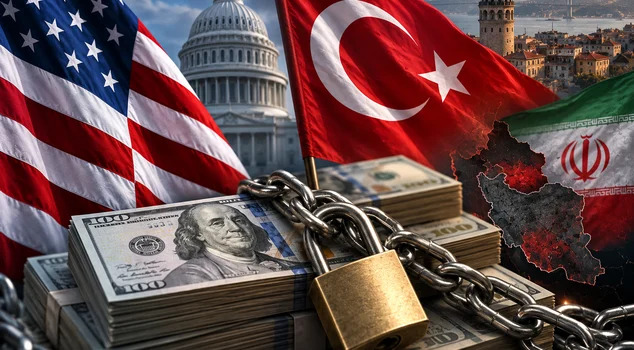
The United States has imposed sanctions on Turkiye-based investment bank Golden Global Yatirim Bankasi and two affiliated companies, accusing them of facilitating financial transactions between Iran and China. Washington’s decision is part of a broader campaign to disrupt Tehran’s financial channels while creating a new source of tension in US-Turkiye relations.
On September 4, the US Treasury Department designated Golden Global Yatirim Bankasi Anonim Sirketi, along with two affiliated entities — asset management company Golden Global Portfoy Yonetimi Anonim Sirketi and leasing company Golden Global Varlik Kiralama Anonim Sirketi. All three entities are based in Istanbul.
Washington alleges that the bank facilitated financial transactions between China and Iran linked to the Islamic Revolutionary Guard Corps (IRGC) and its Quds Force. According to the US Treasury, funds generated from Iranian oil sales to China may have moved through Turkiye’s financial infrastructure before being converted into cash and gold.
The US side also stated that Golden Global provided correspondent banking services to Iranian financial institutions linked to entities already under US sanctions.
The political context of Washington’s decision is particularly significant. According to CCBS, Golden Global became the first financial institution in a US NATO-allied country to be designated as part of the current US campaign targeting Iran’s financial networks.
All three entities were added to the Specially Designated Nationals (SDN) list maintained by the US Treasury Department’s Office of Foreign Assets Control (OFAC). The designation effectively cuts them off from the US financial system and imposes significant restrictions on transactions involving the US dollar. At the same time, Washington issued a temporary license allowing certain transactions involving the sanctioned entities to be wound down.
US Treasury Secretary Scott Bessent said Washington would continue targeting financial channels that, according to US authorities, provide Iran with access to the international financial system.
Golden Global has rejected the allegations. The bank denied facilitating illicit transactions linked to Iran and said it intends to use legal mechanisms to challenge the US sanctions. As a result, the dispute could extend beyond a conventional sanctions case and acquire broader diplomatic significance.
The sanctions against Golden Global come amid a wider campaign by the administration of President Donald Trump to restrict Iran’s access to the international financial system. The US Treasury has been steadily increasing pressure on banks and financial institutions that Washington believes are helping Tehran circumvent sanctions and generate revenue from oil exports.
Earlier, US Treasury Secretary Scott Bessent warned that Washington would impose additional sanctions on financial institutions linked to Iran. The United States views financial pressure as one of the tools that could push Tehran back to the negotiating table.
Against this backdrop, the sanctions on the Turkiye-based bank appear to represent an expansion of the US strategy. Washington is seeking to target not only Iranian financial institutions directly, but also foreign intermediaries through which Iranian funds may flow.
Despite the relatively limited size of Golden Global itself, the political significance of the decision could extend far beyond its immediate economic impact. The United States is demonstrating its willingness to extend sanctions pressure to financial institutions in NATO countries if it believes they form part of Iran’s sanctions-evasion network.
Ankara has an interest in maintaining trade with Iran and developing economic ties with China, while a significant part of the international financial infrastructure remains dependent on access to the US dollar system. For this reason, the sanctions against Golden Global could have a deterrent effect far beyond the bank itself.
Washington’s decision shows that the US campaign against Iran’s financial networks is entering a new phase. The United States is now seeking to target not only Tehran directly, but also foreign intermediaries through which Iranian oil revenues may be routed.
More broadly, the Golden Global case highlights the growing tension between Ankara’s ambition to pursue an increasingly independent foreign policy and its continued reliance on Western financial infrastructure.


 Latest news
Latest news
Latest newsArmenia Energy Diversification: Testing the Limits of Dependence on Russian Gas
15.Sep.2026
Tbilisi Distances Itself from Brussels as Kobakhidze Intensifies Criticism of European Policy
14.Sep.2026
Russia Fuel Crisis Gives the US a New Diplomatic Leverage Tool
14.Sep.2026
Trump Calls on Zelenskyy to Stop Strikes on Russian Oil Infrastructure
13.Sep.2026
Ukraine Expands Pressure on Russia’s Shadow Fleet: Moscow’s Oil Logistics Under Threat
13.Sep.2026
The Riga Conference: Europe Prepares for Long-Term Confrontation with Russia and Reshapes Its Security Architecture
12.Sep.2026
A “Sanctions-Resilient” Route: Modernizing Logistics in Dagestan to Strengthen the North–South Corridor
11.Sep.2026
Black Sea Shield: How the War in Ukraine Forced Romania to Rewrite Its Defense Strategy
11.Sep.2026
Moldova Accelerates EU Integration: Brussels Forced to Increase Resources
10.Sep.2026
Russia Intensifies Strikes on Ukraine After US Talks with Moscow and Kyiv
09.Sep.2026
Georgia Accelerates Middle Corridor Development: Tbilisi Bets on Transit between Asia and Europe
08.Sep.2026
Russia is Losing its Oil Buffer: The War is Beginning to Reshape the Country’s Energy Model
08.Sep.2026
Washington Opens a New Front of Pressure on Ankara: Sanctions on Turkish Bank Test the Limits of US-Turkiye Relations
07.Sep.2026
Iran is losing its main Trump Card: Hormuz is no longer an absolute lever of pressure on the Global Economy
06.Sep.2026
The China Factor in Georgia: Tbilisi Builds a New Geopolitical Pillar
06.Sep.2026